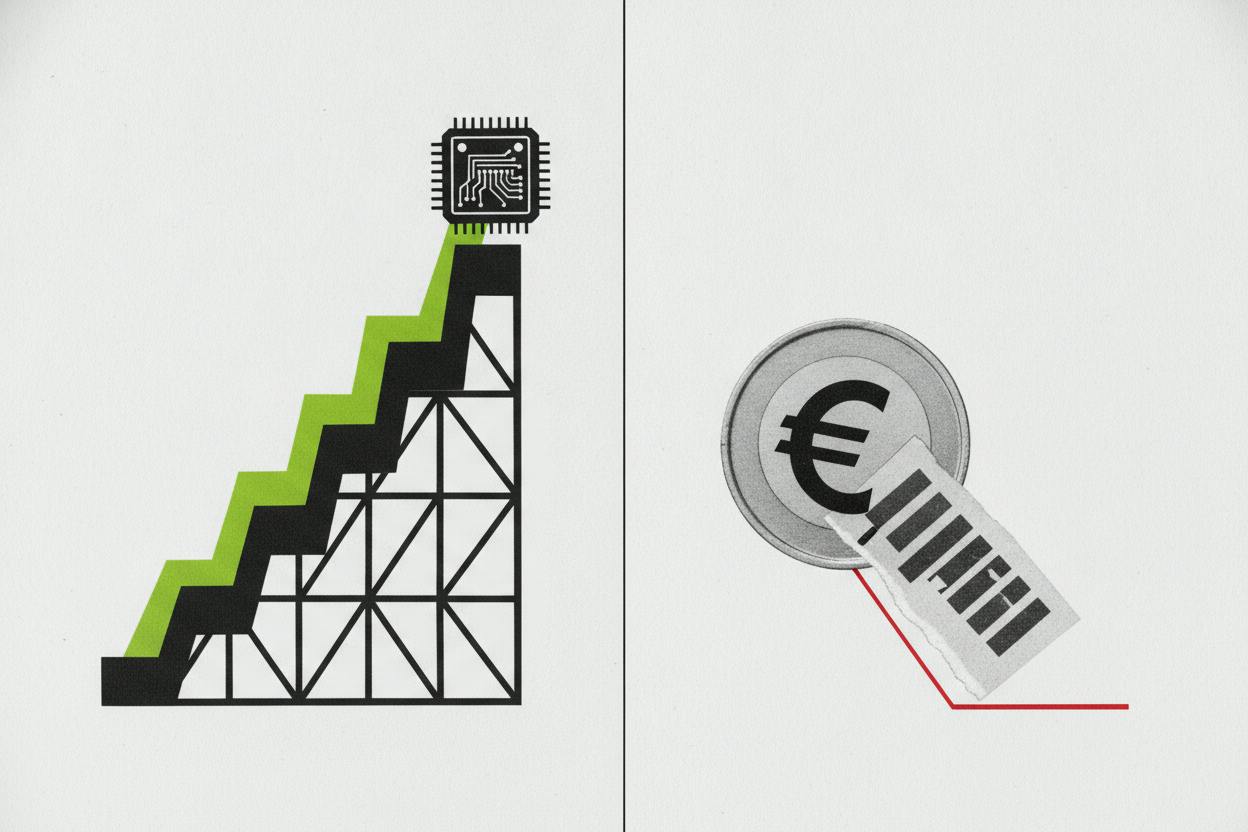
Wall Street's tech-heavy Nasdaq index closed at a record high on [day], powered by Nvidia and other megacap technology companies, even as the euro slid to its weakest level in 17 months on renewed worries about France's public finances. The divergence highlights how investors are weighing two very different sets of concerns across the Atlantic.
What's driving the Nasdaq higher?
The rally in US tech stocks has been led by Nvidia, the chipmaker at the center of the artificial intelligence boom. Along with other large-cap tech names, Nvidia has seen its shares surge as demand for AI chips and data-center infrastructure remains strong. Investors continue to pour money into these companies, betting that AI will drive earnings growth for years to come.
This enthusiasm has been enough to offset the drag from high interest rates. The yield on the 10-year Treasury note has been hovering near multi-year highs, which typically pressures stock valuations, especially for growth-oriented tech companies. But so far, the AI narrative has proven more powerful. As we noted in a recent look at the Nasdaq's record run, tech has been resilient even with yields near 5.3%.
Still, some big investors are starting to trim their AI-heavy US stock positions, though they aren't abandoning the trade entirely. That suggests the rally, while still intact, may be getting more selective.
Why is the euro falling?
Across the Atlantic, the euro has been under pressure as traders focus on France's fiscal situation. The French government is struggling to rein in spending and reduce its debt, and political gridlock has made it harder to pass meaningful budget reforms. As a result, investors are demanding a higher premium to hold French government bonds, which has weighed on the euro.
The single currency dropped to its lowest level in 17 months, a sign that markets are losing confidence in the region's economic outlook. France's troubles are part of a broader pattern of political and fiscal uncertainty in Europe, which has also hit French stocks and other European equities.
What it means for investors
For everyday investors, the key takeaway is that markets are being driven by two very different forces. In the US, the tech rally is a story of growth and innovation, but it also carries risks. If interest rates stay high or AI earnings disappoint, the sector could be vulnerable to sharp pullbacks.
In Europe, the focus is on government finances and political stability. A weaker euro can be a double-edged sword: it makes European exports cheaper and can boost earnings for multinational companies, but it also signals a lack of confidence in the region's economic management.
For those with diversified portfolios, this divergence is a reminder of the importance of not putting all your eggs in one basket. While US tech has been a strong performer, other regions and sectors may offer opportunities—or risks—that are less visible.
Investors will be watching several things in the coming days: whether the Fed's rate-cut signals, as hinted in the Fed minutes, can support broader markets, and whether France can ease fiscal concerns. The euro's slide could also have implications for European stocks, which have been rising despite political turmoil.
Bottom line
The Nasdaq's record and the euro's slide are two sides of the same coin: investors are rewarding US tech for its growth potential while punishing Europe for its fiscal and political challenges. For now, the AI trade remains the dominant force in global markets, but the fragility of the euro and the pressure on European bonds are reminders that not everything is rosy.
As always, it's wise to stay informed and consider how these global shifts might affect your own portfolio, whether through direct holdings or mutual funds and ETFs.