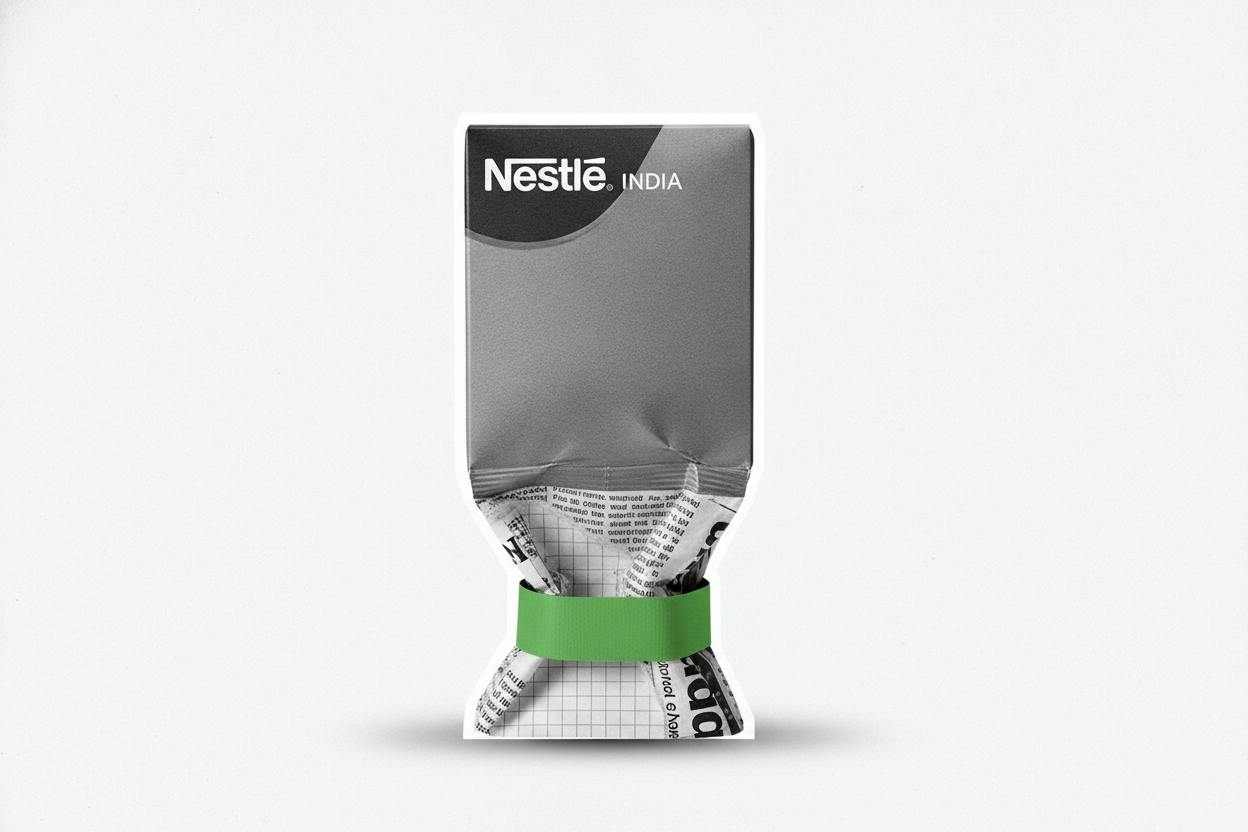
Nestle India, the local arm of Swiss consumer-goods giant Nestle, delivered a strong quarterly performance, with profit climbing 36% thanks to robust demand for its iconic brands like Maggi noodles and Nescafe coffee. However, the market's reaction was far from celebratory: shares slid about 9% after management cautioned that rising food inflation and higher input costs are beginning to squeeze margins.
A solid quarter on the surface
For the quarter, Nestle India reported net profit of 10.27 billion rupees (roughly $123 million), while revenue rose 20% to 67.88 billion rupees. The company said volumes grew at a double-digit pace, helped by deeper penetration in rural areas, surging demand from quick-commerce platforms, and successful new product launches under its KitKat and Munch chocolate brands.
These results underscore the resilience of Nestle's portfolio in India, where consumers continue to reach for affordable indulgences like Maggi and Nescafe even as overall spending remains cautious. The company's ability to expand distribution and innovate has been a key driver of its growth in a highly competitive packaged-food market.
Why investors are worried
Despite the headline numbers, investors focused on the cautionary tone from management. Food inflation in India has been persistently elevated, driven by erratic weather, supply chain disruptions, and higher global commodity prices. This has pushed up costs for raw materials such as wheat, edible oils, and packaging, squeezing margins for consumer goods companies.
Nestle India's warning echoes a broader trend across the sector. Many packaged-food makers are facing a delicate balancing act: they need to raise prices to protect profitability, but doing so risks alienating price-sensitive consumers. In India, where competition is fierce and disposable incomes are still recovering, passing on higher costs is not always straightforward.
The company's shares fell about 9% in response, reflecting investor anxiety that the profit growth may not be sustainable if input costs continue to rise. This reaction is a reminder that even strong earnings can be overshadowed by forward-looking concerns.
What it means for investors
For everyday investors, Nestle India's results offer a lesson in reading beyond the headline numbers. A profit jump is positive, but the market is pricing in what comes next. If inflation persists, Nestle India may have to either raise prices, which could dampen demand, or absorb higher costs, which would hit margins.
Investors should also consider the broader context. India's central bank has been burning through reserves to defend the rupee, which can make imported inputs more expensive and add to inflationary pressures. Meanwhile, the Indian stock market has been volatile, with IT stocks leading rallies on some days and concerns about global interest rates on others, as seen in recent Nifty movements.
For those holding Nestle India shares, the key metrics to watch are volume growth, pricing power, and management's commentary on input costs. The company's ability to maintain double-digit volume growth while managing costs will be crucial. Historically, Nestle has demonstrated strong brand loyalty, which gives it some flexibility to raise prices without losing customers. But the current environment is testing that resilience.
The road ahead
Nestle India's management has not provided specific guidance, but the warning suggests that the coming quarters could be challenging. The company is likely to focus on cost efficiencies, premiumization, and expanding its rural footprint to offset margin pressure.
Investors will also be watching how the broader economy evolves. Food inflation is a key concern for the Reserve Bank of India, which has been hiking interest rates to tame price pressures. Higher rates can slow consumer spending, which would affect companies like Nestle India. On the other hand, if inflation eases, the company could see relief on the cost front.
In the meantime, the stock's decline may present an opportunity for long-term investors who believe in Nestle India's fundamentals. But it also serves as a cautionary tale about the importance of looking beyond quarterly beats and considering the sustainability of growth.
Bottom line
Nestle India's profit jump is a testament to the strength of its brands and execution. However, the market's negative reaction highlights the fragility of the current operating environment. For investors, the takeaway is clear: in times of high inflation, even good news can be met with skepticism. Staying informed about cost trends and consumer behavior will be essential for navigating the road ahead.