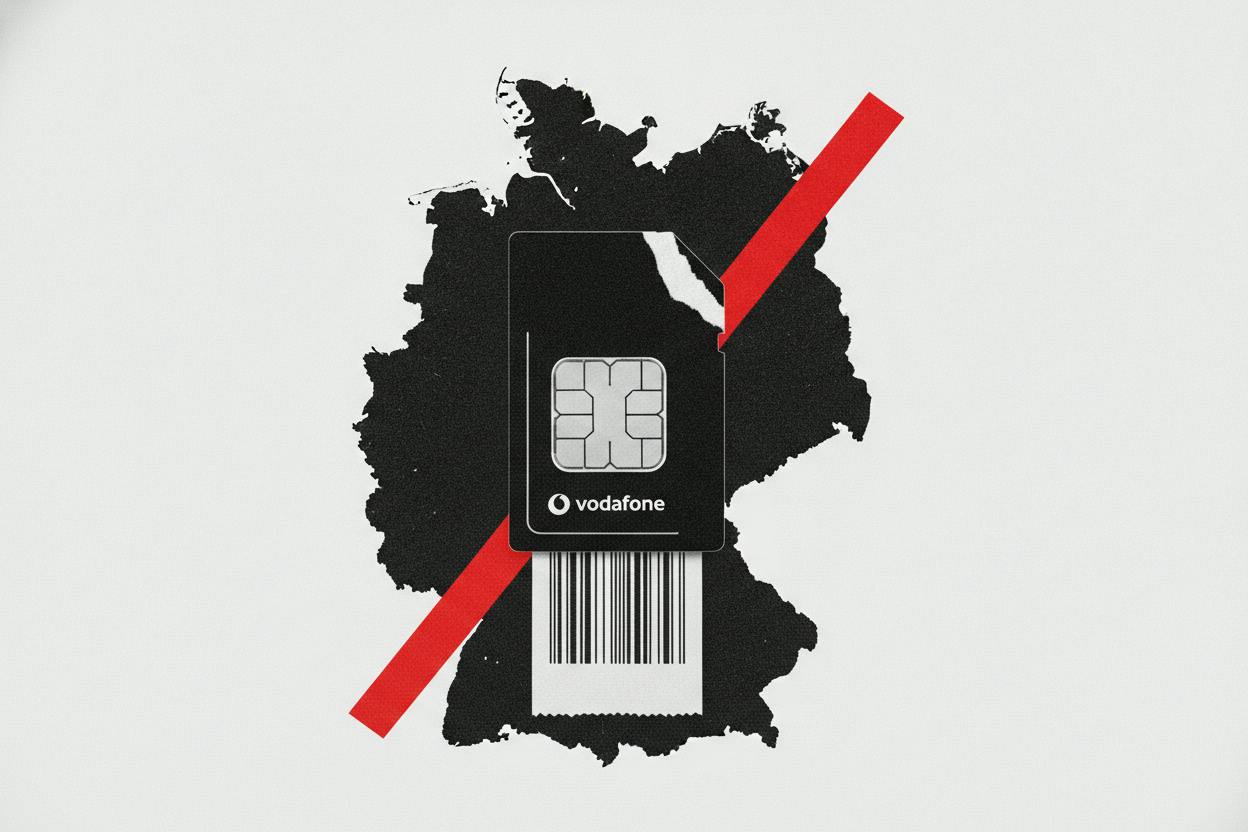
Vodafone's turnaround story remains stuck in neutral, with its biggest market still acting as a drag. Bank of America (BofA) is forecasting a mixed fiscal second quarter for the telecom giant, as weak customer growth in Germany persists and a legal ruling over 2023 price increases sets up an accounting charge later this year.
The UK-based company, which operates mobile and broadband networks across Europe and Africa, has been trying to revive growth after years of underperformance. But Germany—its largest market by revenue—has been a persistent problem, and BofA's analysts see little improvement in the near term.
Germany: value over volume
According to BofA, customer growth in Germany will remain weak in the fiscal second quarter, which runs from July to September. The company has been prioritizing "value over volume," meaning it is focusing on getting more revenue from existing customers rather than chasing new ones with heavy discounts. That strategy may help average revenue per user (ARPU) tick up slightly, but it likely won't be enough to offset the decline in subscriber numbers.
Germany's telecom market is fiercely competitive, with rivals like Deutsche Telekom and Telefónica Deutschland fighting for market share. Vodafone has also been investing heavily in network upgrades, including fiber and 5G, but the payoff has been slow. For everyday investors, this means Vodafone's German operations are still a drag on overall performance, and any recovery will take time.
The legal overhang: 2023 price hikes
The bigger concern is a court ruling against Vodafone's 2023 price increases. In Germany, the company raised prices for some customers, but a court found that the way it did so was not lawful. As a result, Vodafone may have to compensate affected customers, and it will likely need to adjust its accounting.
BofA expects Vodafone to book a provision—money set aside for potential refunds or claims—and to de-recognize revenue that it had previously recorded. De-recognition means the company will remove some revenue from its books, effectively reversing sales it had already counted. This will hit the second half of the fiscal year, which runs from October to March.
This is a classic example of how legal and regulatory risks can suddenly turn into financial pain. For investors, it's a reminder that a company's reported earnings can be revised downward when courts or regulators step in.
What it means for investors
For Vodafone shareholders, the near-term picture is not pretty. The company is already trading at a discount to many of its European peers, partly because of its German problems and its heavy debt load. The legal hit will likely weigh on earnings per share (EPS) in the second half, and BofA's "mixed" outlook suggests there won't be a clear catalyst to boost the stock soon.
That said, Vodafone has been taking steps to simplify its business. It has sold or spun off operations in several markets, and it has been cutting costs. The company also pays a dividend, which is a key reason many investors hold the stock. But the dividend is only sustainable if cash flow holds up, and the German legal issue could eat into that.
Investors should also keep an eye on the broader telecom sector. In the UK, for example, British Land lifted its profit outlook recently, showing that some property-focused companies are doing well, but telecoms face their own challenges. Meanwhile, BofA sees Orange nudging up its 2026 outlook at its October results, suggesting that not all European telecoms are in the same boat.
For Vodafone, the key will be whether the German situation stabilizes. If customer losses slow and the legal costs are manageable, the stock could recover. But if the court ruling leads to larger refunds or more regulatory scrutiny, the pain could extend.
What to watch next
Vodafone is due to report its fiscal second-quarter results in November. Investors will be looking for:
- How much the provision for the German price-hike ruling will be.
- Whether customer losses in Germany are slowing.
- Any update on the company's cost-cutting program.
- Guidance for the full year, especially in light of the revenue de-recognition.
In the meantime, the broader market backdrop matters too. Hot US inflation sent Latin American markets sliding recently, and Citi now expects the Fed to hike in December after that inflation data. Higher interest rates can make dividend-paying stocks like Vodafone less attractive, as investors can get similar yields from safer government bonds.
For now, Vodafone's story is still mostly about Germany—and until that improves, the stock is likely to remain under pressure. Investors should weigh the potential for a recovery against the risks of further legal and operational setbacks.