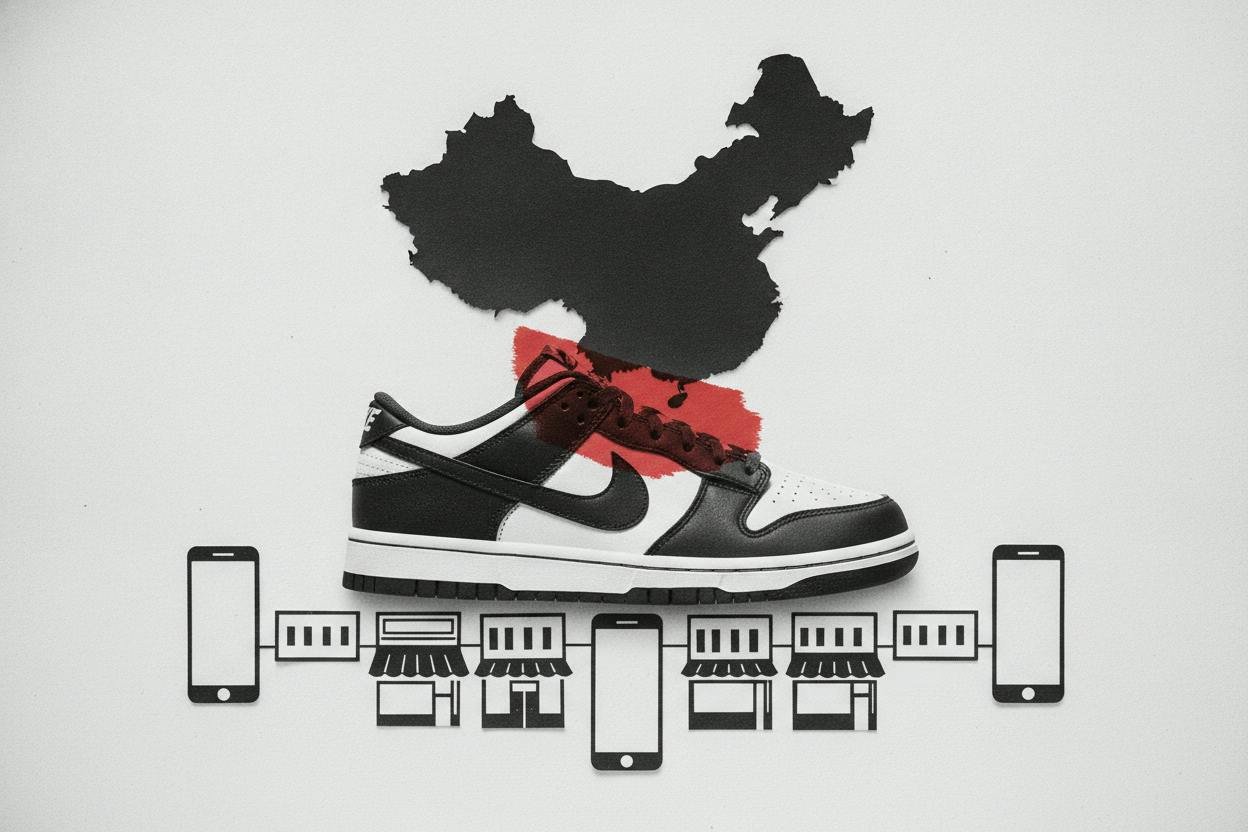
Nike is betting that designing more of its China products locally will help it win back shoppers who have drifted to domestic rivals. The sportswear giant said it wants half of the products it sells in China to be created and developed in the country by fiscal 2030, part of a broader reset after nine straight quarters of falling Greater China sales.
The plan was laid out as part of Nike's five-year financial roadmap. The company said it will lift “local product creation” across its Nike sportswear and Jordan brands to 50% by fiscal 2030. The idea is straightforward: Chinese consumers have increasingly favored homegrown labels like Anta and Li Ning, and Nike believes a more China-first design pipeline can make its lineup feel less imported and more in tune with local tastes.
But executives also tempered expectations. They told Reuters that China revenue is expected to be roughly flat from fiscal 2027 through fiscal 2031. That suggests the company is not counting on a quick rebound in the world's second-largest economy, but rather a long, steady grind to stabilize its position.
Why Nike is changing its China playbook
Nike's struggles in China are not new. For more than two years, the company has faced a combination of weaker consumer spending, intense competition from domestic brands, and shifting preferences among younger shoppers who increasingly see local labels as more authentic and innovative. The result has been a steady slide in sales in a market that was once a major growth engine.
By moving more design and development work to China, Nike hopes to shorten the time between spotting a trend and getting a product on shelves. Local teams can respond faster to regional styles, sizes, and cultural cues. That is a significant shift for a company that has long centralized much of its product creation at its Oregon headquarters.
The move also carries a symbolic weight. It signals to Chinese consumers and regulators that Nike is committed to the market, not just as a place to sell products but as a place to build them. That could help the company rebuild goodwill at a time when geopolitical tensions and supply-chain disruptions have made global brands more cautious about their China exposure.
What the channel changes mean for investors
Alongside the design shift, Nike is tightening how its products reach customers. Reuters reported that starting in January, the company will pull online sales rights from some of its biggest China retail partners, shifting more volume into Nike-controlled channels. That gives Nike more control over promotions, pricing, and inventory.
For investors, this is a margin story more than a sales story. If China revenue is guided to stay roughly flat for several years, the focus turns to how profitably Nike can sell there. Pulling partners' online rights can curb partner-led discounting, keep pricing more consistent, and reduce the need for heavy markdowns to clear excess stock. In other words, the big swing factor becomes updates on promotions, inventory levels, and the mix of Nike's own direct-to-consumer sales — not just the next headline revenue number.
This is a familiar playbook for Nike, which has been pushing direct-to-consumer sales globally for years. But in China, the shift is more delicate because local partners have deep distribution networks and relationships that Nike cannot easily replace overnight. The company will need to balance its desire for control with the risk of disrupting sales during the transition.
What to watch next
Investors will be watching several things in the coming quarters. First, how quickly Nike can ramp up local product creation without sacrificing quality or brand image. Second, whether the channel changes lead to better pricing and fewer discounts, which would show up in gross margins. Third, whether the flat revenue guidance proves too pessimistic or too optimistic as consumer demand in China evolves.
Nike's challenges in China are part of a broader story of Western brands losing ground to local competitors in the country. The same dynamic has played out in other sectors, from technology to consumer goods. For a deeper look at how China's state buyer is tightening its grip in other industries, see China's state buyer tightens grip. And for context on how US-China tensions are affecting global companies, check out US tightens Nvidia chip curbs.
For everyday investors, the key takeaway is that Nike's China turnaround will be a slow burn. The company is not promising a quick fix, and the flat revenue outlook suggests management is being realistic about the headwinds. The real test will be whether Nike can protect its profitability while it rebuilds its brand in a market that has moved on.
As always, no single quarter will tell the whole story. Watch for signs of stabilization in China sales, improvements in gross margin, and any updates on the local product creation target. Those will be the clearest signals of whether Nike's China reset is working.