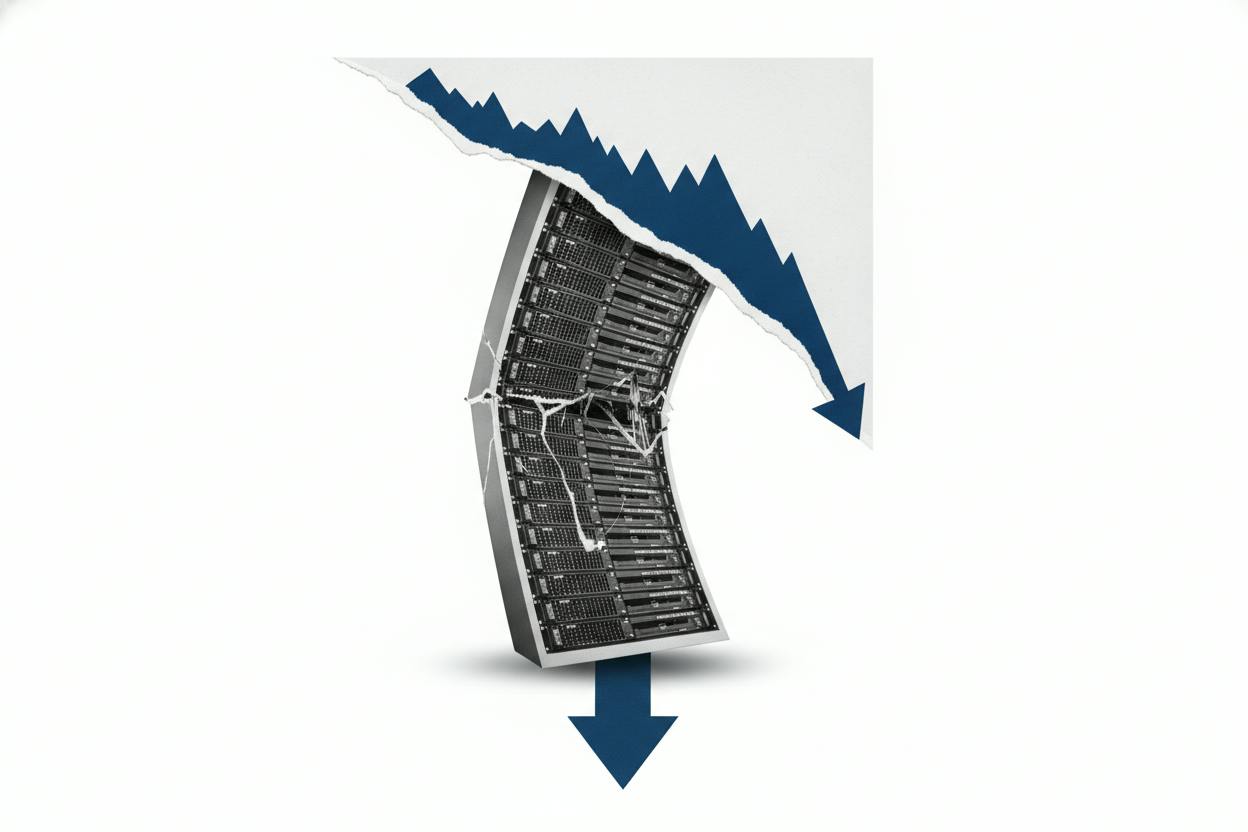
Japan's benchmark Nikkei index fell more than 5% on Friday, with artificial-intelligence-linked stocks like SoftBank leading the decline, as a sharp drop on Wall Street and fresh concerns about tougher US tech regulation rattled investors.
By the midday break, the Nikkei was down 5.3% at 57,858.61, after earlier sliding as much as 7.1%, according to Reuters. The selloff was broad: 221 of the index's 225 stocks were lower, the broader Topix fell 5.4%, and every industry group was in the red.
What's behind the plunge?
The catalyst was a one-two punch. Overnight, US equities suffered sharp losses, and a narrative shift emerged that Washington could tighten oversight on big tech and slow parts of the AI buildout. That could cool expectations for data-center spending, which has been a key driver of the AI boom.
Investors who had piled into AI-related stocks in recent months were hit hardest. SoftBank, which holds large stakes in AI-focused companies, was down 9.3%. Chip-test equipment maker Advantest fell 4.6%. These are among the most crowded trades in the Japanese market, so when sentiment turns, they tend to fall the fastest.
Nomura Securities, one of Japan's largest brokerages, said volatility could stick around as investors reassess AI timelines and costs. The market, Nomura suggested, is shifting from a “buy anything AI” mentality to a more selective approach.
Why volatility can feed on itself
A jump in volatility doesn't just describe choppier trading; it can help create it. Many funds and bank risk teams cap risk using measures like value at risk (VaR), which rises when day-to-day moves get bigger. That can force them to cut exposure quickly, even if the original trigger was “just” tech.
Volatility also tends to make index hedges pricier, because protection in derivatives markets costs more when swings are expected to be larger. Put those together, and selling can spread from the initial AI and regulation worry to the whole index, keeping pressure on the Nikkei and Topix until actual moves calm down.
The stocks that feel it first are usually the most crowded and most sensitive to sentiment, like SoftBank and other AI-adjacent chip names. This dynamic is playing out across Asia, as AI-linked stocks tumble across the region on similar fears.
What it means for investors
For everyday investors, this selloff is a reminder that AI-related stocks can be volatile. When expectations run high, any hint of regulatory pushback or slower spending can trigger sharp reversals. The key is to focus on the long-term fundamentals of companies rather than short-term sentiment swings.
It's also worth noting that this isn't the first time US tech scrutiny has hit Japanese chip stocks. Earlier this year, the Nikkei slid on similar concerns, as US AI scrutiny hit chip stocks. And the broader market is still digesting the implications of faster wage growth in Japan, which could influence the Bank of Japan's rate decisions.
If you hold Japanese equities or funds with exposure to tech, expect continued volatility in the near term. Diversification across sectors and regions can help cushion the blow when one area of the market gets hit hard.
For now, the Nikkei's volatility gauge is at its highest level since March 31, a sign that traders are bracing for more swings. Whether the selloff deepens or stabilizes will likely depend on how US regulators and big tech companies respond in the coming days.