Norway's sovereign wealth fund, the world's largest, is raising alarms about a trend it says is quietly undermining the power of ordinary shareholders: the gradual erosion of voting rights and corporate transparency across major markets.
The fund, which manages $2.3 trillion in assets derived from Norway's oil and gas revenues, holds roughly 1.5% of all listed companies globally, according to Reuters. That makes it one of the most influential institutional investors on the planet. Its latest warning, delivered by its chief governance and compliance officer, Carine Smith Ihenacho, points to two specific developments: the spread of dual-class share structures and a shift toward more voluntary—rather than mandatory—company reporting.
What is 'one share, one vote' and why does it matter?
For decades, the bedrock principle of public equity markets has been "one share, one vote." That means each share of stock carries an equal vote in corporate decisions, from electing directors to approving major mergers. It's a system designed to ensure that the people who own a company—the shareholders—have a say proportional to their stake.
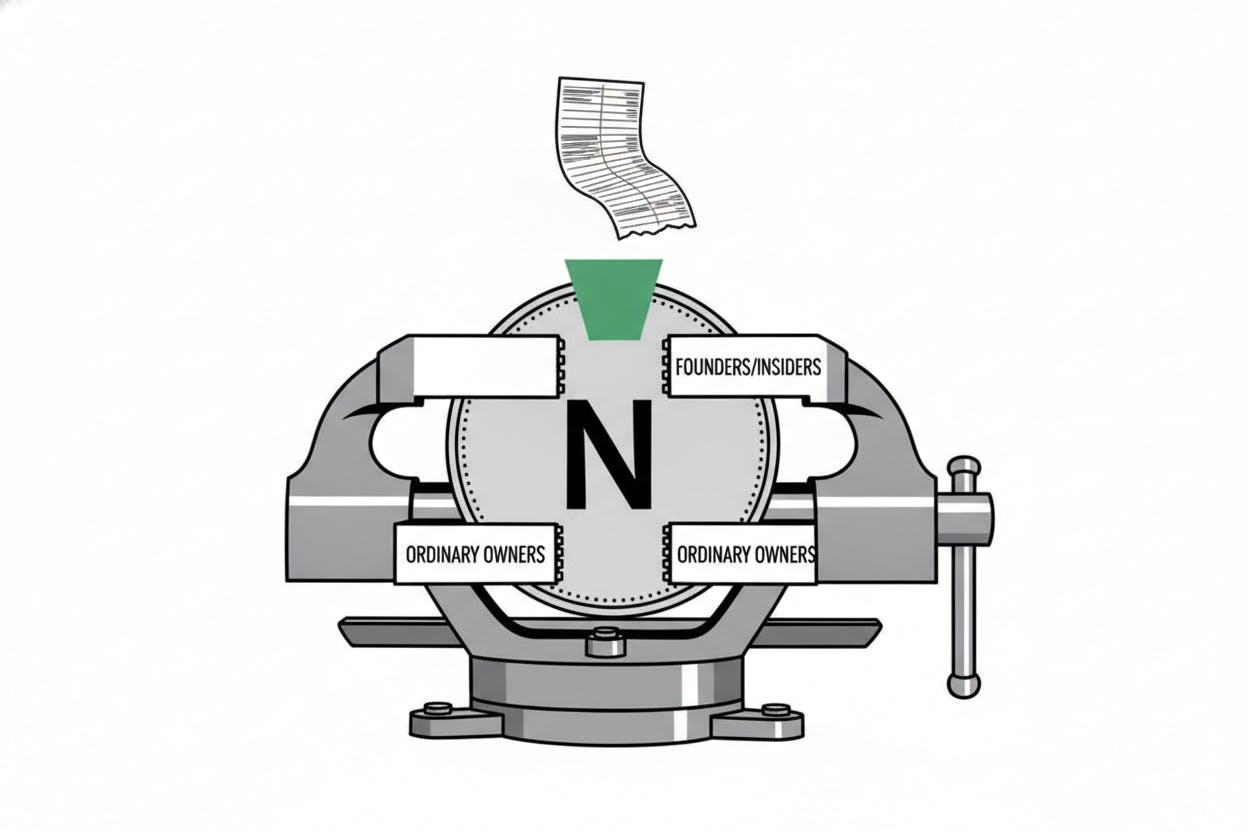
Dual-class shares upend that principle. In a dual-class structure, a company issues two or more classes of stock, with one class carrying significantly more voting power than the other. Often, founders and insiders hold the high-vote shares, giving them control even when they own only a small fraction of the company's equity. This is common among high-profile tech companies, but it's spreading to other sectors as well.
The Norwegian fund's concern is straightforward: when founders and insiders hold outsized voting power, outside investors—including the fund itself—have less influence over how companies are run. That can lead to decisions that favor insiders over the broader shareholder base, from executive pay packages to strategic pivots that destroy value.
Looser reporting rules add to the worry
The second issue the fund highlights is a drift toward more voluntary corporate reporting. In many jurisdictions, regulators are moving away from prescriptive disclosure requirements, allowing companies to decide how much information to share with investors. While proponents argue this reduces compliance costs and lets companies tailor disclosures, the fund sees a downside: less standardized, less comparable information makes it harder for outside investors to assess risk and hold management accountable.
"We are seeing a trend where shareholder rights are being weakened across markets," Smith Ihenacho said, according to the fund's statement. "This is a concern for us as a long-term investor."
The fund's CEO, Nicolai Tangen, has also been vocal about the importance of good governance, arguing that strong shareholder protections are essential for sustainable long-term returns. The fund's size means its views carry weight—it has a track record of engaging with companies on governance issues and voting against management when it deems necessary.
What this means for everyday investors
For the average investor, this may seem like a distant institutional concern. But the implications are direct. When shareholder rights weaken, the value of your investment can be affected. If a founder can push through a deal that benefits them personally but hurts the company, your shares could lose value. If reporting becomes less transparent, you have less information to make informed decisions—and so do the professional fund managers who often act on your behalf.
Moreover, the trend is not confined to one region. The fund's warning comes as activist investors push for board changes at companies like Northern Star, and as takeover bids increasingly come with conditions that test shareholder patience. These are reminders that governance battles are not abstract—they play out in real-time in boardrooms and shareholder meetings.
The fund's stance also aligns with a broader debate about the balance of power in corporate America and beyond. In recent years, companies have returned record amounts of cash to shareholders, but that doesn't necessarily mean shareholders have more say. In fact, some argue that buybacks and dividends can be used to placate investors while insiders retain control.
What to watch next
Investors should keep an eye on how regulators respond to these concerns. In the U.S., the Securities and Exchange Commission has debated tightening rules around dual-class shares and proxy access. In Europe, the push for more voluntary reporting has met with resistance from investor groups. The Norwegian fund's public stance could add pressure on both sides of the Atlantic.
For now, the fund's message is a reminder that the rules of the game matter. As markets await key economic data and investors rotate between sectors, the quiet erosion of shareholder rights may not grab headlines—but it could shape returns for years to come.
For the individual investor, the takeaway is simple: pay attention to how the companies you own are governed. Read proxy statements, understand voting structures, and support efforts to keep boards accountable. In a world where insider control is on the rise, the most powerful tool you have is your vote—if you still have one.