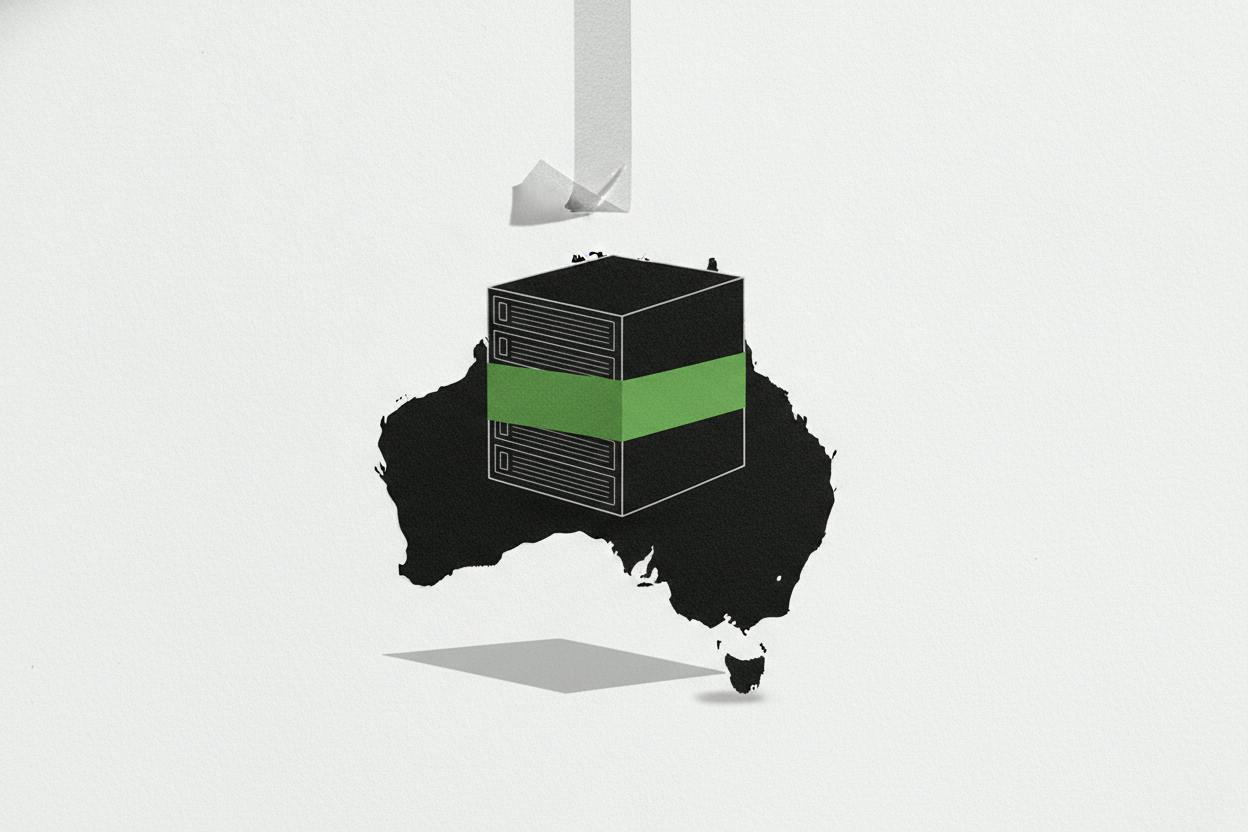
Firmus, a data center operator backed by chip giant Nvidia, is reconsidering its planned initial public offering (IPO) on the Australian Securities Exchange. After closing order-taking on Thursday, the company is now weighing a smaller float at a lower price or turning to private investors for funding instead.
The move signals a cooling in investor appetite for new listings, particularly in capital-intensive sectors like data centers, where high interest rates and rising construction costs have made investors more cautious.
What's happening with the IPO?
Firmus had been preparing to list on the ASX, hoping to raise capital to fund its expansion. However, after the order book closed, the company found that demand was not strong enough to support the original terms. Rather than pushing ahead with a listing that might disappoint, Firmus is now exploring alternatives.
According to the brief, the company is considering two main options: a smaller float at a lower price, or a private funding round. A smaller float would mean selling fewer shares and raising less money, while a private round would involve selling shares to institutional or other private investors without going public.
This is not an uncommon situation for companies planning IPOs. When market conditions turn sour, issuers often have to adjust their expectations. Some choose to delay, others cut the price, and some abandon the listing altogether.
Why does this matter?
Firmus is part of the booming data center industry, which has become a focal point for investors due to the explosion in artificial intelligence (AI) and cloud computing. Data centers are the physical facilities that house servers and computing equipment, and they are in high demand as tech companies race to build AI infrastructure.
Nvidia, the world's most valuable chipmaker, has been a key backer of Firmus, highlighting the strategic importance of data centers to the AI supply chain. Nvidia's chips are widely used in AI training and inference, and the company has been investing in data center operators to ensure there is enough capacity to run its technology.
The potential shelving of Firmus's IPO comes amid a broader trend of AI-related companies going public. For instance, Nvidia-backed Iambic Therapeutics recently targeted a valuation of $806 million in its US IPO, showing that investor interest in AI-linked firms remains strong in some areas.
However, the data center sector faces unique challenges. Building and operating data centers requires massive upfront investment, and the returns are often slow to materialize. With interest rates still elevated, the cost of borrowing for such projects has risen, making investors more demanding about valuations.
What does this mean for investors?
For everyday investors, the news is a reminder that IPOs are not guaranteed to succeed. When a company pulls or scales back its listing, it often signals that the market is not willing to pay the price the company wants. This can be a sign of broader caution in the market, particularly for growth-oriented sectors.
If Firmus opts for a private funding round, it would mean that retail investors, who typically participate in IPOs, would miss out on the opportunity to own a piece of the company. Private funding rounds are usually reserved for institutional investors, such as pension funds and venture capital firms.
On the other hand, if Firmus proceeds with a smaller float at a lower price, it could offer a more attractive entry point for investors who believe in the long-term growth of data centers. However, a lower price also suggests that the company's growth prospects are being viewed with more skepticism than initially hoped.
Investors should also consider the broader implications for the Australian market. The AI data center boom could keep Australian inflation sticky, as the construction and operation of these facilities drive up demand for electricity and other resources. This could influence the Reserve Bank of Australia's monetary policy decisions, potentially affecting interest rates and the overall economy.
What's next?
Firmus has not yet made a final decision, and the company is likely to announce its plans in the coming days. Investors will be watching closely to see whether the company can salvage its listing or whether it will join the ranks of companies that have chosen to stay private.
The outcome could also have ripple effects for other data center operators considering IPOs. If Firmus's experience deters others from going public, it could slow the flow of new listings in the sector, which has been a hot area for investment.
For now, the key takeaway is that the IPO market remains selective, and companies must be prepared to adapt to changing conditions. As always, investors should do their own research and consider their risk tolerance before making any decisions.