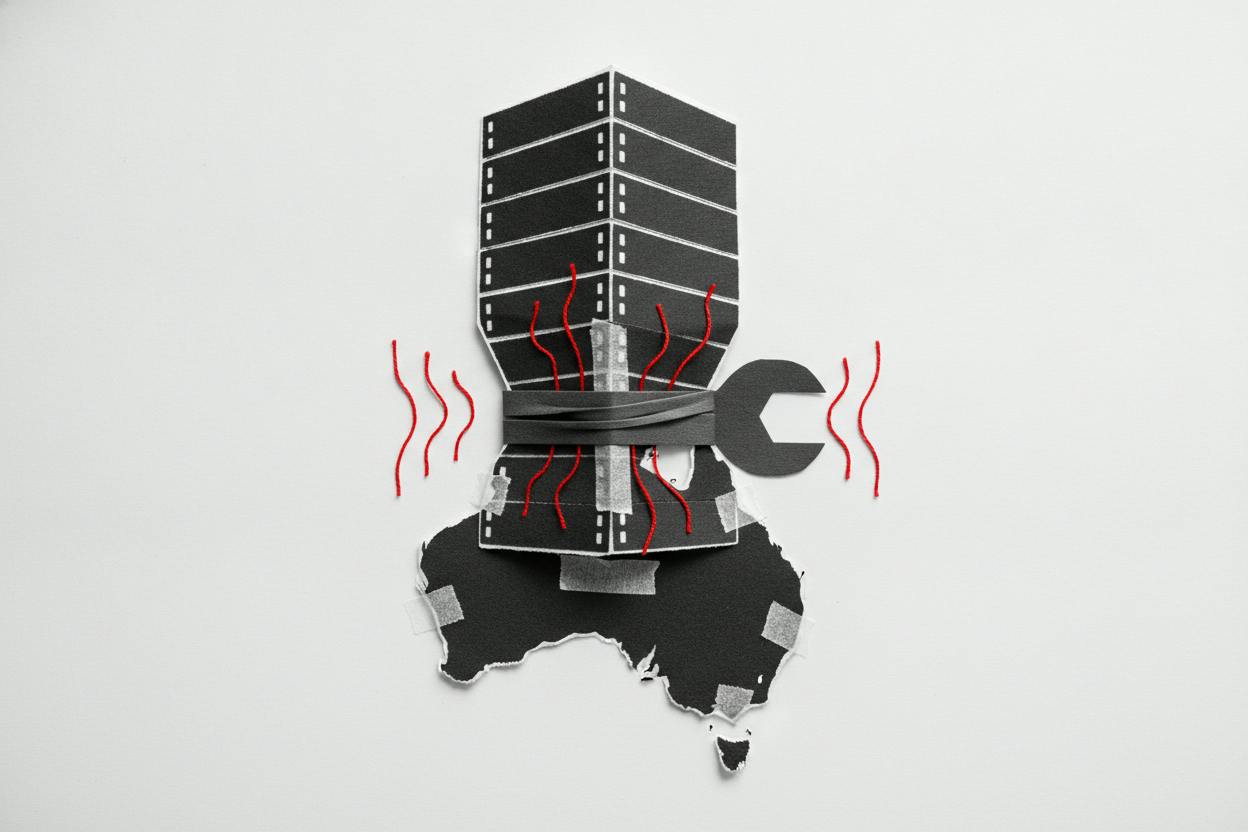
Australia's rush to build artificial intelligence infrastructure, especially data centers, could keep inflation higher in the near term, according to a former Reserve Bank of Australia (RBA) official. Jonathan Kearns, now chief economist at Challenger, warns that the inflation 'hit' from construction spending tends to arrive well before any productivity payoff from AI.
Why the timing is awkward
Kearns explains that data center construction spending shows up as demand almost immediately, while the productivity gains from AI typically take longer to materialize and are far from guaranteed. Even though around three-quarters of data center spending goes on imported equipment, the remaining local slice still competes for Australia's non-tradable inputs—things you can't easily import, like construction crews, electricians, grid connections, and specialized services. These are exactly the areas where price pressures can linger.
That's awkward timing for the RBA. Inflation picked up in August, and the central bank has already raised its cash rate four times in 2026, to a 15-year high of 4.6%. Governor Michele Bullock has flagged the AI buildout as one factor. With inflation sitting above target for 'four or five years,' Kearns argues the RBA can't simply ignore an AI-driven bump, and he thinks another rate increase this year is still on the table.
What it means for your money
A 4.6% cash rate still flows through to everyday borrowing costs. If big AI projects keep spending even when rates rise, higher interest rates don't necessarily cool that demand much. Instead, monetary policy does most of its work where it transmits fastest: variable-rate mortgages, other bank loans, and parts of the economy that rely on financing. That's why an AI-linked inflation pulse can still mean higher-for-longer repayment pressure for households, even if the data centers themselves are funded and built regardless of the RBA's next move.
For investors, the key takeaway is that AI infrastructure spending is a double-edged sword. It can boost economic activity and create opportunities in construction, technology, and related services, but it also complicates the central bank's fight against inflation. If the RBA has to keep rates higher for longer, that could weigh on rate-sensitive sectors like housing and consumer discretionary spending.
Kearns's comments echo broader concerns about AI-driven demand for resources. In other markets, similar dynamics are playing out—for instance, oil price jumps are stoking inflation worries in Malaysia, and bond yields and oil are fueling inflation fears in Canada. The global picture is one of supply constraints meeting strong demand, and Australia is no exception.
The bigger picture
The AI buildout is part of a broader trend of digital infrastructure investment. Data centers are energy-intensive and require significant construction, which puts pressure on local resources. In Australia, projects like the 1.4GW data center plan near Wagga Wagga have already faced local opposition, highlighting the tension between economic development and community concerns.
For the RBA, the challenge is balancing the need to contain inflation with the risk of stifling growth. If AI spending keeps inflation sticky, the central bank may have to keep rates higher for longer, which could slow the broader economy. That's a delicate balancing act, and Kearns suggests the RBA is likely to err on the side of caution.
Investors should watch for signals from the RBA about its next move. Any hints of another rate hike could affect bond yields, the Australian dollar, and rate-sensitive stocks. At the same time, companies involved in the AI infrastructure buildout—from construction firms to technology providers—could see continued demand, even if the broader economy cools.
In the meantime, households with variable-rate mortgages should prepare for the possibility that rates stay elevated. The AI boom may be a long-term positive for productivity, but in the short term, it's adding to the inflation pressures that keep borrowing costs high.