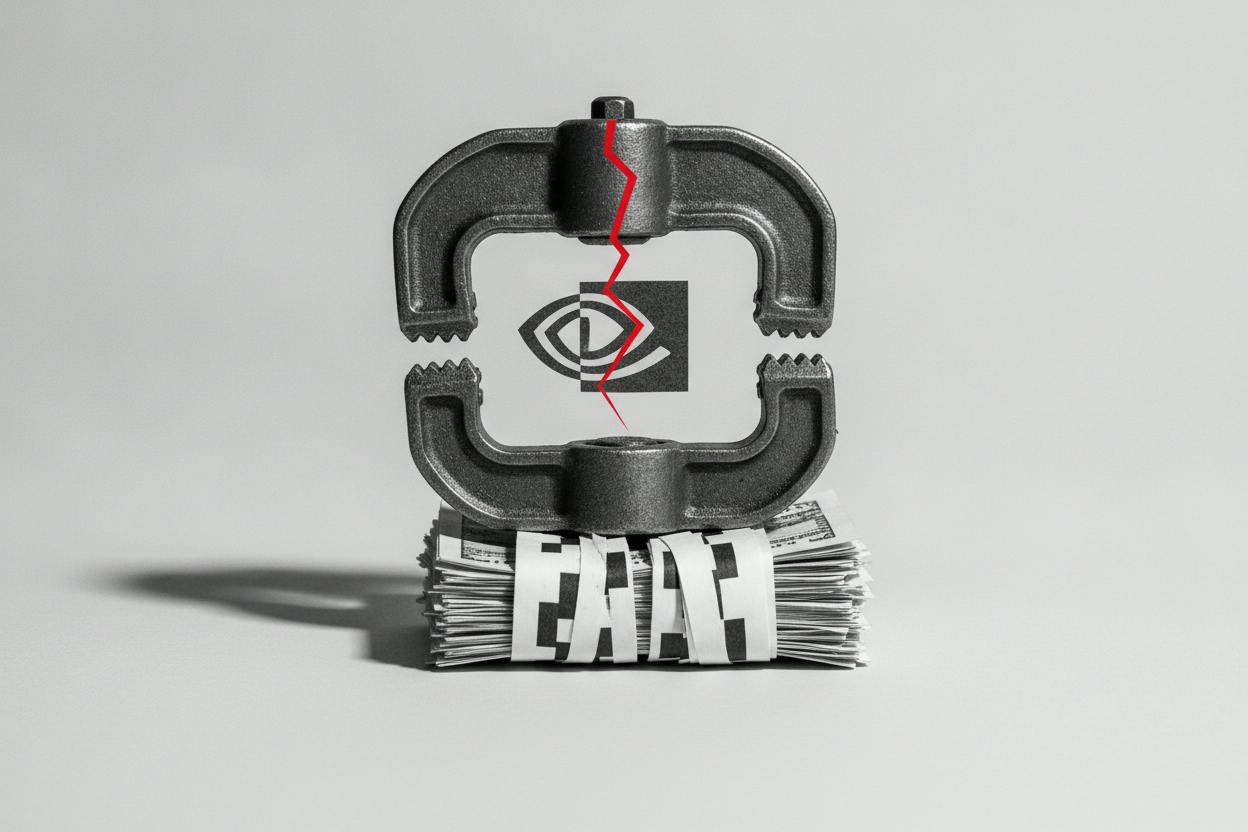
Credit investors are starting to question the debt of Nvidia's smaller AI partners, as leadership uncertainty at the chip giant casts doubt on whether it will keep providing the financing and guarantees that have helped these firms fund rapid data-center buildouts. The shift could mark an end to what Reuters describes as an era of “easy money” for AI infrastructure, potentially squeezing the so-called “neoclouds” that depend on a steady stream of outside capital to buy Nvidia graphics processing units (GPUs) and build out their computing capacity.
The wobble is already visible in bond prices. CoreWeave's June bonds were issued at a 9.625% yield, but investors now demand nearly 15% to hold them. Nebius's August 4.5% bonds have also seen their yields climb, reflecting growing unease about the creditworthiness of these companies. The widening gap between what these firms pay to borrow and what safer debt yields is a classic sign that investors are pricing in more risk.
What are neoclouds and why do they matter?
Neoclouds are a new breed of cloud-computing providers that focus almost exclusively on renting out Nvidia's high-end AI chips. Unlike the big cloud giants like Amazon Web Services, Microsoft Azure, or Google Cloud, which offer a broad range of services, neoclouds like CoreWeave and Nebius are built around one thing: providing access to the most powerful GPUs for AI training and inference. That focus has made them popular with AI startups and even some large tech companies that need massive computing power quickly.
But that specialization comes with a catch. Building and operating data centers packed with Nvidia GPUs is enormously expensive. These companies typically don't have the cash flow to fund their expansion from operations alone, so they rely heavily on debt and on vendor financing from Nvidia itself. Nvidia has historically been willing to help its biggest customers by providing financing or guaranteeing loans, effectively betting that the AI boom will continue and that these customers will be able to pay back what they owe.
That support has been a key pillar of the neocloud business model. If Nvidia pulls back, these companies could find it much harder to raise the capital they need to keep growing. And with leadership uncertainty at Nvidia—the company recently saw a CEO exit, as markets reacted to the news—credit investors are wondering whether the chip giant's willingness to back these deals will continue.
Why credit investors are getting nervous
The bond market is often a leading indicator of trouble. When investors demand higher yields, it means they see more risk of default. For CoreWeave and Nebius, the jump in yields suggests that lenders are no longer treating their debt as a safe bet. The concern is not just about the companies themselves, but about the broader ecosystem that supports them.
Nvidia's vendor financing and guarantees have been a crucial backstop for these neoclouds. If that support becomes less certain, the cost of borrowing could rise further, making it even harder for these companies to fund their buildouts. That could slow the pace of AI infrastructure investment, which has been a major driver of growth for Nvidia and the wider tech sector.
The timing is also tricky. The AI trade has already been under pressure, with AI chip stocks facing a pivotal week as Nvidia earnings and an Anthropic IPO loom. And new US legislation targeting cloud access to AI chips could add another layer of uncertainty for companies that rely on Nvidia hardware.
What it means for everyday investors
For most people, the immediate impact is indirect. If you own a diversified portfolio, you may not hold CoreWeave or Nebius bonds directly. But the ripple effects could be felt across the market. Nvidia is one of the most valuable companies in the world, and its fortunes are closely tied to the AI boom. If the financing that fuels that boom starts to dry up, it could weigh on Nvidia's stock and on the broader tech sector.
For investors in bond funds or ETFs, the rising yields on neocloud debt are a reminder that credit risk can change quickly. What looks like a safe, high-yield investment one day can become much riskier the next. It's also a signal that the AI infrastructure buildout, which has been a key driver of economic growth and market performance, may be entering a more cautious phase.
That doesn't mean the AI trade is over. But it does suggest that the easy-money era for AI infrastructure may be coming to an end. As Asian AI stocks have already slid on chip-curb worries, the credit market's new caution could be another sign that investors are starting to differentiate between companies with solid business models and those that are simply riding the AI wave.
For now, the key thing to watch is whether Nvidia addresses the leadership uncertainty and reaffirms its commitment to supporting its customers. If it does, the credit markets may calm down. If not, the pressure on neoclouds and their lenders could intensify, with consequences for the entire AI supply chain.