Nvidia has quietly warned some of its chip buyers that a proposed US law could significantly expand how Washington polices access to its artificial-intelligence processors, according to a CNBC report on Tuesday. The warning centers on the “Remote Access Security Act,” a bill that would give US regulators broader authority to monitor who taps into restricted technology through cloud services.
The move signals that the US-China chip fight is no longer just about hardware shipments. It is increasingly about who gets to use the computing power once it sits inside data centers in the US or allied countries.
What the proposed law would do
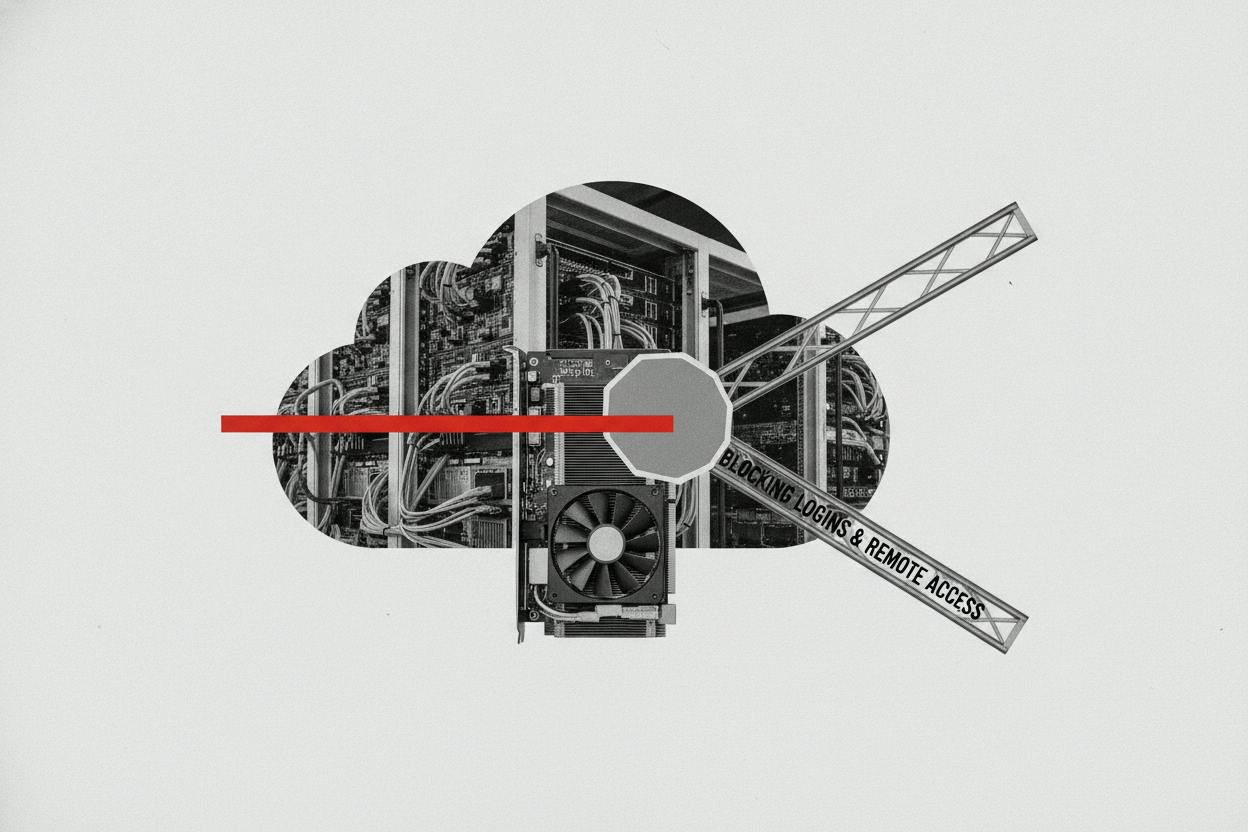
The bill, as described by CNBC, would let US regulators police remote access to cloud services that run restricted technology. That could pull cloud providers and their end users into legal trouble if Chinese firms gain access to advanced AI chips through rented computing capacity.
For everyday investors, the key takeaway is that this is a shift in how export controls work. Traditionally, export rules focused on physical shipments of chips. But with AI computing increasingly delivered over the internet, regulators are looking at the “remote access” route as a potential loophole.
Nvidia also flagged a practical tripwire for its customers: it may avoid selling to any buyer that rents more than 50% of its graphics processing unit (GPU) capacity to Chinese companies. That bright-line threshold could force cloud operators and middlemen to cap China-linked usage, rewrite customer contracts, add monitoring, and reshuffle scarce AI-computing supply toward lower-risk clients.
Why the 50% threshold matters
GPUs are the workhorse chips behind AI models, and Nvidia is the dominant supplier. Cloud providers and resellers buy these chips in bulk and rent out the computing power to other companies. If a buyer rents out more than half of that capacity to Chinese firms, Nvidia says it may simply refuse to sell to that buyer.
That creates a simple rule for managing risk: screen customers more aggressively, limit how capacity is sublet, and charge more for the compliance work. It tends to squeeze compute-rental businesses built on matching opaque, cross-border demand with scarce GPUs, while favoring big cloud providers that can document who’s using what and enforce tighter controls.
This is not the first time US chip curbs have rattled markets. US chip curbs have already hit Southeast Asia data center stocks as China-linked demand stalls, and Singapore stocks fell 1.4% when Washington tightened AI chip curbs on China earlier this year.
What it means for investors
For investors, the immediate question is how this affects Nvidia’s sales and the broader AI trade. Nvidia is the biggest beneficiary of the AI boom, and any threat to its ability to sell chips—or to its customers’ ability to use them—could weigh on its stock and on the wider semiconductor sector.
The 50% rental cap could also reshape the “AI-compute middlemen” business. Companies that buy GPUs and rent them out to third parties may find their customer base shrinking, their compliance costs rising, and their margins under pressure. On the other hand, large cloud providers with robust compliance systems could gain a competitive edge.
This comes at a time when Asia’s AI stocks have slid on US chip curbs and Nvidia nerves, and Taiwan and South Korea stocks have wobbled ahead of Nvidia earnings. The new legal risk adds another layer of uncertainty to an already volatile trade.
For ordinary investors, the key is to understand that this is a regulatory risk, not a fundamental change in AI demand. The demand for AI computing remains strong, but the rules governing who can access it are tightening. That could mean higher costs for cloud users, more scrutiny for resellers, and potentially slower growth for some AI-related businesses.
As always, it’s worth watching how the bill progresses through Congress and how Nvidia and its customers adapt. If the law passes, expect more headlines about compliance, contract rewrites, and shifting supply chains. If it stalls, the immediate pressure may ease—but the underlying tension between US export controls and China’s AI ambitions is unlikely to disappear.