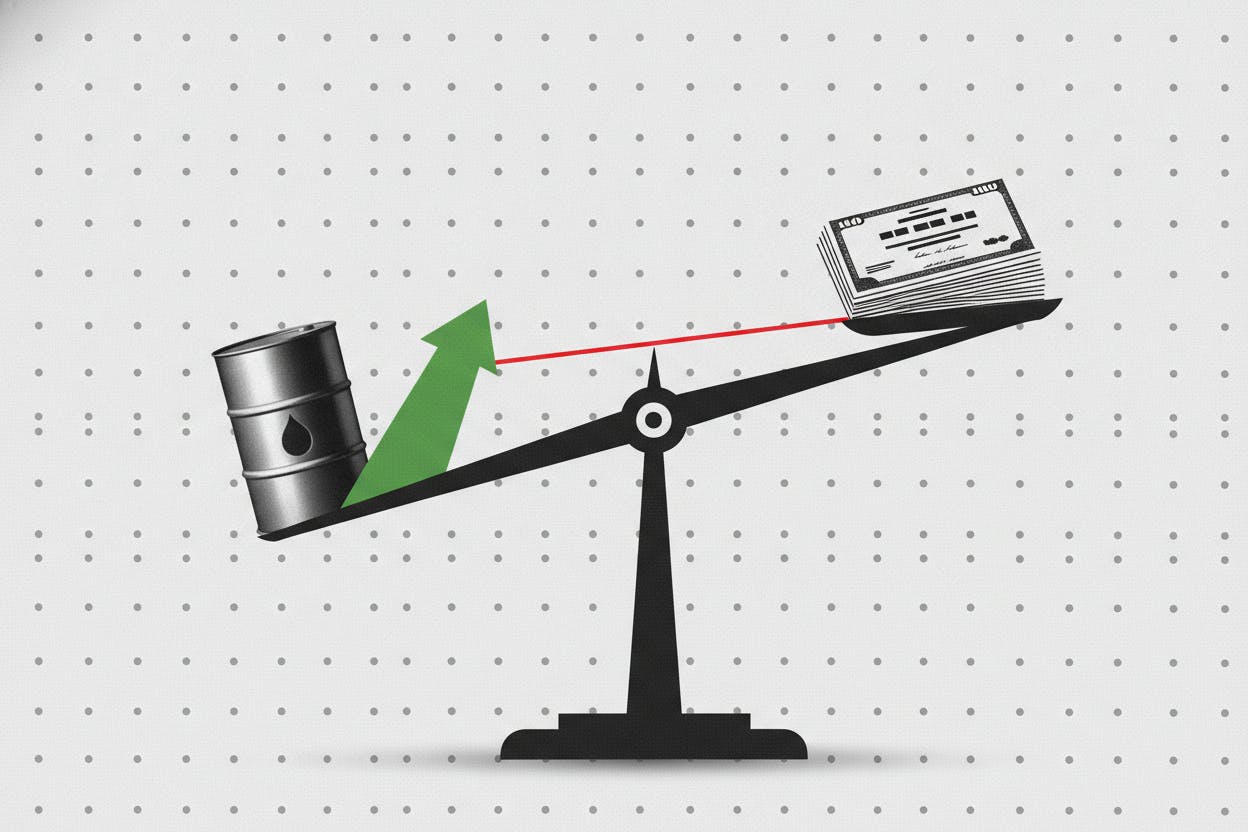
US stock futures were little changed on Thursday as a rise in oil prices and Treasury yields, driven by renewed US-Iran tensions, revived concerns that inflation could pick back up. The moves come just a day before the government's monthly jobs report, which investors are watching closely for signals on the Federal Reserve's interest-rate path.
What's driving the market
Fresh clashes between the US and Iran have injected a new dose of geopolitical uncertainty into markets. Oil prices climbed as traders worried about potential supply disruptions in the Middle East, a key producing region. At the same time, US Treasury yields moved higher, reflecting both the inflation jitters and a broader global bond selloff that has been underway for weeks.
Higher oil prices are a double-edged sword for the economy. On one hand, they can signal strong demand. On the other, they raise costs for businesses and consumers, which can feed into higher inflation. That is why the latest jump in crude is making investors nervous: it could undo some of the progress the Fed has made in bringing price increases under control.
The rise in yields also matters. When Treasury yields go up, borrowing costs for everything from mortgages to corporate loans tend to follow. That can weigh on economic growth and make stocks less attractive relative to bonds, which now offer higher returns without the same level of risk.
Why the jobs report matters
Friday's jobs report is one of the most closely watched economic indicators. It tells investors how many jobs were added last month and what the unemployment rate is. But the number that often moves markets the most is average hourly earnings, because it gives a hint about wage inflation.
If wages are rising too quickly, the Fed may feel pressure to keep interest rates higher for longer to cool the economy. If wage growth is moderate, it could give the central bank room to start cutting rates later this year. With oil prices now adding to inflation worries, the jobs data takes on even more significance.
The Fed has been trying to strike a balance: slow the economy enough to bring inflation down to its 2% target, but not so much that it triggers a recession. Every new data point, including the jobs report, helps investors guess which way the Fed will lean.
What it means for investors
For everyday investors, the flat futures suggest that markets are in a wait-and-see mode. The combination of higher oil and higher yields is a tricky backdrop for stocks, especially for growth companies that are valued on future earnings. When bond yields rise, those future earnings are worth less in today's dollars, which can drag on stock prices.
Energy stocks, on the other hand, often benefit from rising oil prices. But the broader market may struggle if inflation fears persist. Investors should keep an eye on how the jobs report comes in and how the Fed reacts. A strong report could be seen as a reason for the Fed to stay hawkish, while a weak one might raise recession fears.
It's also worth noting that this isn't happening in a vacuum. The dollar has hit a two-week high as tensions in the Middle East lift oil, and European stocks have stalled with oil above $95 and German yields at multi-year highs. The ripple effects are global, as Chinese and Hong Kong stocks slid on the global bond selloff, and South Korea's KOSPI dropped over 3% on the same pressures.
For now, the key takeaway is that markets are on edge. The combination of geopolitical risk, rising oil, and higher yields is a reminder that inflation is not fully vanquished. Investors should brace for potential volatility in the coming days, especially if the jobs report surprises to the upside or downside.
Looking ahead
Beyond the jobs report, investors will be watching for any further developments in the US-Iran situation. A de-escalation could ease oil prices and calm markets, while an escalation could push crude higher and add to inflation pressures. Central bank commentary will also be in focus, as Fed officials may use upcoming speeches to signal their intentions.
In the meantime, the flat futures suggest that traders are holding their breath. The next 24 hours could set the tone for the week, and possibly the month, as the market digests the jobs data and the latest geopolitical headlines.



