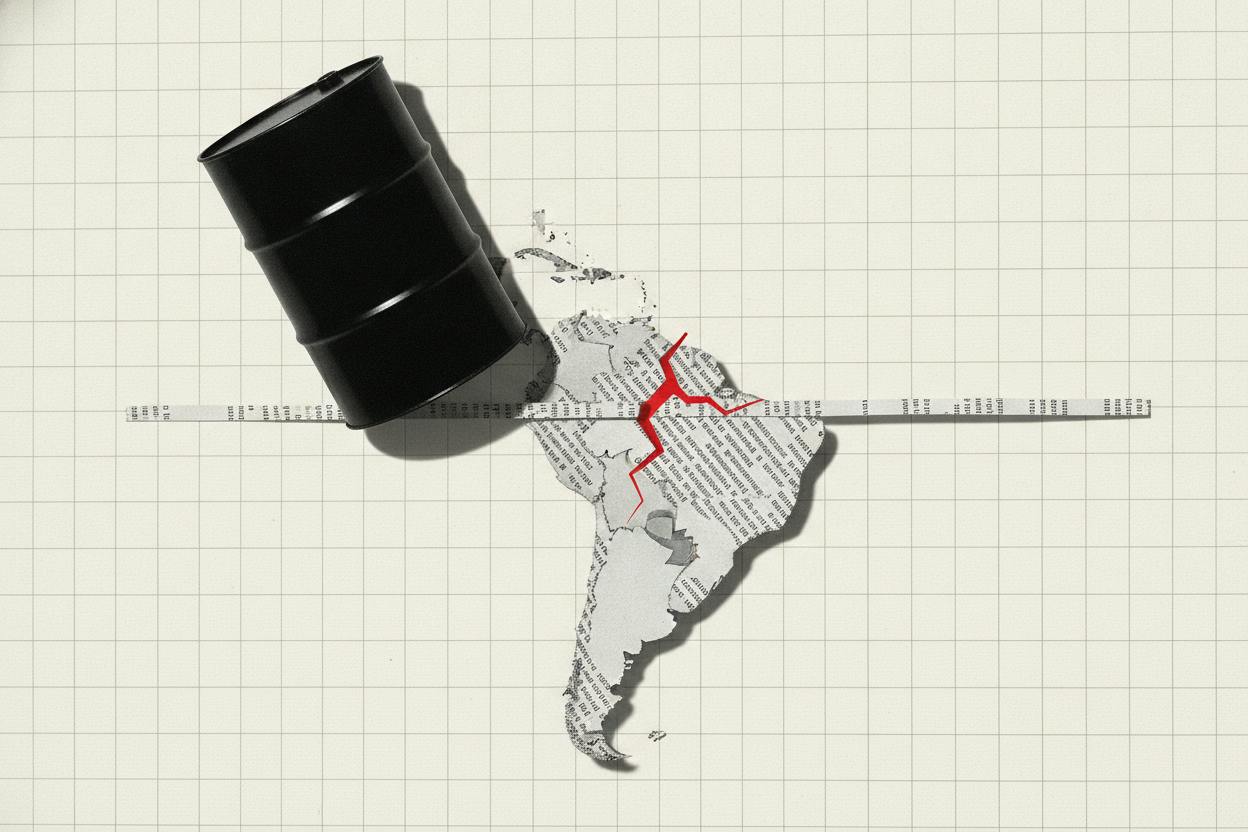
Oil's relentless climb is sending shockwaves through Latin American markets, where investors are juggling the twin threats of higher inflation and fresh political uncertainty in the region's biggest economy. Brent crude, the international benchmark, jumped to $110 a barrel on Tuesday, a level not seen in years, and the fallout was immediate: MSCI's Latin America equity index tumbled 2.2%, while a gauge of regional currencies weakened against the US dollar, according to Reuters.
Why oil hurts Latin America
For most countries in the region, oil is a double-edged sword. While a handful are net exporters—think Mexico, Colombia, and Venezuela—the vast majority, including Brazil, Chile, and Peru, are net importers. When crude prices spike, the cost of fuel, transport, and electricity rises, feeding directly into consumer prices. Food prices also tend to follow, as energy is a major input in agriculture and distribution.
That's a problem for central banks that have spent the past two years battling stubbornly high inflation. Higher energy costs make it harder to bring inflation back to target, and policymakers often respond by keeping interest rates elevated for longer. For investors, that's a double whammy: higher rates tend to compress stock valuations, and they can also attract capital away from riskier emerging-market assets, putting downward pressure on local currencies.
Brazil's election adds to the jitters
Compounding the oil shock is a tightening race in Brazil's presidential election. Polls show the contest between incumbent Jair Bolsonaro and former president Luiz Inácio Lula da Silva narrowing, with Lula still ahead but by a smaller margin than earlier in the campaign. Investors are watching closely because the two candidates have very different economic platforms. Lula has signaled a more interventionist approach to the economy, while Bolsonaro is seen as more market-friendly, though his fiscal record has also raised concerns.
Political uncertainty tends to make investors nervous, and Brazil is the heavyweight of the Latin American index, so any wobble there drags down the whole region. The combination of oil-driven inflation and election jitters is a potent cocktail for market volatility.
What it means for investors
For everyday investors, the immediate takeaway is that Latin American assets are likely to remain choppy in the near term. If oil stays above $100, expect continued pressure on the region's currencies and equities, especially in import-dependent countries. On the flip side, energy exporters like Mexico could see a boost to their fiscal revenues, though that doesn't always translate into stock market gains.
It's also worth remembering that oil's rise is a global story. The same inflationary pressures are being felt in developed markets, and central banks worldwide are grappling with how to respond. As we've noted in our coverage of emerging markets sliding on oil spikes, the ripple effects are broad. Similarly, Indian stocks have slipped as Brent tops $110, showing that no region is immune.
For those with exposure to Latin American funds or ETFs, the key is to stay diversified and not panic. Market selloffs driven by commodity shocks and political headlines can be sharp, but they often reverse once the news cycle moves on. The bigger question is whether oil prices stay elevated, which would force central banks to keep rates higher for longer—a scenario that could weigh on growth and corporate earnings across the region.
What to watch next
Investors will be watching several things in the coming days. First, any fresh signals from OPEC and its allies on production levels, as they could ease or exacerbate the supply crunch. Second, Brazil's election polls, which are likely to keep moving the market. Third, how central banks in the region respond—if they signal a pause in rate hikes, that could provide some relief to stocks.
Also on the radar is the broader energy complex. As we've seen with airlines cutting outlooks due to fuel costs, high oil prices have real-world consequences for corporate profits. And for a sense of how global supply chains are faring, the Baltic Dry Index's recent surge is a reminder that shipping costs remain elevated.
For now, the message for investors is to buckle up. Latin American markets are in for a bumpy ride as long as oil stays hot and Brazil's election remains too close to call.