Oil prices edged higher on Tuesday as renewed attacks on ships and firmer rhetoric from Iran refocused traders' attention on the Strait of Hormuz, one of the world's most critical oil shipping lanes. Brent crude, the international benchmark, climbed to $89.63 a barrel, while US benchmark West Texas Intermediate (WTI) rose to about $83.91.
The gains came despite data from the American Petroleum Institute (API) pointing to a 9.1 million-barrel jump in US crude inventories last week. Typically, a large build in stockpiles signals weaker demand and would push prices down. But geopolitical risk is currently overshadowing supply-and-demand fundamentals.
Why the Strait of Hormuz matters
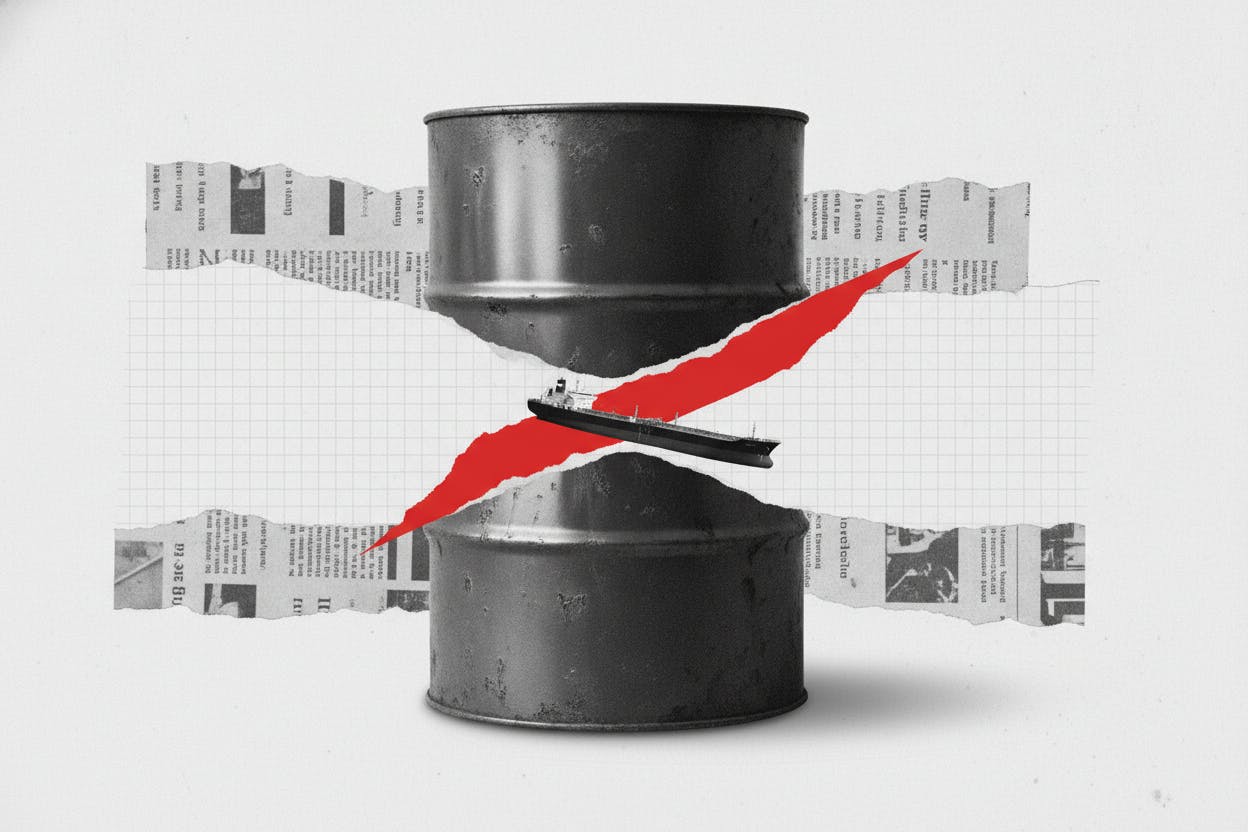
The Strait of Hormuz is a narrow waterway between Iran and Oman that connects the Persian Gulf to the Gulf of Oman and the open ocean. Roughly one-fifth of the world's oil passes through it, making it a vital chokepoint for global energy supplies. When tensions rise in the region, traders worry that shipments could be delayed, rerouted, or even halted, which would tighten supplies and push prices up.
Recent ship attacks and tougher messaging from Iran have put the strait back at the center of market concerns. Flow data showed traffic through the strait dropping to just six vessels on Monday, far below the pre-war norm of 125 to 140 a day. That dramatic decline highlights how quickly the situation can escalate and how sensitive the market is to any sign of disruption.
This is not the first time Hormuz has been in the spotlight. In past conflicts, threats to the strait have caused oil prices to spike, even when actual disruptions were limited. The market doesn't only price how much oil exists, but also what it costs to get it to buyers. Any risk to that journey is quickly reflected in the price.
What the inventory data tells us
The API's report of a 9.1 million-barrel increase in US crude inventories is a reminder that, on a fundamental level, the US has plenty of oil. The API is an industry group, and its weekly numbers are often seen as a preview of the more official data from the US Energy Information Administration (EIA), which is due later this week.
A build of that size suggests that US production and imports are running ahead of demand, which would normally be a bearish signal for prices. But when geopolitical risks are high, traders tend to focus on potential supply disruptions rather than current stockpiles. That's why oil can rise even when inventories are growing.
For everyday investors, this means that oil prices are being driven by headlines and fear, not just by the physical balance of supply and demand. That can make the market more volatile and harder to predict.
What it means for investors
Higher oil prices have a ripple effect across the economy. They can push up gasoline prices, which hits consumers' wallets and can weigh on spending. They also raise costs for airlines, shipping companies, and manufacturers that rely on fuel and petrochemicals. On the flip side, energy producers and oil services companies often see their profits and share prices rise when crude climbs.
For investors with diversified portfolios, the key takeaway is that geopolitical events can create short-term swings in energy prices, but the long-term picture depends on many factors, including global demand, production decisions by major exporters, and the pace of the transition to cleaner energy.
If you hold energy stocks or funds, you might see some benefit from higher prices. But if you're a broad-market investor, you should be aware that sustained high oil prices can add to inflation and potentially influence central bank policy. As we've seen in recent years, inflation and interest rates are closely watched by markets.
The situation in the Strait of Hormuz is fluid, and traders will be watching for any further developments. Talks between the US and Iran have sent mixed signals in the past, and the market remains sensitive to any news that could ease or escalate tensions. For now, the risk premium in oil prices is likely to stay elevated until there's a clear resolution.
As always, it's important to remember that oil prices are just one piece of the investment puzzle. Keeping a long-term perspective and a diversified portfolio can help you weather the ups and downs that come with geopolitical uncertainty.