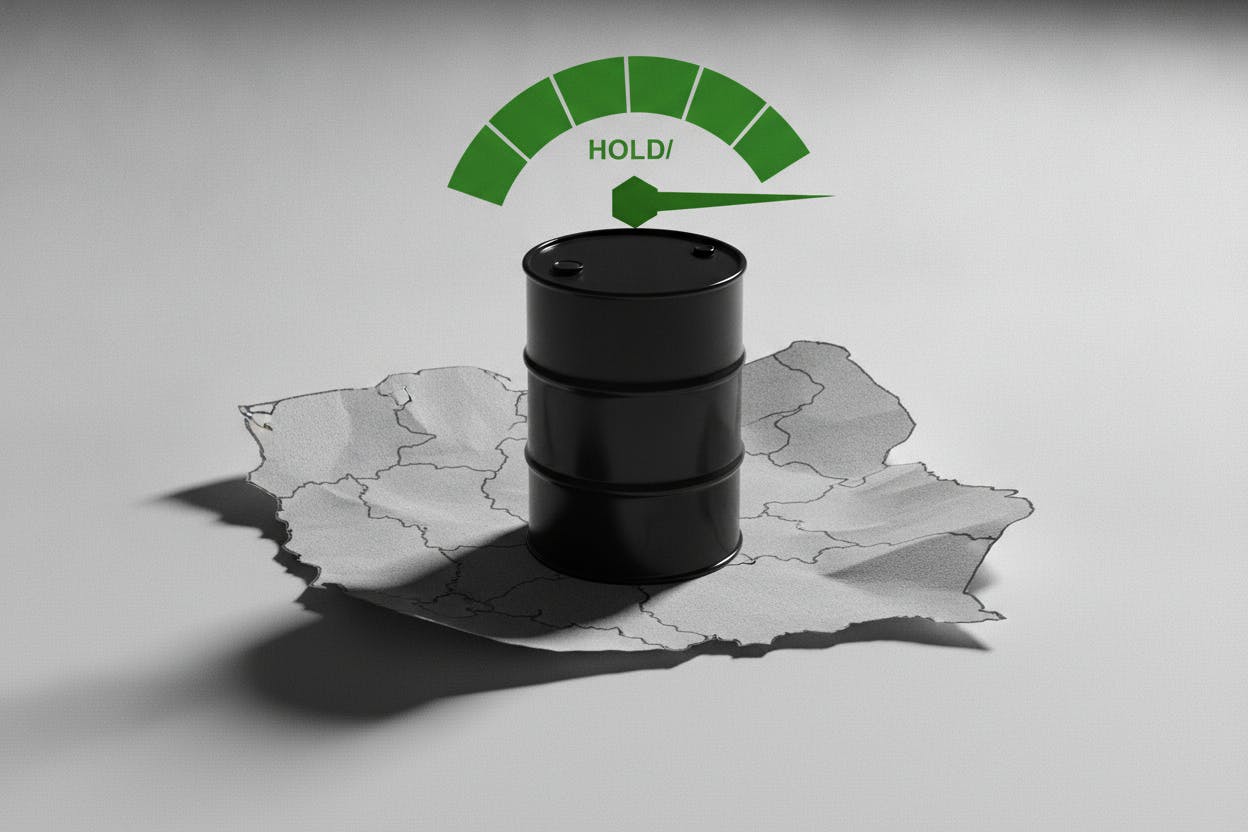
Oil prices briefly climbed above $100 a barrel on Tuesday, and the currencies of two of Europe's biggest energy importers felt the immediate strain. The Polish zloty and the Hungarian forint both edged lower as traders weighed the impact of dearer crude on inflation and trade balances, and as they braced for a key interest-rate decision from Poland's central bank.
The move underscores how the recent jump in oil prices is rippling through smaller European economies that rely heavily on imported energy. For Poland and Hungary, higher oil costs can quickly feed into higher consumer prices and widen their trade deficits, both of which tend to weigh on their currencies.
Why oil matters for the zloty and forint
Poland and Hungary are not major oil producers; they import most of their crude and refined products. When the price of Brent crude spikes, the cost of those imports rises, which can worsen the countries' trade balances. A weaker trade balance often puts downward pressure on a currency, as more local currency is sold to pay for foreign oil.
At the same time, higher energy prices can push up inflation. That is a particular concern for central banks in the region, which have been trying to bring price growth back to target after a period of elevated inflation. If oil stays above $100, it could make the job of taming inflation harder, and that is why currency traders are watching both the oil market and the region's monetary policymakers.
The recent run-up in crude has already been a theme across European markets. As European stocks slipped with Brent returning to $100, investors have been focused on how central banks will respond to the renewed energy shock.
Poland's central bank in the spotlight
All eyes are now on the National Bank of Poland (NBP), which is due to announce its latest rate decision. A Reuters poll of analysts expects the bank to hold its main interest rate at 3.75%, with many pointing to sticky inflation and loose government spending as reasons for caution.
Poland's inflation has been slow to fall back to the central bank's target, and fiscal policy remains expansionary, which could add to price pressures. That combination makes it unlikely that the NBP will cut rates soon, even as some other central banks in the region have begun easing.
PKO Bank, one of Poland's largest lenders, has said the statement accompanying the decision will be closely scrutinised for any hints about the future path of rates. The bank's commentary could move the zloty, especially if it signals a more hawkish or dovish stance than markets expect.
What it means for investors
For everyday investors, the immediate takeaway is that energy prices are once again a driving force in global markets. When oil climbs above $100, it tends to hit currencies of energy-importing countries hardest, and that can have knock-on effects for anyone holding assets in those currencies or investing in companies that depend on them.
A weaker zloty or forint can also make imported goods more expensive for consumers in Poland and Hungary, adding to inflationary pressures. That could influence how quickly the central banks in those countries move on interest rates, which in turn affects borrowing costs for households and businesses.
For investors with exposure to European equities, the oil price is a factor to watch. As oil at seven-week highs puts central banks in the spotlight, the interplay between energy costs and monetary policy is likely to remain a key theme.
The broader picture
The rise in oil prices comes amid ongoing Middle East tensions, which have raised concerns about supply disruptions. While the region is not a major producer, the risk of conflict spreading to key shipping lanes or production facilities is enough to keep a risk premium in the price.
For Poland and Hungary, the situation is compounded by their reliance on energy imports. Both countries have been working to diversify their energy sources, but in the short term they remain vulnerable to swings in global oil prices.
Investors will be watching the NBP decision closely, as well as any further moves in crude. If oil stays above $100, the pressure on the zloty and forint could persist, and central banks may have to reconsider their policy stances.
As European stocks mixed with oil climbing shows, the energy market is influencing sentiment across the region. For now, the message for investors is to keep an eye on both oil and central bank communications, as they are likely to drive currency and bond markets in the coming days.