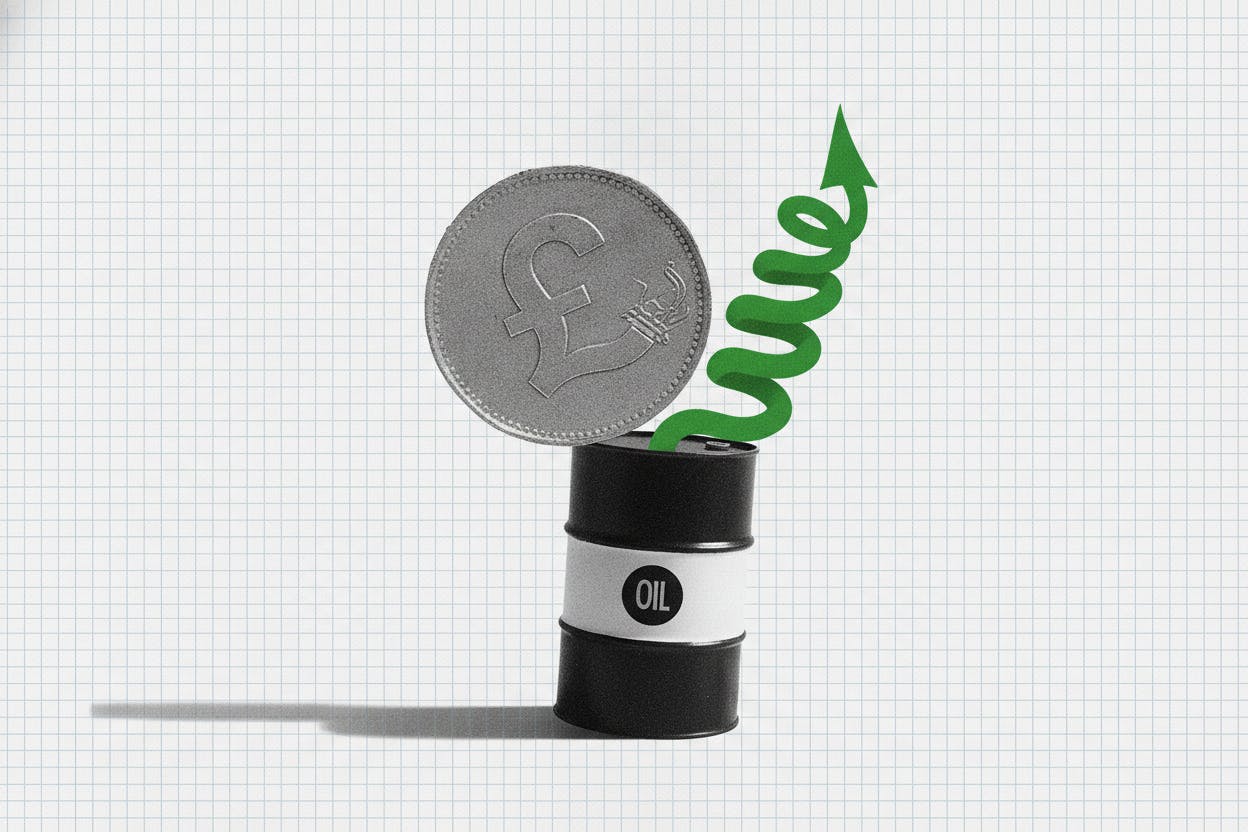
The British pound remained resilient on [day], holding near two-week highs around $1.3545 against the U.S. dollar, even as Brent crude oil climbed above $100 a barrel. Currency markets are increasingly betting that the Bank of England (BOE) will be forced to raise interest rates at least twice by next March to combat stubborn inflation.
For everyday investors, the pound's steadiness in the face of surging energy prices is a notable signal. It suggests that, at least for now, the market sees the UK's inflation problem as one that the central bank is willing to tackle head-on, even if that means tighter monetary policy.
Why oil at $100 matters for the pound
Higher oil prices are a classic double-edged sword for an economy like the UK's. On one hand, they push up the cost of fuel, shipping, and many goods, feeding directly into inflation. That squeezes household budgets and raises operating costs for businesses, which can slow economic growth.
On the other hand, in currency markets, the immediate question is how central banks respond. If the BOE is seen as more aggressive in raising rates than the Federal Reserve, that tends to support the pound, because higher interest rates make a currency more attractive to yield-seeking investors.
That dynamic appears to be at play. UK inflation ticked up to 2.9% in July, and money markets are now pricing in at least two rate hikes by March. This expectation has helped sterling hold its ground even as energy costs spike.
The situation echoes broader global concerns. As oil's climb toward $100 rattles emerging markets, developed economies like the UK are also feeling the pinch, but their central banks have more tools to respond.
What this means for your money
For UK investors, the combination of high oil prices and expected rate hikes has several implications. First, inflation erodes the real return on cash savings, so even if the BOE raises rates, savers may still lose purchasing power if inflation stays above interest rates.
Second, higher rates tend to weigh on bond prices, so existing bond holdings could see their market value fall. However, new bonds and some savings accounts may offer better yields as rates rise.
Third, for those with mortgages or loans tied to the BOE's base rate, additional hikes would mean higher monthly repayments. The market's expectation of two hikes by March suggests borrowers should prepare for that possibility.
For investors with international exposure, a firmer pound can reduce the value of overseas earnings when converted back to sterling. But it also makes imports cheaper, which could help offset some of the inflation pressure from oil.
Global context and what to watch
The pound's resilience is part of a broader currency market story. The dollar has been under pressure recently, partly due to expectations that the Fed may pause its own rate-hiking cycle. As some analysts warn a Fed pause could push long-term Treasury yields higher, the dollar's direction remains uncertain.
Meanwhile, oil's surge above $100 is a global phenomenon, affecting everything from Asian markets to currency markets in North America. For the pound, the key will be whether the BOE follows through on the rate hikes that markets are pricing.
Investors should keep an eye on upcoming UK inflation data, BOE speeches, and any shifts in oil prices. If oil keeps climbing, the BOE may feel even more pressure to act, which could support the pound further. Conversely, if oil prices retreat or the UK economy shows signs of weakness, the pound could give back its gains.
The bottom line
Sterling's ability to hold near two-week highs despite $100 oil is a sign that markets are focused on central bank policy rather than the immediate economic drag of higher energy costs. For now, the BOE's expected rate hikes are providing a floor under the currency.
But this is a delicate balance. If inflation continues to rise, the BOE may have to hike more aggressively, which could hurt economic growth. If it holds back, the pound could weaken. Either way, investors should stay informed and consider how these moves might affect their portfolios.