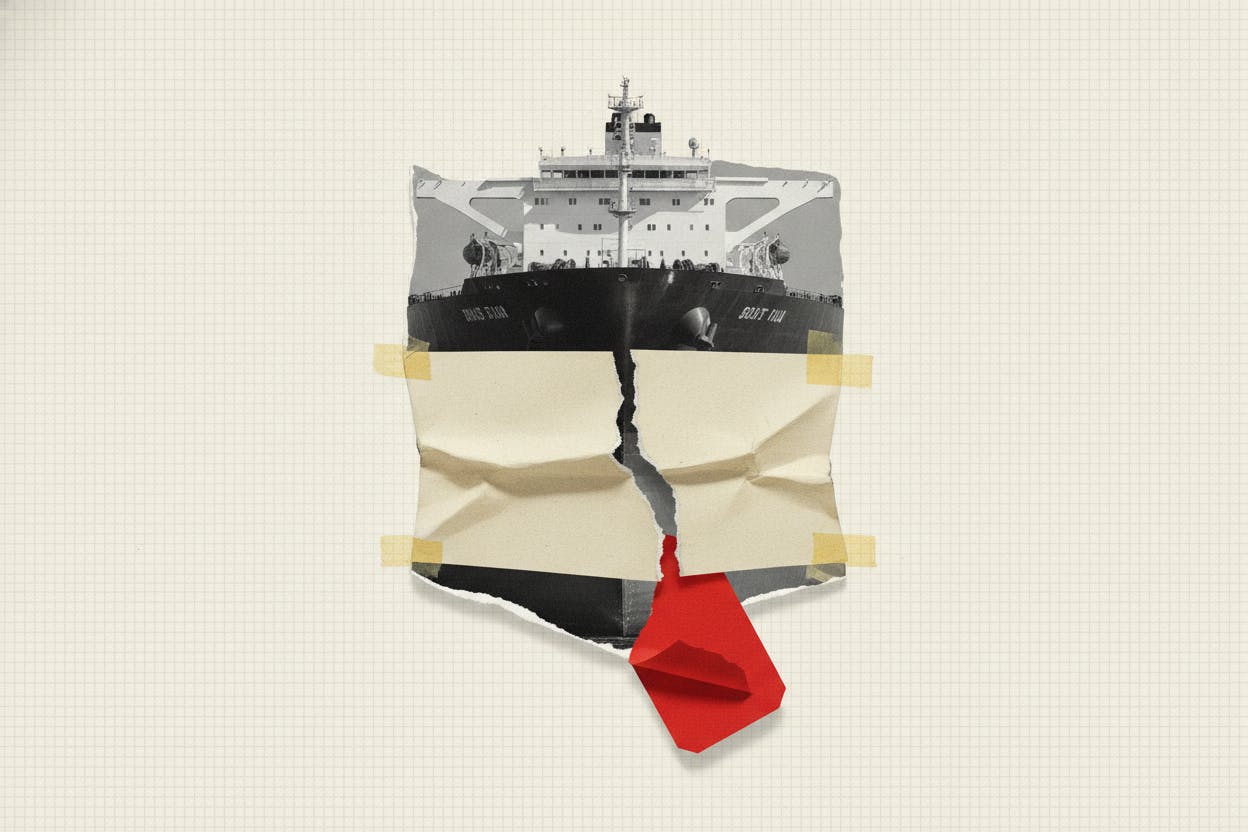
Oil prices slid on Tuesday as tankers continued to transit the Strait of Hormuz without major disruption, prompting traders to unwind the risk premium that had built up after a recent security incident near Oman. Brent crude settled at $71.99 a barrel, down 4.34%, while West Texas Intermediate (WTI) ended at $69.23, down 3.74%.
The move marks a sharp reversal from the brief spike in prices that followed reports of a vessel being struck near Oman. Two US officials told Reuters the incident involved Iranian fire, and Iran has warned that safety outside designated Hormuz routes "is not guaranteed." But the market's focus has shifted to what matters most for pricing: crude is still flowing.
Supply resilience trumps geopolitical noise
Shipments through the Strait of Hormuz have risen to their highest level since the US-Israeli conflict with Iran began at the end of February, according to data cited by Reuters. That resilience is changing the conversation from disruption to oversupply, analysts said.
Adding to the supply picture, Saudi Aramco, the Saudi state oil giant, has resumed loadings at its Ras Tanura terminal after a nearly four-month halt. LSEG shipping data shows two very large crude carriers (VLCCs) taking on barrels at the facility, with another waiting nearby. VLCCs are the largest type of oil tanker, capable of carrying up to 2 million barrels of crude each.
The restart of Ras Tanura loadings is significant because it signals that Saudi Arabia is willing to put more barrels into a market already awash with supply. For context, the terminal is one of the world's largest crude export facilities, and its prolonged closure had been a supportive factor for prices.
Demand uncertainty adds to the pressure
On the demand side, the picture remains murky. Sparta Commodities, a trading firm, noted that China — the world's largest crude importer — has not yet shown a clear pickup in buying. That lack of demand visibility, combined with rising supply, has made traders more willing to sell.
The day's selloff looks less like panic and more like traders marking down "just in case" pricing that had been built into futures contracts. When tankers keep transiting Hormuz and Saudi exports restart, traders typically shave off the extra "disruption insurance" baked into prices.
What it means for investors
For everyday investors, the drop in oil prices is a reminder of how quickly geopolitical risk premiums can evaporate when actual supply disruptions fail to materialize. The unwind usually hits the front of the futures curve first — the nearest Brent contracts and the gaps between near-term and later contracts — because those prices reflect whether refiners need to pay up for immediate barrels.
If flows stay steady, it can cool near-term energy inflation pressure without necessarily changing longer-term expectations about global supply and demand. That could be a positive for sectors that benefit from lower input costs, such as airlines and transportation companies, while weighing on energy stocks.
Earlier this week, US stocks edged higher as oil retreated, suggesting that equity markets are welcoming the relief from energy costs. The broader market backdrop also includes a US dollar that has been edging higher as traders brace for a deluge of economic data and Federal Reserve remarks.
For those invested in energy stocks, the recent volatility in oil prices underscores the importance of diversification. While the sector can offer attractive dividends and inflation protection, it is also highly sensitive to shifts in supply and demand dynamics that can change rapidly.
Looking ahead, investors will be watching for any further developments in the Strait of Hormuz, as well as demand signals from China and other major economies. The normalization of shipping through the strait has already pushed Brent to levels not seen in months, and if the trend continues, further downside could be in store.
For now, the message from the oil market is clear: when tankers keep moving, prices tend to follow.