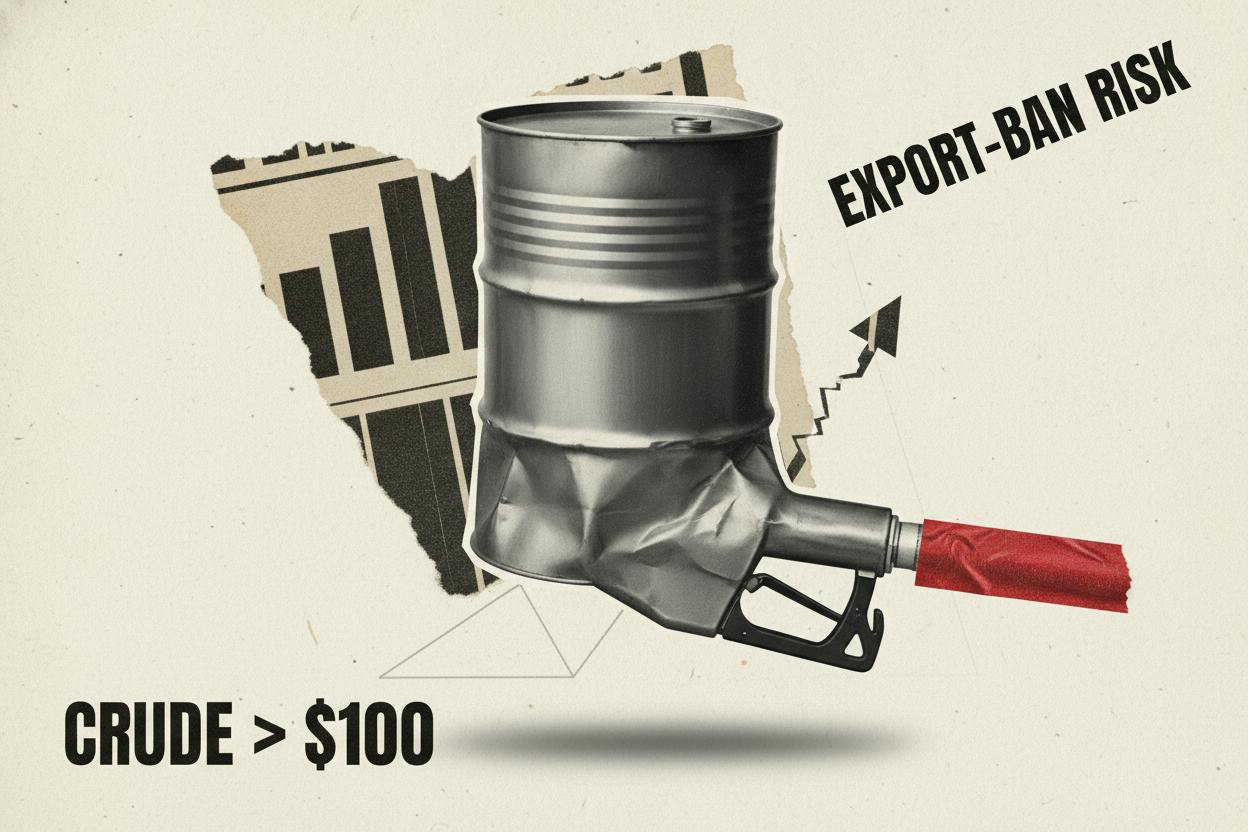
Oil prices surged past the $100 mark on Tuesday, with Brent crude jumping to $101.32 a barrel, as energy stocks rallied on news that the Trump administration is considering a ban on US diesel exports. The report, from Reuters, sent a jolt through the market, underscoring how quickly geopolitical and policy headlines can move the energy complex.
Why the diesel headline matters
Diesel is a key refined product made from crude oil, used to power trucks, ships, farm equipment, and heating systems. When a major exporter like the United States restricts diesel exports, the immediate effect is that more of that fuel stays at home, which could help lower domestic prices. But for the rest of the world—especially Europe, which relies heavily on imported diesel—the move would mean tighter supplies and potentially higher prices, as buyers compete for a smaller pool of available fuel.
This kind of policy shock can also reshape refining economics. Refiners earn money on the difference between what they pay for crude oil and what they get for the fuels they produce, a margin known as the crack spread. If export restrictions push diesel prices higher relative to crude, refiners that can still sell domestically may see their margins improve, while those that depend on export markets could face headwinds. The market's reaction on Tuesday suggests investors are betting that some refiners stand to benefit from the potential policy change.
Energy stocks ride the oil wave
The jump in crude prices provided a broad lift to energy shares, as investors priced in higher revenues for oil producers and service companies. The rally was part of a wider trend that has seen energy stocks outperform in recent sessions, even as other sectors have struggled with rising bond yields and inflation concerns. In fact, stocks drifted lower as oil jumped and Treasury yields fell, highlighting the mixed signals in the market.
Energy companies have been a bright spot for investors looking for inflation hedges, as higher oil prices often translate into stronger cash flows and dividends. However, the sector is also sensitive to policy shifts, and a diesel export ban could have uneven effects across the industry. Refiners with strong domestic sales networks might benefit, while those with significant export exposure could see their margins squeezed.
What it means for investors
For everyday investors, the move above $100 is a reminder that oil remains a volatile and politically charged asset. The price of crude affects not just energy stocks, but also the broader economy, influencing inflation, consumer spending, and central bank policy. Higher fuel costs can eat into household budgets and corporate profits, which is why European stocks slid as oil and bond yields kept climbing earlier in the week.
The diesel export ban talk also highlights the importance of refining margins, a concept that can be hard to grasp but is crucial to understanding energy company earnings. When margins widen, refiners make more money per barrel of oil processed, which can boost their stock prices. Conversely, when margins narrow, profits can fall even if oil prices are high.
Investors should also watch how the policy debate unfolds. A ban is not yet in place, and the administration may choose a different course, such as negotiating with allies or imposing only a partial restriction. The uncertainty itself can create volatility, as seen in the sharp moves on Tuesday.
Broader market context
The oil rally comes at a time when markets are already grappling with rising bond yields and inflation. The 10-year Treasury yield recently hit levels not seen in decades, putting pressure on growth stocks and banks. In this environment, energy has been one of the few sectors to gain, as bond yields hit TSX banks, but AI and oil kept tech and energy afloat in Canada. Similarly, German stocks slipped as energy costs and diesel politics bit, showing that the issue is global.
For investors, the key takeaway is that oil prices are influenced by a complex mix of supply, demand, geopolitics, and policy. A single headline can move the market, but the long-term trend depends on fundamentals like global economic growth, production levels, and the pace of the energy transition. As always, diversification remains a prudent strategy, as energy stocks can be volatile and are not immune to policy risks.
Looking ahead
Traders will be watching for any official confirmation or denial from the White House regarding the diesel export ban. They will also keep an eye on weekly US inventory data, which can provide clues about supply and demand. If the ban is implemented, expect further divergence between regional diesel prices and potential knock-on effects on inflation and central bank decisions.
For now, the message is clear: oil is back above $100, and energy stocks are feeling the love. But as with any policy-driven move, the sustainability of the rally is uncertain. Investors should stay informed and consider how energy price movements fit into their broader portfolio strategy.