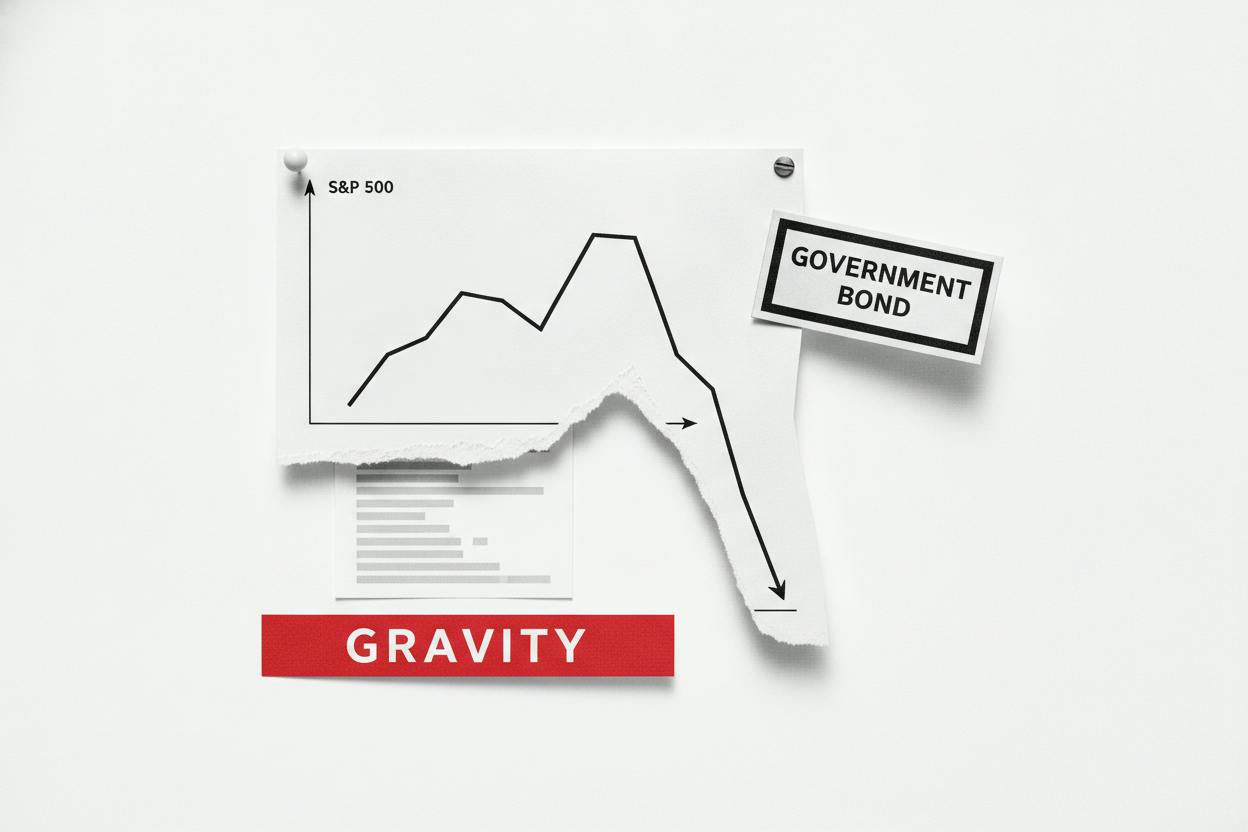
British brokerage Panmure Liberum has issued a stark warning for US stock investors: the S&P 500 could sink back to 5,000 by the end of 2027. That would represent a decline of more than 35% from the index's last close of 7,722.72, a level that reflects years of strong gains driven by resilient corporate earnings and investor optimism.
The firm's strategist, Joachim Klement, argues that the current bull market is vulnerable to a sustained rise in government bond yields and interest rates. As borrowing costs climb, the math for equities becomes less favorable, potentially forcing a significant repricing of stocks.
Why higher yields hurt stocks
To understand the warning, it helps to look at how bond yields affect stock valuations. When government bonds—like US Treasuries—offer higher yields, they become more attractive to investors seeking relatively safe returns. Stocks, which carry more risk, must then offer a higher expected return to compete. That higher "required return" means investors are willing to pay less for a given stream of future earnings, pushing stock prices down.
This dynamic has been a recurring theme in markets over the past couple of years. Even as inflation has lingered and the Federal Reserve has kept interest rates elevated, US stocks have shown remarkable resilience. That resilience has helped keep valuations high, but Panmure Liberum believes the tide may be turning. If bond yields keep climbing, the pressure on equities could intensify.
Recent market action already hints at this tension. Treasury yields have climbed even in the face of weak jobs data, as some Fed officials point to market-driven tightening. Meanwhile, yields near 6% pose an asymmetric risk for bond buyers, complicating the outlook for both fixed income and equities.
What a 35% drop would mean
A fall to 5,000 would erase years of gains and mark a major correction—far deeper than the typical 10% pullback that investors occasionally see. For context, the S&P 500 has not traded at 5,000 since early 2024, when the index was still climbing toward record highs. Such a decline would likely coincide with a broader economic slowdown, as higher rates tend to cool borrowing, spending, and corporate investment.
Panmure Liberum's forecast is notably more bearish than many Wall Street strategists, who generally expect modest gains over the next couple of years. But the brokerage is not alone in flagging the risk. Q4 tailwinds meet higher yields and AI spending bets, creating a complex backdrop where optimism about technology and productivity coexists with concerns about valuation and monetary policy.
What it means for everyday investors
For ordinary investors, this kind of forecast is a reminder that stock markets do not move in a straight line. Even if the S&P 500 eventually reaches 5,000, the path could be volatile, with sharp swings along the way. Diversification—holding a mix of stocks, bonds, and other assets—remains a key strategy for weathering such uncertainty.
It's also worth noting that a drop of this magnitude would not happen overnight. The forecast stretches to the end of 2027, giving investors time to adjust their expectations. However, those who are heavily concentrated in US large-cap stocks might want to consider how they would react to a prolonged downturn.
Panmure Liberum's view is just one of many, and forecasts can be wrong. But the underlying logic—that higher yields and rates can compress valuations—is a fundamental principle that has played out many times in market history. As gilt yields retreat in the UK, the global bond market remains a key variable to watch.
For now, the S&P 500 continues to trade near record levels, and many investors remain optimistic. But the brokerage's warning serves as a useful counterpoint, highlighting the risks that could emerge if the bond market keeps pushing yields higher. Whether the index ultimately falls to 5,000 or not, the message is clear: the era of ultra-low rates and cheap money is over, and stocks will need to earn their keep.