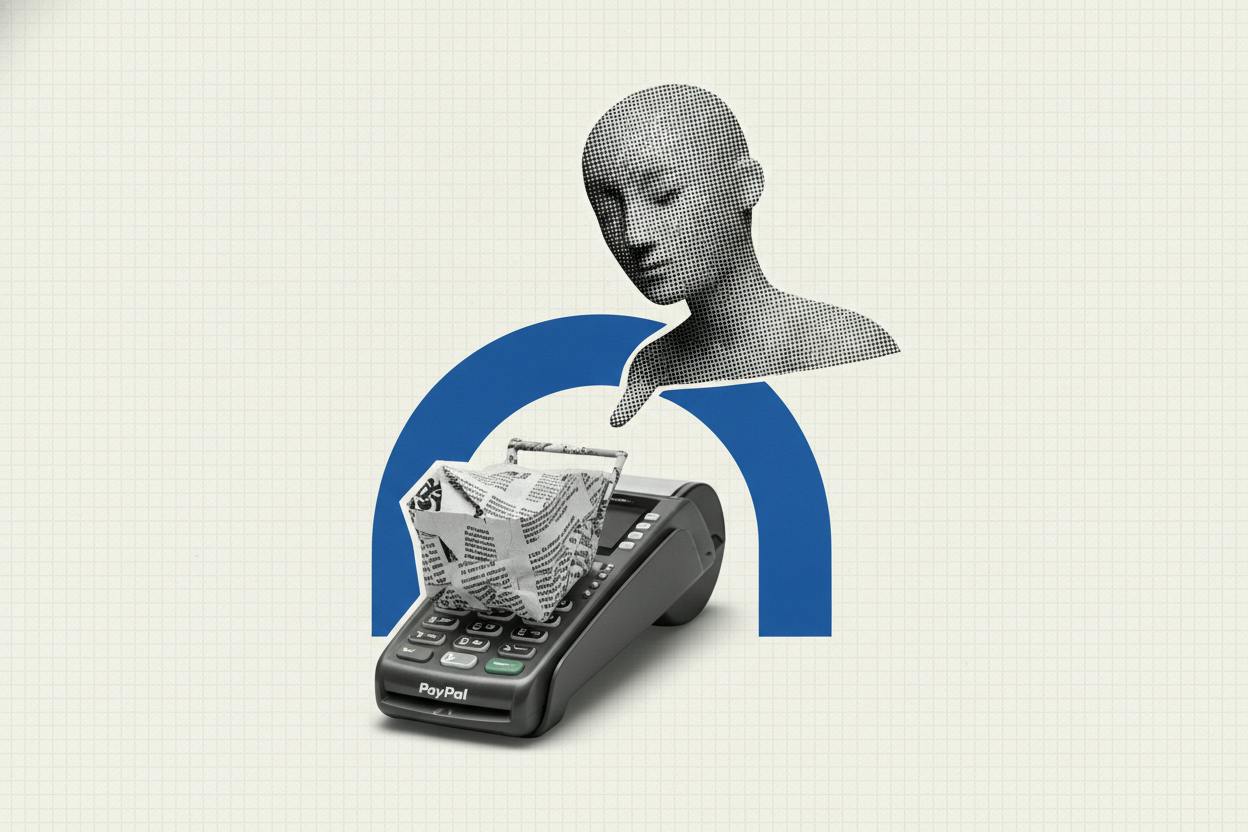
PayPal and Meta have announced a partnership that will place Meta's Muse AI shopping agents directly into the checkout experience for PayPal merchants around the world. The idea is straightforward: let an artificial intelligence assistant help shoppers figure out what they want, answer their questions, and then complete the purchase — with PayPal processing the payment in the background across its merchant network.
The news lands as the financial sector trades cautiously. The Financial Select Sector SPDR ETF, a widely followed basket of large US financial stocks, slipped 1.8% in Tuesday afternoon trading, a reminder that broad market sentiment can overshadow company-specific announcements in the short term.
What exactly is being built
Meta's Muse is an AI agent designed to act like a shopping companion. Rather than clicking through filters and product pages, a shopper could describe what they need in plain language and let the agent surface options, answer follow-up questions, and guide them toward a purchase decision. PayPal's role is the plumbing underneath: it handles the actual money movement, fraud checks and merchant settlement that make a completed sale possible.
For PayPal, the appeal is about conversion. Online shopping carts are notoriously fragile. Every extra step, every unanswered question, every moment of hesitation is a chance for a shopper to close the tab and walk away. Payments companies generally earn their revenue when a transaction actually completes, so anything that reduces friction between "I'm interested" and "I've paid" is directly tied to their business model.
AI shopping assistants are part of a broader push across technology and retail to use large language models to smooth the customer journey. Companies in this space are betting that consumers will increasingly delegate product research to software, and that whoever controls that conversational layer can influence where the money gets spent.
Why payments firms care about the checkout moment
PayPal sits at a strategic crossroads in digital commerce. It has a massive base of merchants and consumers, but it faces competition from card networks, buy-now-pay-later providers, and big tech platforms that want to own more of the transaction. Partnering with Meta gives PayPal a way to stay embedded in the shopping experience even as the front end of commerce shifts toward AI-driven interfaces.
Meta, meanwhile, has been working to turn its family of apps — Facebook, Instagram, WhatsApp — into places where commerce happens, not just where people scroll. An AI agent that can help someone buy something is a natural extension of that ambition. If Muse can shorten the distance between seeing a product and paying for it, Meta has a stronger pitch to advertisers and merchants alike.
The tie-up also reflects a wider pattern in financial services: established players are racing to integrate AI tools rather than build them from scratch. Recent moves in the sector, from AI tools aimed at financial firms to large-scale investment partnerships like the JPMorgan and Qatar sovereign fund tie-up, show how quickly AI and big capital are reshaping how financial companies operate and compete.
What it means for investors
For everyday investors, the PayPal-Meta deal is less about a single headline number and more about a strategic signal. Payments companies are valued partly on how much volume flows through their networks and how much of that volume converts into revenue. If AI agents genuinely make checkout easier, they could lift completion rates over time — a slow-burn positive rather than an overnight earnings jolt.
It's also worth watching how this fits into the competitive landscape. If AI shopping agents become a standard part of how people buy online, the companies that own the assistant — and the payment rails behind it — could gain meaningful leverage. That makes partnerships like this one a way for both PayPal and Meta to hedge against being disintermediated by rivals.
Investors should keep a few things in mind. First, announcements of this kind often precede a long rollout, and the financial impact may take quarters to show up in results. Second, the broader financial sector is currently sensitive to interest rate expectations and economic data, as the dip in the financial sector ETF suggests. Company-specific news can get lost in that noise.
Third, the consumer backdrop matters. Recent data showed US retail sales holding up better than expected, which is a supportive sign for any business tied to online spending. If shoppers keep spending, tools that make buying easier have a larger pool to work with.
The bigger picture
This partnership is a small but telling example of two trends colliding: the maturing of AI agents as practical tools, and the ongoing battle for control of the digital checkout. PayPal gets a shot at higher conversion and deeper engagement; Meta gets a more transactional role in commerce. Whether shoppers actually embrace an AI assistant at the moment of payment is the open question — and the answer will determine whether this becomes a meaningful revenue driver or just another feature.
For now, the deal is a reminder that in payments, the winners are often the companies that make the final step — paying — as invisible as possible.