Italian tiremaker Pirelli has unveiled plans to invest $1.0 to $1.2 billion over several years to boost its manufacturing footprint in the United States. The announcement comes alongside a significant boardroom shake-up: the Italian government has moved to limit the influence of Pirelli's largest shareholder, China's Sinochem, while reaffirming Andrea Casaluci as chief executive officer.
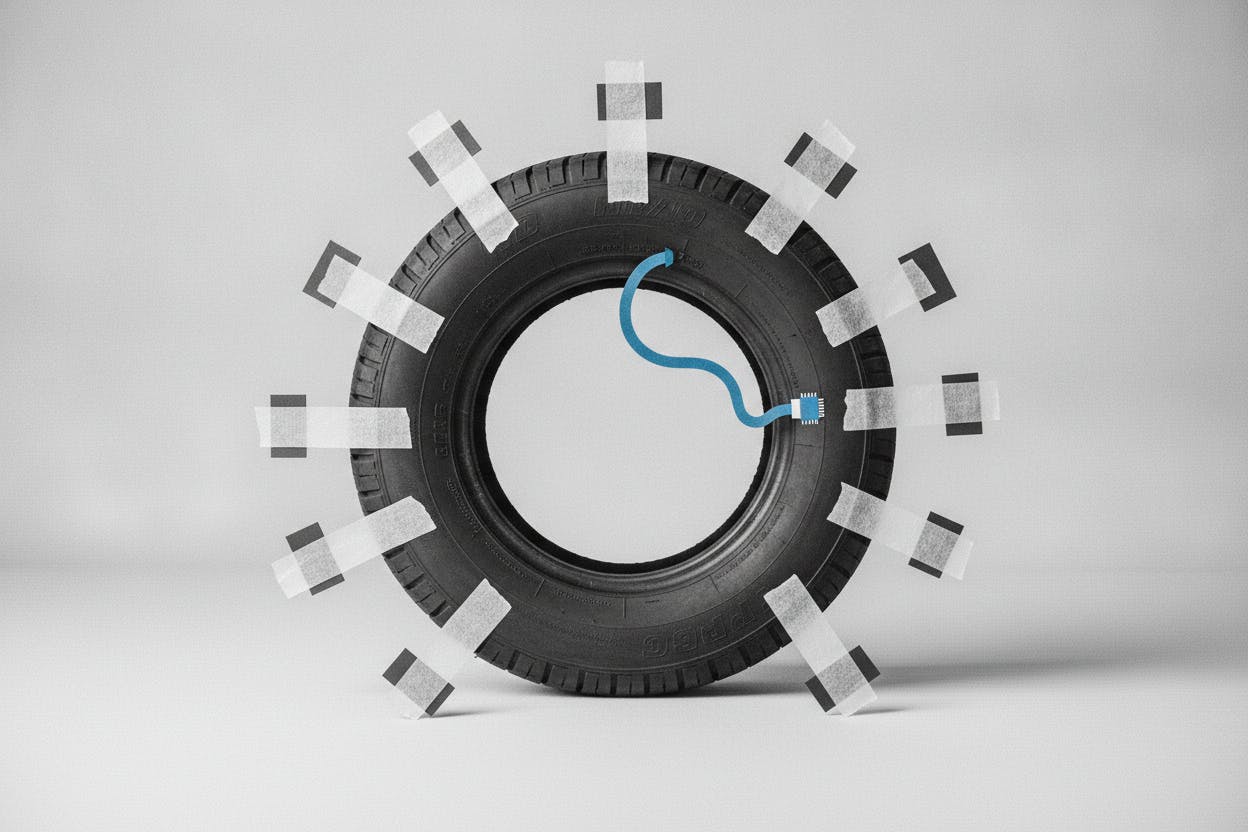
The investment proposal, which has been presented to Pirelli's board, focuses on expanding production capacity at the company's existing plant in Rome, Georgia. A key part of the plan involves ramping up output of so-called 'Cyber Tyres' — tires embedded with sensors that can transmit data to vehicles, enabling real-time monitoring of road conditions, tire pressure, and wear. Pirelli has previously indicated that this high-tech product line would be manufactured at the Georgia facility.
The board is expected to vote on the proposal at a future meeting, but the strategic direction is clear: Pirelli is doubling down on the US market at a time when global trade tensions and supply chain disruptions are prompting many manufacturers to localize production.
Why the US Bet Matters
For Pirelli, the US is a critical growth market. The company is known for its premium and high-performance tires, which are fitted on luxury cars, sports cars, and SUVs from brands like BMW, Mercedes-Benz, and Ferrari. Expanding US production allows Pirelli to serve American automakers and consumers more efficiently, reduce exposure to currency fluctuations, and hedge against potential tariffs or trade barriers.
The investment also aligns with broader trends in the auto industry. As electric vehicles (EVs) gain market share, tiremakers are developing specialized products that handle the heavier weight and higher torque of EVs. Pirelli's Cyber Tyre technology fits into this shift, offering data that can help optimize vehicle performance and safety.
From an investor's perspective, the US expansion signals that Pirelli sees long-term demand in North America as robust enough to justify a billion-dollar capital outlay. However, such investments also carry risks: if the US economy slows or auto sales decline, Pirelli could be left with excess capacity.
The Boardroom Reset: Italy vs. Sinochem
The investment news is intertwined with a political and corporate governance story. Sinochem, a Chinese state-owned chemicals and energy conglomerate, is Pirelli's largest shareholder, holding a 37% stake. Since acquiring the stake in 2015, Sinochem has had significant influence over the company's strategy and board appointments.
But the Italian government, citing national security concerns, has moved to curb that influence. Under Italy's 'golden power' legislation — which allows the government to block foreign takeovers in strategic sectors — Rome has imposed new conditions on Sinochem's role. According to reports, the government has limited Sinochem's ability to appoint board members and influence key decisions, effectively reducing its control over Pirelli's direction.
At the same time, the board has reaffirmed Andrea Casaluci as CEO, providing continuity in leadership. Casaluci, who took the helm in 2023, has been pushing a strategy focused on premium tires, technology, and geographic diversification.
This governance reset is significant for investors. It reduces the risk that Pirelli's strategy could be swayed by Chinese state interests, which might prioritize different goals than maximizing shareholder value. It also makes Pirelli a more straightforward investment for Western funds that may have been wary of Chinese influence.
What It Means for Investors
For everyday investors, the Pirelli story touches on several themes worth watching.
Geopolitical risk is real. The tension between Italy and Sinochem shows how cross-border ownership can create uncertainty. Companies with large state-owned shareholders from geopolitically sensitive countries may face regulatory headwinds. Pirelli's situation is a reminder to check who controls the companies in your portfolio.
US manufacturing is in vogue. Pirelli is not alone in boosting US production. Many global manufacturers are 'reshoring' or 'nearshoring' to reduce reliance on Asia and avoid supply chain disruptions. This trend could benefit US industrial real estate, logistics, and local economies, but it also means higher capital spending for companies.
Tech-enabled tires are a growth niche. Cyber Tyres represent a small but fast-growing segment of the tire market. As vehicles become more connected, tires that can communicate with onboard systems may become standard. Pirelli's early investment could give it a competitive edge, but it's still a nascent technology.
Dividends and debt. Pirelli has historically paid a dividend, and the company's cash flow is supported by its premium positioning. However, a $1 billion-plus investment plan will require financing. Investors should watch how Pirelli funds this — whether through debt, cash flow, or asset sales — as it will affect future returns.
In the near term, the market will focus on the board's approval of the investment plan and any further details on the Cyber Tyre rollout. Longer term, the success of the US bet will depend on auto demand, trade policy, and Pirelli's ability to execute.
For context, Pirelli's move comes as other companies are also making big strategic bets. For instance, Shell is nearing a $1 billion sale of its South African fuel stations to Adnoc, while Jack in the Box is closing weak stores to tackle $1.6 billion in debt. These stories all highlight how companies are reshaping their portfolios in response to changing market conditions.
Pirelli's boardroom reset and US investment plan are a clear signal: the company is betting on America, and it's doing so with a freer hand, less constrained by its largest shareholder.