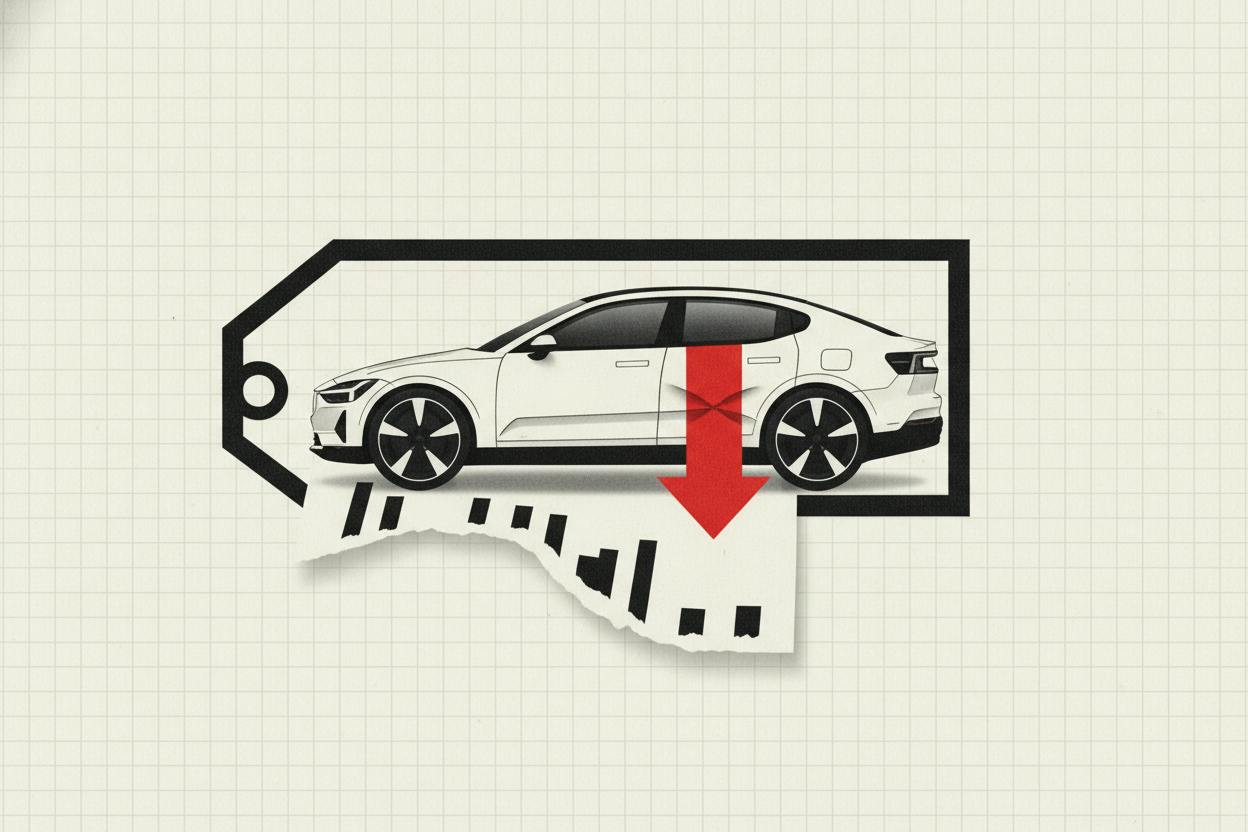
Polestar, the Swedish electric vehicle maker backed by Volvo and Geely, delivered a sobering quarterly update that underscores the brutal economics of the EV price war. For the three months ended September 30th, the company reported a net loss of $403 million, worse than the same period a year earlier, even as it sold slightly more cars.
Revenue dropped 14% to $642 million, while retail deliveries inched up just 1% to 14,371 vehicles. The real red flag was profitability: gross margin tumbled to negative 18.1% from negative 6.1% a year ago. In plain terms, Polestar is now losing more than 18 cents on every dollar of revenue from selling cars, before it even pays for sales, marketing, or research.
Why margins are bleeding
Polestar attributed the margin collapse to a combination of factors: aggressive discounting to move inventory, a lower share of deliveries of its higher-margin Polestar 3 SUV, an unfavorable geographic mix, and accounting adjustments tied to guaranteed resale values in North America. That last item is a reminder that when automakers promise to buy back vehicles at a set price, those guarantees can come back to bite if used-car values fall.
The broader picture is familiar to anyone following the EV sector. As competition intensifies—especially from Tesla's repeated price cuts and a wave of affordable Chinese models—manufacturers have slashed prices to protect market share. But cutting prices to shift metal can backfire: if you sell more cars at a loss, you simply burn cash faster. Polestar's experience is a textbook example of that dynamic.
This is not an isolated story. Other EV makers have faced similar margin pressure, as we've seen with Xiaomi's EV losses and the broader challenges in the sector. Even legacy automakers are feeling the pinch, with Hyundai and Tata planning price hikes in India to offset costs.
A cash crunch and a US exit
Polestar's financial position is now under the microscope. The company had $653 million in cash as of September 30th. With a quarterly net loss of $403 million, that cash buffer could evaporate quickly if losses continue at this pace. The company also warned of additional costs from winding down most of its US business, after authorities barred it from selling new cars starting with model-year 2027. That regulatory blow effectively cuts off a key market and adds restructuring expenses.
The timing of the earnings release didn't help confidence. Polestar delayed its report from November 5th to allow more time to close the books, a move that often spooks investors. The company still reaffirmed its guidance for low- to mid-single-digit volume growth, but with margins this weak, hitting that target may only deepen losses.
What it means for investors
For everyday investors, Polestar's numbers are a stark lesson in unit economics. A negative gross margin means the company loses money on every vehicle it sells, before overhead costs. That's not sustainable without either raising prices, shifting to higher-margin models, or finding other sources of revenue. Polestar's hope is that the Polestar 3 and future models will improve the mix, but that's a bet on execution in a fiercely competitive market.
The key metric to watch is cash runway. With $653 million in the bank and a $403 million quarterly burn, Polestar may need to raise capital or restructure its debt sooner rather than later. The US wind-down adds to the urgency. Investors should also keep an eye on whether the company can improve gross margins in the coming quarters, as that will determine whether it can survive without a major dilution or bailout.
Polestar's struggles are part of a broader trend in the EV industry, where record margins in some sectors contrast sharply with the pain in electric vehicles. The company's fate will be a test of whether a niche EV brand can thrive in a market that increasingly rewards scale and cost control.
For now, the message is clear: Polestar is in a race to fix its margins before its cash runs out. Investors should treat this as a high-risk situation, not a value opportunity.