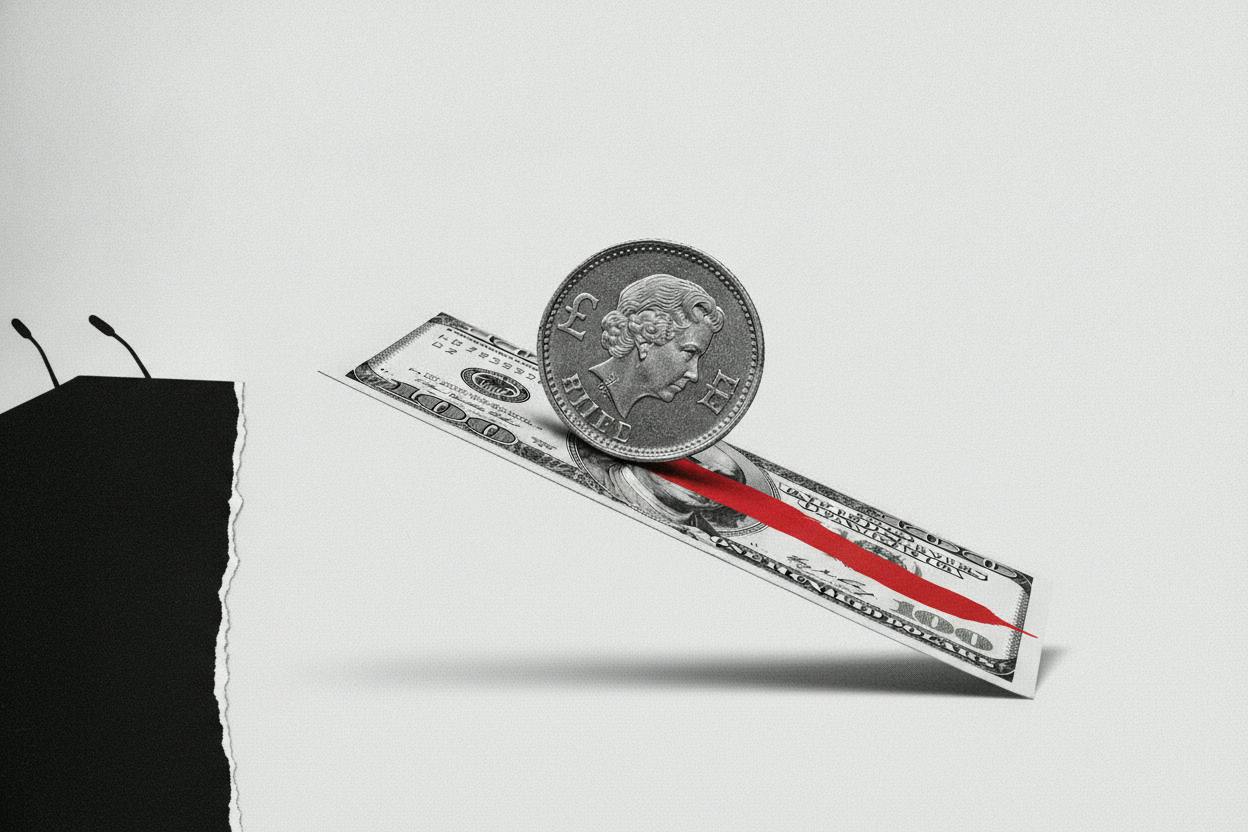
The British pound slipped to about $1.3226 on Tuesday, hovering near a three-month low, as a stronger US dollar set the tone and traders waited for Labour leader Andy Burnham's first conference speech. The move extends a recent slide for sterling, which has struggled to gain traction against a greenback buoyed by higher US bond yields and firm oil prices.
While the dollar's strength is the immediate driver, UK politics is adding a second layer of uncertainty. Reuters reported that finance minister John Healey's pledge of “fiscal responsibility” helped steady gilts – UK government bonds – after a period of volatility. That reassurance appears to have calmed bond markets, but currency traders are still watching for signals from Burnham's speech, which could shape expectations for fiscal policy and economic direction.
Why the dollar is winning
The dollar has been on a firm footing recently, supported by a resilient US economy and expectations that the Federal Reserve will keep interest rates higher for longer. Higher US bond yields make dollar-denominated assets more attractive, drawing global capital toward the greenback. Firm oil prices add to the dollar's appeal, as the US is a major energy exporter.
For the pound, this creates a headwind. When the dollar strengthens broadly, currencies like sterling often weaken in response. The pound's slide against the dollar is part of a wider trend, as seen in other currencies like the Indian rupee, which recently slipped past 96 per dollar amid oil surges and outflows. Similarly, the Australian dollar barely moved after the Reserve Bank's 15-year high rate hike, showing how dominant the dollar's strength has become.
Yet sterling has shown some resilience against its European counterpart. The pound rose against the euro for a third straight session as the single currency weakened, suggesting that the pound's weakness is more about the dollar than about UK-specific problems.
UK politics and the fiscal backdrop
Healey's fiscal pledge appears to have reassured investors who were worried about the government's borrowing plans. Gilts steadied after the comments, which is a positive sign for the UK's borrowing costs. When gilts are stable, it signals that investors are confident in the government's ability to manage its finances, which in turn supports the pound.
However, the upcoming speech from Andy Burnham, the Labour leader, adds an element of uncertainty. Traders will be listening for any hints about tax, spending, or economic strategy that could affect the UK's fiscal outlook. Political events can move currencies, especially when they touch on economic policy.
This is not the first time UK politics has influenced the pound. Earlier this year, the pound rebounded as traders bet on a Bank of England rate hike, showing how monetary policy and political signals intertwine. Now, with the Bank of England's next move uncertain, the market is sensitive to any political developments that could shift the balance.
What it means for investors
For everyday investors, a weaker pound has mixed implications. If you hold US stocks or dollar-based investments, a lower pound means your overseas returns are worth more in sterling terms. Conversely, if you're planning a trip to the US or buying goods priced in dollars, a weaker pound makes those purchases more expensive.
For UK investors with domestic portfolios, the pound's slide could be a double-edged sword. Companies that earn revenue in dollars, such as large multinationals, may see a boost to their earnings when translated back into sterling. On the other hand, importers and retailers that buy goods in dollars could face higher costs, which might squeeze margins or lead to higher prices for consumers.
The steadiness in gilts is a reassuring sign for bond investors. It suggests that the UK government's borrowing costs are not spiraling, which is important for the overall health of the economy. However, if the dollar continues to strengthen, the pound could remain under pressure in the near term.
Traders will be watching the dollar's trajectory closely, especially with upcoming US jobs data and Federal Reserve speakers on the horizon. A strong US jobs report could reinforce the dollar's strength, while a weak one might give the pound some breathing room. For now, the pound's fate seems tied to the dollar's dominance and the political signals from the Labour conference.
As always, currency moves are a normal part of investing. For long-term investors, short-term fluctuations in the pound are less important than the underlying fundamentals of your investments. But for those with near-term currency needs, it's worth keeping an eye on the trends.