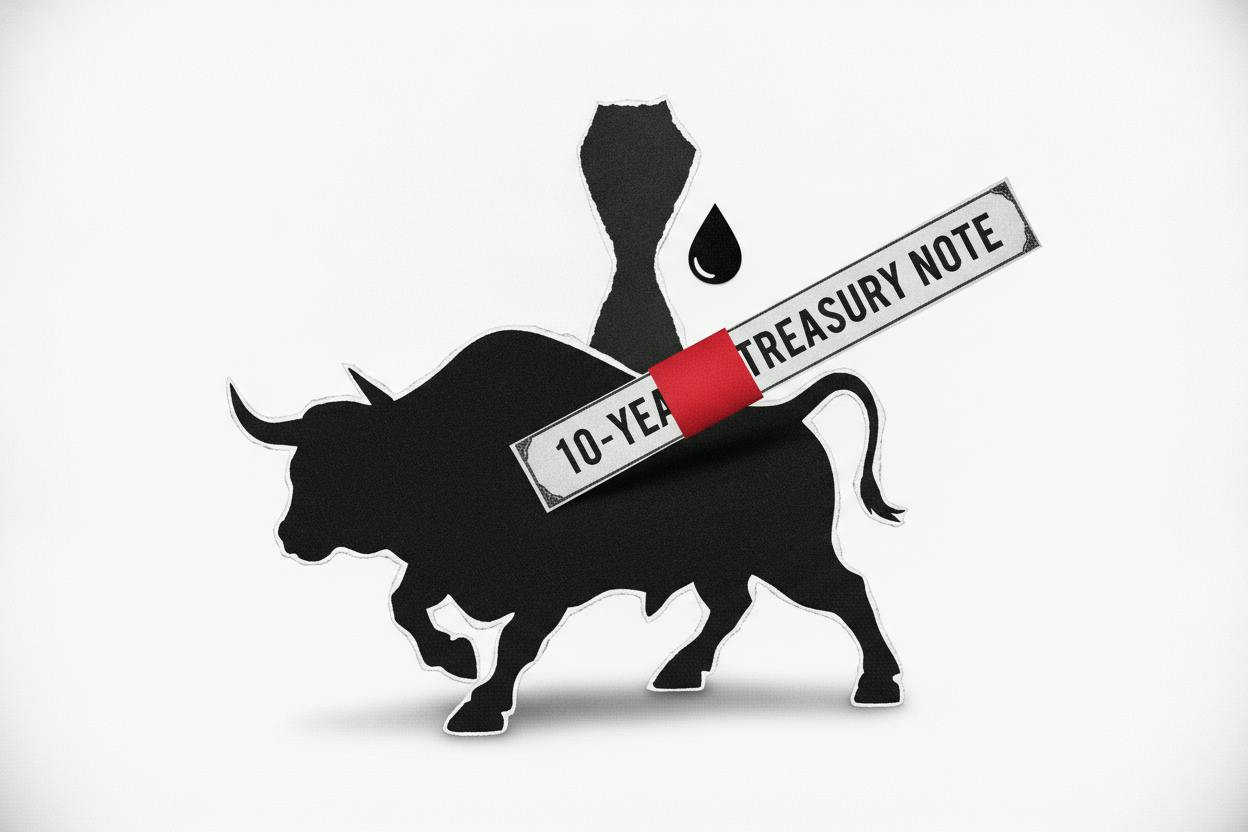
US stock futures ticked higher on Tuesday, but the mood was far from confident. Treasury yields remained pinned near multi-year highs, with the 10-year yield hovering around 5.2%, while diplomatic efforts to secure a ceasefire between the US and Iran showed no obvious progress. For everyday investors, the combination points to a market that is holding its ground but not celebrating.
Yields stay high, and that matters
The 10-year Treasury yield was at 5.221% early Tuesday, just below Monday's close of 5.245%. The 30-year yield stood at 5.54%. These are levels that tend to tighten financial conditions—meaning borrowing becomes more expensive for companies and consumers, which can slow economic activity and put pressure on stock valuations, especially for growth-oriented sectors.
Higher yields also make bonds more attractive relative to stocks, which can pull money out of equities. Yet despite that headwind, Nasdaq futures were up about 0.3%, suggesting investors are still willing to take on some risk, at least for now.
This isn't happening in a vacuum. Bond yields have been climbing alongside oil prices, and the two forces are now interacting in ways that complicate the outlook for both inflation and growth.
Iran talks stall, oil risk lingers
On the geopolitical front, mediators are still working on a ceasefire between the US and Iran, but there's been no clear breakthrough. That uncertainty keeps an "oil risk premium" in crude prices—the extra cost that comes from the possibility of supply disruptions. If tensions escalate, shipping routes like the Strait of Hormuz, a critical passage for global oil shipments, could be threatened.
Oil prices have already been elevated, and any further spike would feed into inflation, which in turn could push central banks to keep interest rates higher for longer. That's a double-edged sword for markets: higher energy costs hurt consumers and businesses, while higher rates make borrowing more expensive.
Investors are also watching a busy week of US economic data and speeches from Federal Reserve officials. The data could offer clues about whether the economy is cooling enough to allow the Fed to ease policy, or whether inflation remains too sticky for comfort.
What it means for investors
For the average investor, the key takeaway is that markets are navigating two big uncertainties at once: the cost of money and the cost of energy. Both have the power to move portfolios, but they don't always move in the same direction.
High Treasury yields tend to hit rate-sensitive areas hardest—think technology stocks, real estate investment trusts, and other sectors where future earnings are discounted heavily. On the other hand, energy companies and other commodity-linked stocks can benefit from rising oil prices. That's part of why indices like the S&P 500 can stay relatively stable even when individual sectors swing sharply.
It's also worth remembering that a yield near 5.2% on the 10-year Treasury offers a meaningful alternative to stocks. For investors who are nervous about volatility, that yield provides a relatively safe return, which can be a reason to trim riskier holdings.
But it's not all gloom. The fact that stock futures are edging higher suggests that many investors see the current situation as manageable—at least for now. The coming days, with more data and Fed commentary, will likely determine whether that optimism holds.
What to watch next
Keep an eye on the economic calendar. Inflation reports, jobless claims, and consumer confidence numbers can all move markets, especially when yields are this high. Fed speakers will also be parsed for any hints about the path of interest rates.
Geopolitics remains the wildcard. Any sign of progress in US-Iran talks could ease oil prices and take some pressure off yields. Conversely, a breakdown in negotiations could send crude higher and push yields up further, creating a tougher environment for stocks.
For now, the market is in a holding pattern—steady but alert. As always, diversification and a long-term perspective remain sensible tools for navigating periods of uncertainty.