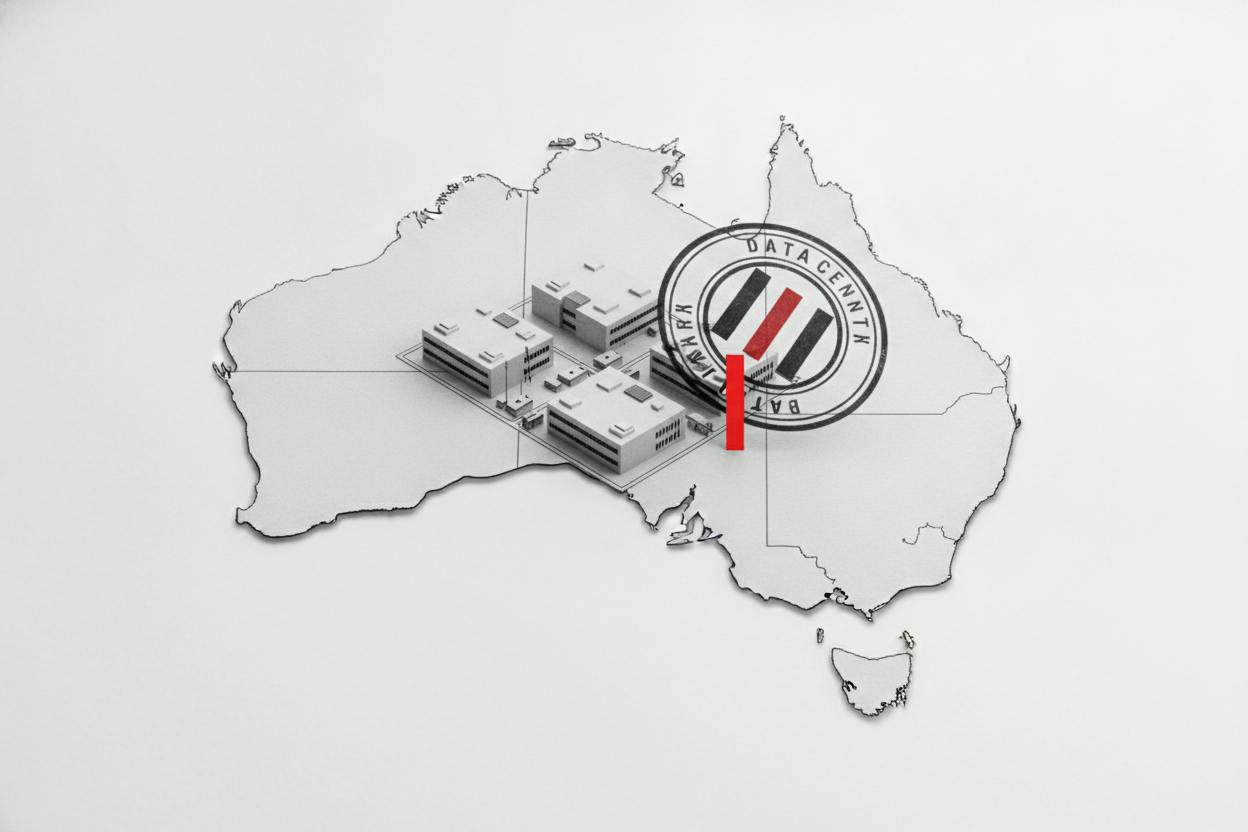
Energy North has quietly dropped its June 2028 “first power” target for Project Ares, a planned 1-gigawatt data center campus in Australia’s Northern Territory, after the region’s environment regulator paused its review to tighten the rules. The move underscores how regulatory uncertainty is reshaping the economics of large-scale data center projects, even as demand for AI infrastructure surges.
What happened
On October 7, the Northern Territory Environment Protection Authority (NT EPA) paused its standard seven-week review of Project Ares, saying it needed more time and would seek federal input as expectations for data centers and AI infrastructure are still being formed. The agency listed concerns ranging from water use to potential impacts on Aboriginal sacred sites, and said it had a “low level of confidence” in the company’s proposed fixes.
That pause matters because the next step – setting the required scope for the project’s environmental impact statement, essentially the checklist the developer must answer – now has no published deadline. With that uncertainty, Energy North says it’s no longer working toward the June 2028 schedule, even as it continues early-stage funding while it works toward a final investment decision.
Project Ares at a glance
Project Ares is pitched as one of Australia’s largest data center proposals: a remote 191-square-kilometer campus on a cattle ranch, designed to run on solar power backed up by gas, with on-site worker housing and other infrastructure. The scale is enormous – 1 gigawatt is roughly the output of a large power plant – and the location, far from major cities, is unusual for a sector that typically clusters near population centers and grid connections.
The project’s remote setting is both a selling point and a vulnerability. On one hand, it offers abundant land and solar resources. On the other, it raises complex questions about water supply, environmental impact, and the logistics of building and operating a massive facility in a sparsely populated region.
Why timing is everything in data centers
Big data centers live and die by timing. Lenders and major customers typically want a clear path from permits to construction to “first power” before they sign long-term commitments. When a regulator swaps a fixed review window for an open-ended one, the risk isn’t just delay; it’s that every downstream milestone becomes harder to trust, raising the cost of capital and pushing customers to wait for clearer terms.
In practice, that can make Australia’s data center pipeline look larger on paper than it is in deliverable, near-term capacity, especially for greenfield mega-sites far from major cities. Recent examples – NextDC, a data center operator, pushing back a Melbourne expansion, and Goodman, a property group, shelving a Sydney plan – show that schedule credibility is increasingly a differentiator in the sector. Investors are starting to scrutinize not just whether projects are announced, but whether they can actually be delivered on time.
What it means for investors
For everyday investors, the Project Ares delay is a reminder that the data center boom, while real, is not without friction. The sector has been a favorite in markets, with companies like Marvell acquiring Lumentum to bet on AI data center demand, and deals targeting AI data center bottlenecks making headlines. But the gap between announced capacity and operational capacity can be wide.
When a project like Project Ares slips, it doesn’t necessarily mean the project is dead – it means the timeline is less certain. For investors in listed companies that depend on data center growth, such as REITs, utilities, or equipment suppliers, this kind of delay can affect earnings expectations. For those considering direct investment in data center projects, it highlights the importance of regulatory risk.
The NT EPA’s move also reflects a broader trend: regulators are becoming more cautious about large infrastructure projects, particularly those with significant environmental or cultural impacts. This is not unique to Australia. Around the world, data center developers are facing tougher scrutiny over energy use, water consumption, and land rights.
What to watch next
The key question now is how long the NT EPA’s pause lasts. If the agency sets a new, clear timeline for the environmental impact statement scope, Energy North may be able to re-establish a target. If not, the project could face months or years of uncertainty.
Investors should also watch for signals from Energy North about its final investment decision. The company says it’s continuing early-stage funding, but without a clear regulatory path, that decision could be pushed out. For the broader market, the Project Ares delay is a cautionary tale about the gap between hype and reality in the AI infrastructure buildout.
As earnings season takes center stage, investors will be listening for how data center operators and suppliers talk about their own timelines. If more projects slip, it could temper some of the enthusiasm that has driven the sector. But if regulators and developers find a way to work together, the long-term story remains intact.
For now, Project Ares is a reminder that in the world of mega-projects, the only certainty is uncertainty.