Qualcomm, the company best known for powering most of the world's Android smartphones, is making a serious push into the data center. At a recent investor event, the chipmaker announced that Microsoft and Meta will use its new artificial intelligence chips, marking its most significant attempt yet to challenge Nvidia's near-total dominance in the market for AI hardware.
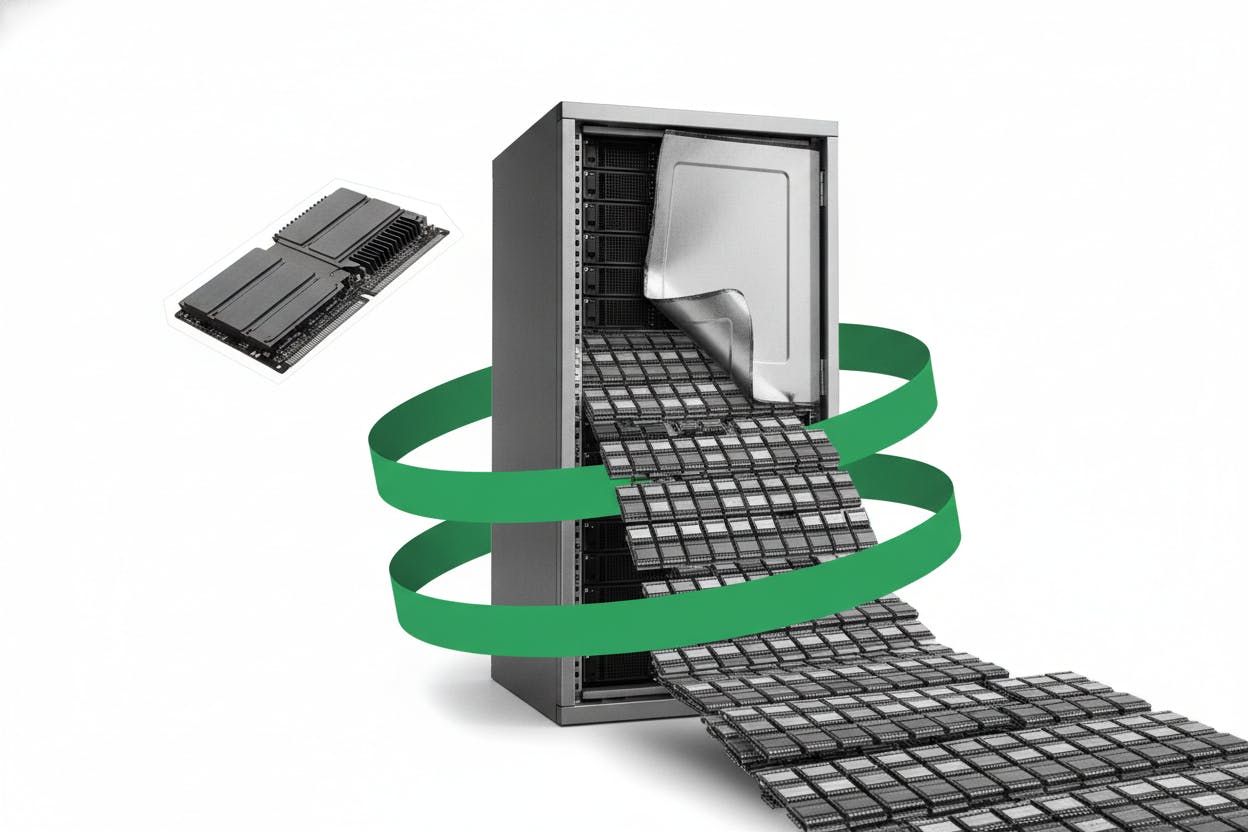
The announcement is part of a broader strategy to diversify beyond the volatile handset market. Qualcomm is pitching a fundamentally different approach to building AI servers: using cheaper, more readily available memory instead of the specialized high-bandwidth memory (HBM) that has become standard in Nvidia-powered systems. The company calls its design "High Bandwidth Compute" (HBC), and it argues that the payoff is better performance per dollar, especially for AI inference — the process of running a trained AI model to make predictions, as opposed to training it from scratch.
How Qualcomm's Approach Differs
High-bandwidth memory has become one of the tightest and most expensive components in AI hardware. It is costly to produce, supply is limited, and demand from hyperscale cloud providers has sent prices soaring. Qualcomm's HBC design instead uses memory similar to what you would find in a smartphone or laptop — LPDDR (low-power double data rate) memory. This is cheaper, easier to source, and consumes less power.
For many AI workloads, especially inference, the trade-off may be acceptable. While Nvidia's systems offer peak performance that is hard to match, many companies care more about the cost to run each individual workload than achieving the absolute fastest speed. If Qualcomm can deliver "good enough" AI performance at a lower total cost, hyperscalers like Microsoft and Meta could scale their inference capacity with fewer supply bottlenecks and a lower bill of materials.
Qualcomm also announced that Meta will use its Dragonfly C1000 central processing unit (CPU), a chip designed for data center infrastructure tasks. And the company said it expects early custom-chip revenue from two unnamed hyperscalers before the end of this calendar year.
Why This Matters for Investors
For everyday investors, this story is about competition and cost. Nvidia's dominance in AI chips has made it one of the most valuable companies in the world, and its high-margin, tightly integrated systems have given it enormous pricing power. But that dominance also creates an opening for rivals.
If Qualcomm's approach gains traction, it could shift how the largest cloud providers build their AI infrastructure. Even small changes in server design at Microsoft- or Meta-sized volumes can move industry demand for HBM and give big customers more leverage when negotiating with Nvidia for premium systems. That could pressure Nvidia's margins over time, or at least slow its growth in certain segments.
Qualcomm's push into data centers is also strategic for its own business. Handset growth is no longer the reliable engine it once was, and the company has been looking for new revenue streams that scale with cloud spending. In a recent investor presentation, Qualcomm targeted $40 billion in non-handset revenue by 2029, with data center growth as a key pillar.
The Software Challenge
Winning in data centers is not just about hardware. Developers build AI applications using software platforms like Nvidia's CUDA, which has become the industry standard. To compete, Qualcomm needs its own software ecosystem. That helps explain its planned $4 billion all-stock purchase of Modular, an AI software startup. The acquisition is aimed at giving developers the tools they need to write code that runs efficiently on Qualcomm's chips, rather than being locked into Nvidia's platform.
Building a software ecosystem takes time and money, and Nvidia's lead is formidable. But Qualcomm's bet is that the market for AI inference is large and diverse enough that customers will want alternatives — especially if they can save money on memory.
What to Watch Next
The near-term signal for investors is whether those promised custom-chip revenues from hyperscalers arrive before year-end and expand beyond a few targeted deployments. If Qualcomm can convert those early wins into broader adoption, it could become a meaningful player in a market that has been almost entirely owned by Nvidia.
For now, the announcement is a reminder that the AI hardware race is far from over. While Nvidia remains the clear leader, the economics of memory and the scale of cloud spending create room for challengers. Qualcomm is betting that cheaper, more accessible hardware can win a slice of that business — and it has already lined up two of the biggest names in tech to prove it.