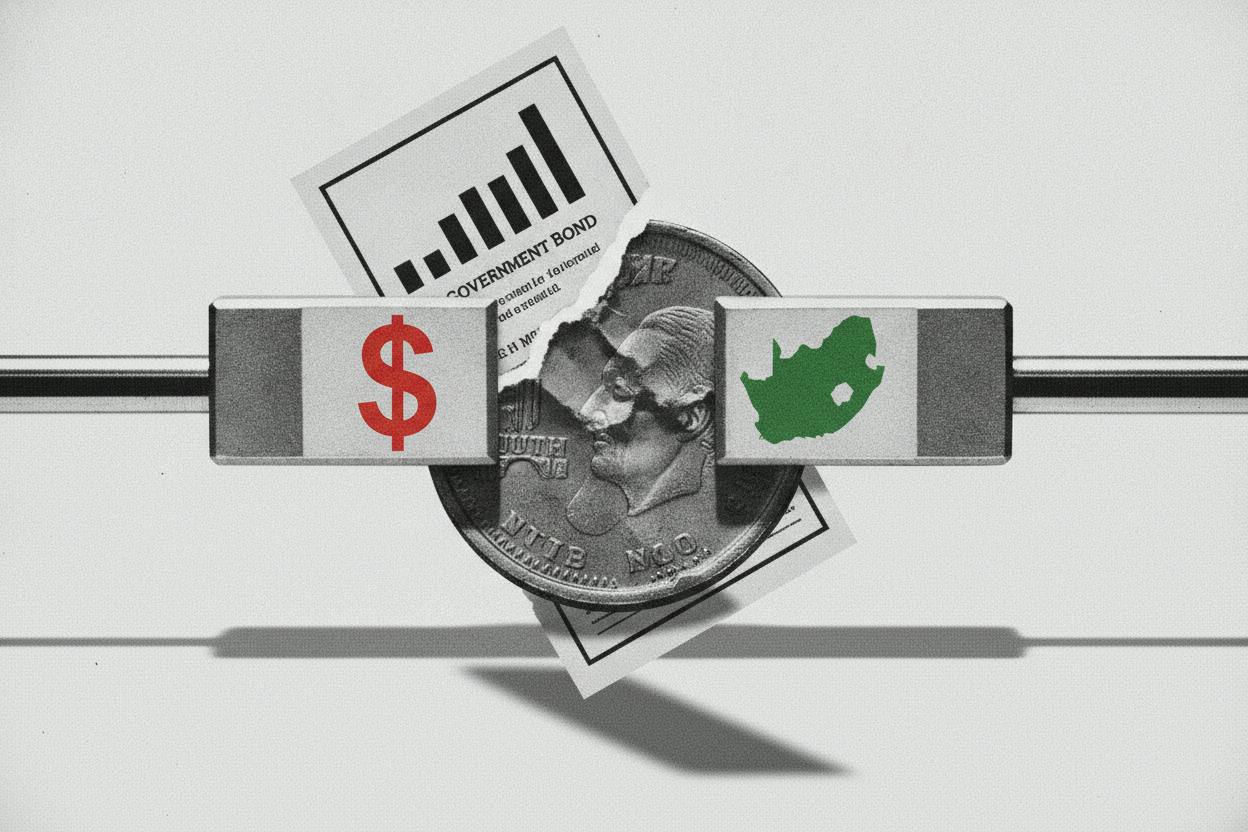
South Africa's rand touched its weakest level of the year on Thursday, trading near 17.36 per US dollar, as investors braced for the South African Reserve Bank's (SARB) interest rate decision. The currency's slide reflects a familiar squeeze on risk-sensitive assets, with the US dollar hovering near a 19-month high and domestic political uncertainty adding to the pressure.
Why the rand is under pressure
The immediate trigger for the rand's decline is the strength of the US dollar. Minutes from the Federal Reserve's latest meeting, along with comments from a Fed official, have kept the possibility of further rate hikes on the table. That has pushed the dollar to levels not seen in nearly two years, making it harder for higher-risk currencies like the rand to compete for investor capital.
When the dollar strengthens, emerging market currencies often suffer. Investors tend to move money into US assets, which offer higher yields and perceived safety, and away from riskier bets. The rand, which is highly sensitive to global risk sentiment, is particularly vulnerable to these shifts. As the dollar's strength pressures stocks and commodities, currencies like the rand feel the pinch too.
Adding to the rand's woes are shaky coalition talks in South Africa. Political uncertainty can spook investors, as it raises questions about the stability of economic policy. The combination of a strong dollar and domestic political jitters has left the rand trading at its lowest level of the year.
What to watch: the SARB decision
Traders are now focused on the SARB's rate decision, due later Thursday. The central bank has been navigating a tricky path: inflation remains above its target range, but economic growth is sluggish. A rate hike could support the rand by making South African assets more attractive, but it could also weigh on an already fragile economy.
Analysts are divided on what the SARB will do. Some expect a modest hike to combat inflation, while others think the bank will hold rates steady to avoid further hurting growth. The decision will be closely watched for signals about the bank's future policy path.
The rand's move is part of a broader trend. The Canadian dollar also hit a 19-month low recently, and Latin American markets have been hit by Fed hawkishness. The dollar's strength is a global phenomenon, and emerging market currencies are bearing the brunt.
What it means for investors
For everyday investors, the rand's weakness has several implications. If you hold South African assets, a weaker rand can erode their value in dollar terms. It also makes imported goods more expensive, which can feed into inflation and affect consumer prices.
For those investing in US dollar-denominated assets, a strong dollar can boost returns when converted back to rand. However, it also means that investing in emerging markets like South Africa carries additional currency risk.
The SARB's decision will be a key indicator of how the central bank views the balance between fighting inflation and supporting growth. If the bank signals further hikes, the rand could find some support. If it sounds dovish, the currency could weaken further.
Investors should also keep an eye on the broader dollar trend. As traders price in a possible December Fed hike, the dollar's strength may persist, keeping pressure on the rand and other emerging market currencies.
In the short term, the rand's path will likely be dictated by the SARB's tone and any developments in coalition talks. For now, the currency remains at the mercy of global and domestic forces, and investors should be prepared for continued volatility.