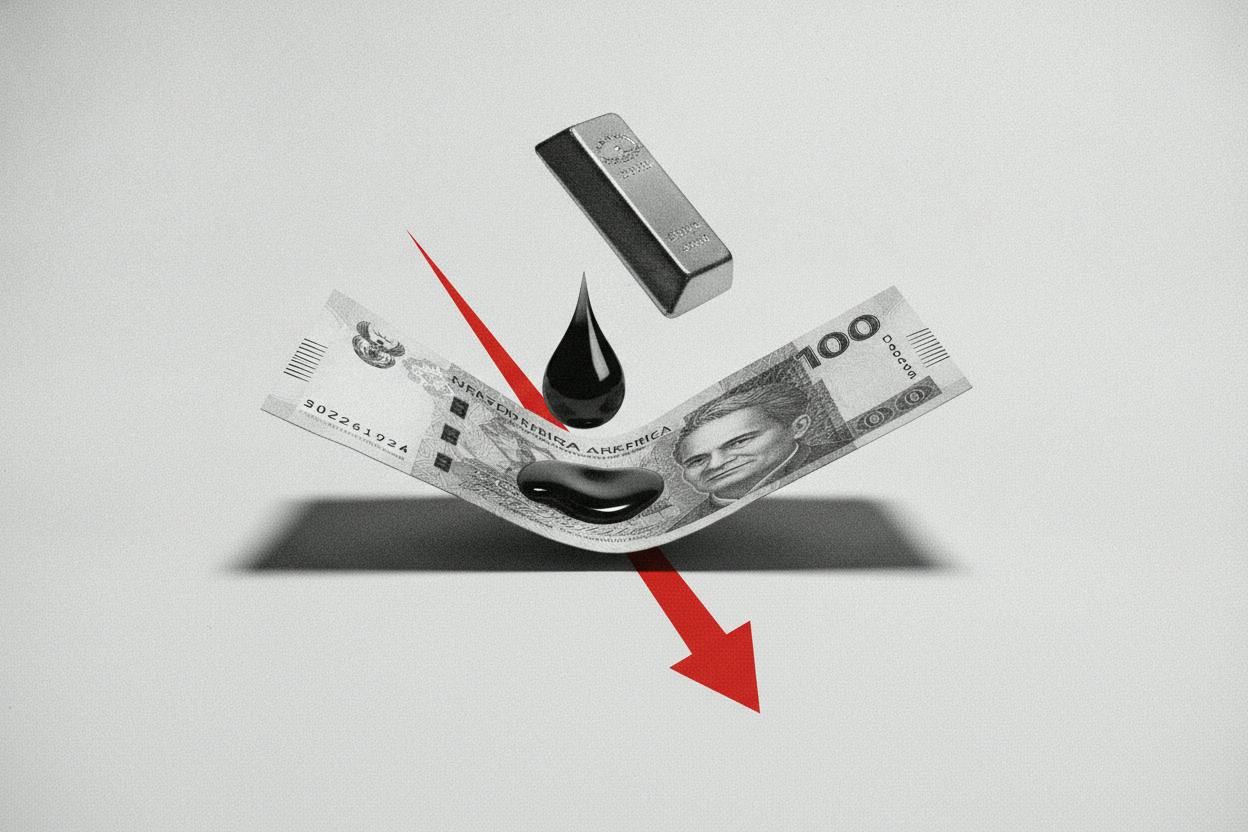
South Africa's rand weakened to 16.33 against the US dollar on Tuesday, caught between two uncomfortable trends: rising crude prices that inflate the country's import bill and falling gold prices that trim its export earnings. The currency was down about 0.4% in early London trading, with a firmer US dollar adding to the pressure on emerging-market currencies.
For a country like South Africa, the combination is particularly awkward. It relies on imported oil to fuel its economy, so every dollar increase in crude prices makes energy and transport more expensive. At the same time, gold and other precious metals are among its biggest exports, so when their prices drop, the country earns less foreign currency. That double squeeze tends to weigh on the rand.
Why oil and gold matter for the rand
Oil prices have been climbing, with Brent crude recently trading near multi-month highs. The rally is driven by supply concerns and a broader risk-on mood in commodities. For South Africa, higher crude prices mean a wider trade deficit, because the country must spend more dollars to buy the same amount of oil. That increased demand for dollars puts downward pressure on the rand.
Gold, on the other hand, slipped about 0.2% to $4,287.69 an ounce. While that might seem like a small move, it adds to the negative sentiment. South Africa is one of the world's major gold producers, and when the metal's price falls, mining companies earn less, which can reduce export revenues and tax receipts. The softer gold price also reflects a stronger US dollar, which makes dollar-priced metals more expensive for buyers using other currencies.
The broader backdrop is a familiar one for emerging markets. A robust US dollar, supported by expectations that the Federal Reserve will keep interest rates higher for longer, tends to pull capital away from riskier assets like the rand. As dollar strength and oil near a four-month high drag emerging Asia markets, the same forces are at play in Africa's most industrialised economy.
What this means for South African consumers and investors
For ordinary South Africans, a weaker rand and higher oil prices often translate into more expensive petrol, which then ripples through the cost of food and other goods. That can push inflation higher, potentially prompting the South African Reserve Bank to keep interest rates elevated. Higher rates are meant to cool inflation, but they also make borrowing more expensive for households and businesses.
For investors, the rand's slide is a reminder of how vulnerable emerging-market currencies can be to global shifts. A stronger dollar and rising oil prices are a tough combination for any country that imports energy and exports commodities. The oil surge to $108 lifts the dollar to a two-week high, and as Fed rate-cut bets fade, the pressure on currencies like the rand is unlikely to ease quickly.
South African assets, including bonds and equities, often move in tandem with the currency. A weaker rand can make local stocks less attractive to foreign investors, while imported inflation can hurt consumer spending. However, some export-oriented companies, particularly miners, may benefit from a weaker rand because their costs are in rand but their revenues are in dollars.
What to watch next
Investors will be closely watching the Federal Reserve's next policy decision. If the Fed signals that rate cuts are further away, the dollar could stay strong, keeping pressure on the rand. On the other hand, any sign of easing could provide relief. The path of oil prices is also key; if crude continues to climb, South Africa's import bill will keep growing, and the rand may struggle to recover.
Gold prices are another factor. If safe-haven demand returns, gold could rebound, giving South Africa's export earnings a boost. But for now, the market's focus is on the interplay between oil, the dollar, and global interest rates. As the pound slips as oil jumps and the dollar firms before the Fed decision, the same dynamics are affecting currencies worldwide.
For everyday investors, the key takeaway is that currency moves like this are part of the normal ebb and flow of global markets. They can affect the value of international investments, the cost of imported goods, and the returns on emerging-market funds. While it's impossible to predict short-term swings, understanding the forces at play—oil, gold, and the dollar—can help you make more informed decisions.
As always, it's wise to keep a long-term perspective and avoid making hasty moves based on daily currency fluctuations. Diversification across asset classes and regions can help cushion the impact of any single currency's decline.