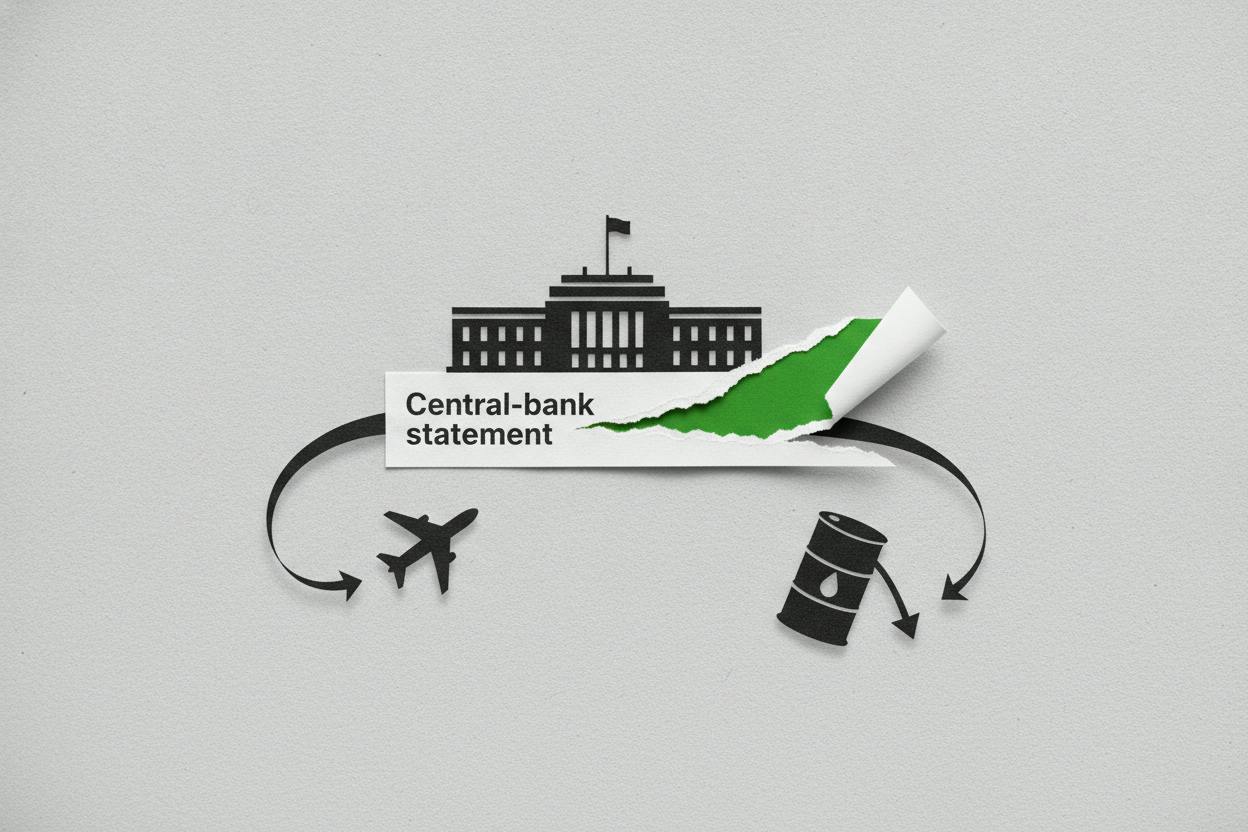
Australian stocks turned positive on Tuesday after the Reserve Bank of Australia (RBA) raised its key cash rate to 4.85%, a move that was widely anticipated by markets. The more notable development was the central bank's statement, which dropped a line about raising rates further “if needed” — a subtle shift that traders often interpret as a signal that policymakers believe they are nearing the peak of this tightening cycle.
The rate hike itself was no surprise, so investors quickly moved on to what it means for the future path of policy. When a central bank removes conditional language about further increases, it can change the market's expectations for where rates will top out and how soon they might start coming down. Those expectations, in turn, feed into the “discount rate” used to value future profits and rental income, making them a powerful driver of asset prices.
What the RBA's shift signals
The RBA's decision to raise rates to 4.85% was the latest step in a campaign to cool inflation. But by omitting the phrase about raising rates further “if needed,” the bank hinted that it may be close to the end of its hiking cycle. For investors, this is often more important than the actual rate change itself.
Equities tend to move on the expected path of policy, not just the single decision in front of them. If the market reads the missing language as a step toward a pause, it may shave its estimate of the peak rate and bring forward expectations for eventual cuts. That can be a tailwind for assets whose value depends heavily on cash flows far in the future, because those future dollars get discounted less harshly when rates are expected to fall.
This dynamic played out in a split-screen fashion on the ASX. Rate-sensitive sectors like real estate held up even on a day when the central bank was raising rates. Banks also rose, but their upside may be limited if 4.85% is near the ceiling — higher rates typically boost banks' lending margins, but that support can fade if the market starts to price the next move as down, not up.
Oil's overnight drop reshuffles the deck
Adding to the churn was a sharp overnight fall in oil prices. Cheaper crude acts like a tax cut for fuel-heavy businesses such as airlines, which saw their shares climb. For energy producers, however, lower oil prices are a direct hit to expected cash flow, and their stocks fell accordingly.
This kind of cross-current is a reminder of how a single macro input can push different sectors in opposite directions. Airlines and transport companies benefit from lower fuel costs, while energy producers see their revenue outlook dim. For investors, it underscores the importance of diversification and understanding which parts of the market are most sensitive to commodity prices.
The oil move also echoes broader trends seen in other markets. For instance, Canadian stocks rose on a similar oil drop, lifting rate-sensitive sectors there. And in Asia, Indian stocks have been supported by easing crude prices as well.
What it means for investors
For everyday investors, the key takeaway is that the RBA's 4.85% hike mattered less than the sentence it removed. The shift in language suggests that the central bank may be nearing the end of its tightening cycle, which could have implications for everything from mortgage rates to the valuation of growth stocks.
If rates are indeed close to peaking, investors may start to look ahead to potential cuts. That could benefit sectors like real estate investment trusts (REITs), which are sensitive to discount rates, as well as longer-duration growth stocks. On the other hand, banks might see their earnings momentum slow if the next move is down.
The oil price drop is a separate but equally important factor. For those with exposure to airlines or transport, cheaper fuel is a positive. For energy investors, it's a headwind. As always, it's wise to keep a balanced portfolio and not over-concentrate in any single sector.
Looking ahead, investors will be watching for further clues from the RBA about its next steps. Any hints about a pause or a potential cut will be scrutinized closely. In the meantime, the market's reaction to Tuesday's hike shows that sometimes the words around a decision matter more than the decision itself.
For more on how rate decisions and oil moves are affecting markets, see our coverage of Australian shares reacting to oil retreats and how oil steadies near $105 in other regions.