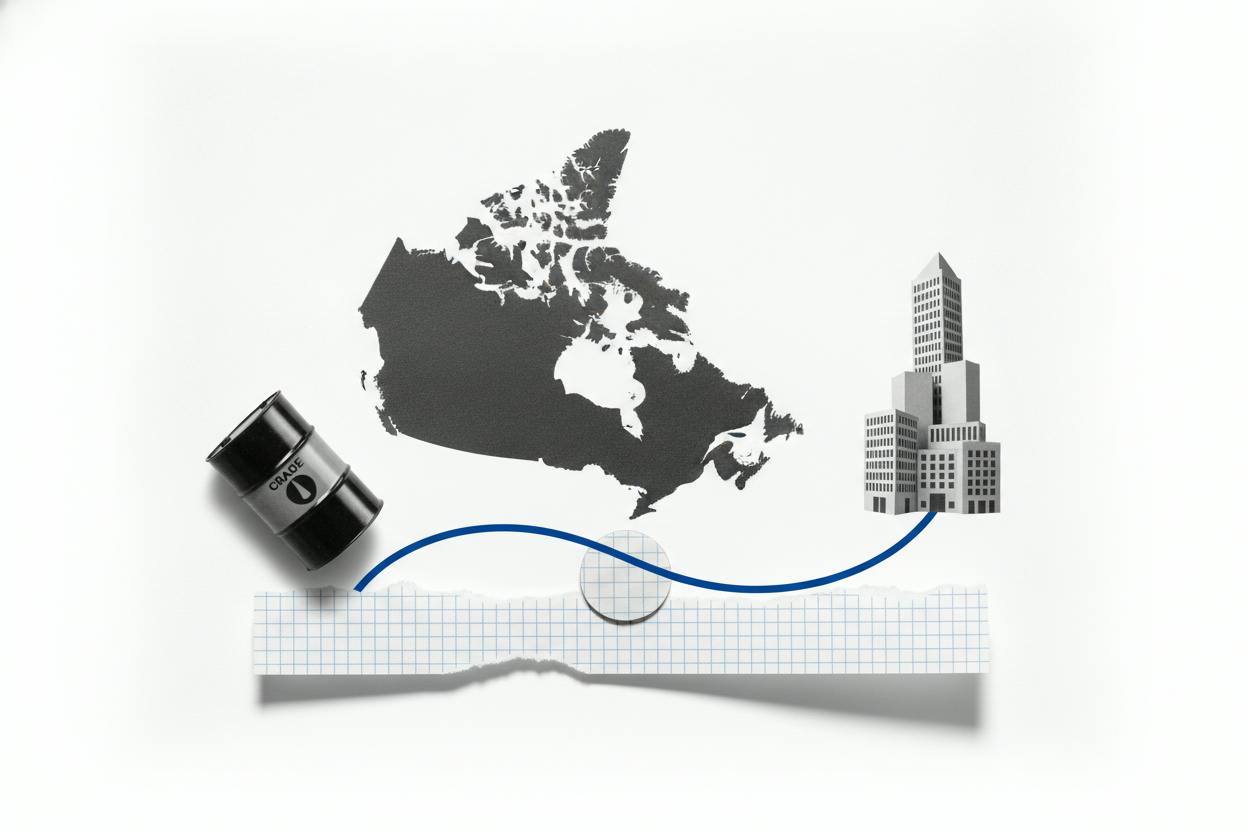
Canada's S&P/TSX Composite Index edged up 0.5% on Monday, a day when the market's biggest headline—a sharp drop in oil prices—pulled the index in two different directions at once. US crude fell 7.4% to $96.46 a barrel, a move that weighed heavily on energy stocks but also cooled inflation expectations, which in turn boosted other parts of the market.
The result was a session where the leaders and laggards flipped the usual script. Energy, the heavyweight sector in Canada's benchmark, dropped 4.8% as lower crude prices feed directly into lower near-term revenue expectations for producers. But real estate jumped 2.6%, materials rose 2.3%, and industrials gained 2.5%, helped by a 5.4% advance in engineering firm WSP Global.
Why oil's slide rippled through the whole market
Oil is a double-edged sword for the Canadian market. On one hand, energy companies are a major part of the TSX, so falling crude typically drags the index down. On the other, cheaper oil tends to ease inflation pressure by lowering fuel and shipping costs across the economy. That second effect showed up quickly in bond markets: Canada's 10-year government bond yield fell about 4.9 basis points to 3.750%.
When bond yields fall, sectors whose value depends more on cash flows far in the future—like real estate—tend to benefit. That's because lower yields reduce the "discount rate" investors use to value future profits, making those distant earnings look more valuable in today's dollars. It's a reminder that a single commodity move can push different parts of the stock market in opposite directions.
Gold also rebounded 1.8% from a one-year low, helping lift the materials sector. Precious metals often move inversely to real interest rates, so a drop in yields can give gold a boost even when the broader commodity complex is under pressure.
Manufacturing data adds a wrinkle
Adding to the mix, data released Monday showed Canada's manufacturing sector contracted in October. That's a sign of slowing economic activity, which can also pull bond yields down as investors anticipate less growth and possibly looser monetary policy down the road.
But slower growth brings its own complications. It keeps the Bank of Canada watching for any fresh inflation flare-ups, especially if commodity prices reverse and push costs back up. The central bank has been navigating a delicate balance between taming inflation and avoiding a hard landing for the economy. As one prominent economist has argued, the bank may be near the end of its rate-hiking cycle, but the path remains data-dependent.
The factory contraction also echoes a broader theme: tariffs and rising input costs have been squeezing manufacturers, and today's reading suggests those pressures haven't let up. If manufacturing weakness persists, it could weigh on economic growth and corporate earnings in the months ahead.
What it means for investors
For everyday investors, days like this are less about "good" or "bad" news and more about which input dominates: oil setting profit expectations for producers, or bond yields setting the discount rate the market uses to value everything else.
With US crude at $96.46 and Canada's 10-year yield at 3.750%, TSX leadership can change quickly. A sharp oil move can push Canadian stocks in two directions at once. Lower crude usually pressures energy shares, but it can also cool inflation expectations, which often drags bond yields down. When yields fall, sectors whose value depends more on future cash flows—like real estate—tend to benefit.
That's why diversification matters. An investor heavily weighted in energy might have felt Monday's pain, while someone with more exposure to real estate or materials saw gains. The TSX's breadth—with multiple sectors moving on the same macro trigger—shows how interconnected markets have become.
Looking ahead, investors will likely watch whether oil's slide continues or reverses. A sustained drop could keep inflation expectations in check and support rate-sensitive stocks, but it would also hurt Canada's energy-heavy corporate earnings. Meanwhile, the manufacturing data adds another layer of uncertainty, as a prolonged contraction could signal broader economic weakness.
For now, the market's message is clear: lower oil can be a tailwind for some parts of the TSX even as it drags on others. Understanding that dynamic is key to making sense of days like Monday.