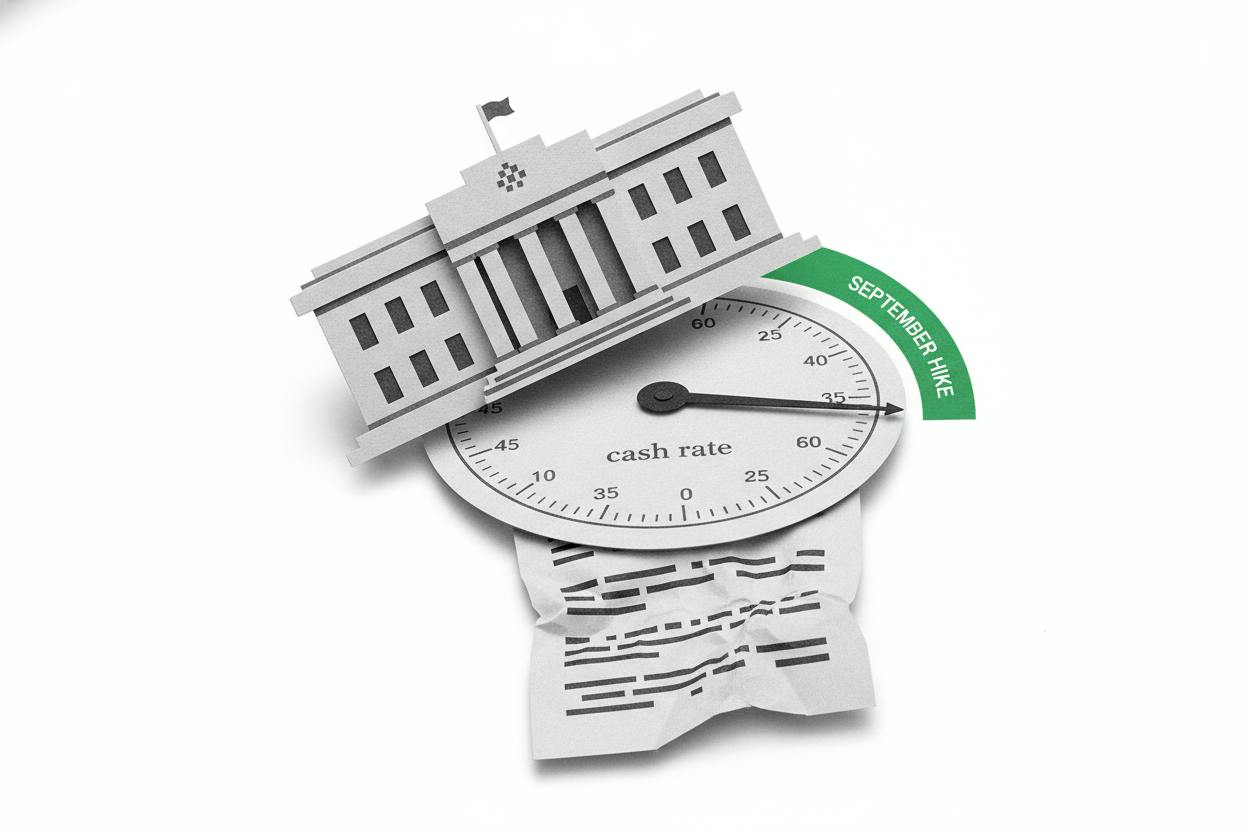
The Reserve Bank of Australia (RBA) has opened the door to another interest rate hike, with a senior official warning that stubborn inflation could force the cash rate above its current level of 4.35%. Markets are now pricing in a high probability of a move at the central bank's next meeting on September 29.
Sarah Hunter, the RBA's Assistant Governor and chief economist, said policymakers are concerned that inflation has been "too high for too long" and could become "baked in" to the economy as businesses and workers set prices and wages. That matters because once inflation expectations shift, price pressures can stay sticky even as demand cools.
Why another hike is on the table
The RBA has already lifted the cash rate to 4.35%, a level that has made borrowing more expensive for households and businesses. But underlying inflation is still running at 3.6%, above the central bank's target range of 2% to 3%. Hunter flagged upside risks to that outlook, suggesting that if price pressures don't ease quickly enough, the RBA may need to tighten policy further.
For everyday Australians, another rate hike would mean higher mortgage repayments and costlier loans. The cash rate is the benchmark for variable home loan rates, so any increase flows through quickly to borrowers. It also affects savings rates, though banks often pass on increases to savers more slowly.
The RBA's stance is part of a broader global trend. Central banks around the world have been grappling with inflation that has proven more persistent than initially expected. While some have paused their hiking cycles, others have signaled they may need to do more. The recent fall in oil prices has helped ease some inflation concerns globally, but Australia's inflation problem is largely domestic, driven by services costs and tight labor markets.
What investors are watching
For investors, the prospect of another RBA hike has immediate implications. Higher interest rates tend to weigh on stock valuations, particularly for growth and technology companies, because future earnings are discounted at a higher rate. Sectors like real estate and consumer discretionary, which are sensitive to borrowing costs, could also come under pressure.
The Australian dollar has already firmed on the back of the RBA's hawkish tone, as Governor Michele Bullock's earlier warnings had set the stage for this week's comments. A stronger currency can help dampen imported inflation but can also hurt exporters by making their goods more expensive overseas.
Bond markets are also reacting. Yields on Australian government bonds have risen as traders price in a higher probability of a hike. That affects borrowing costs for the government and corporations, and it can ripple through to mortgage rates and fixed-income investments.
What it means for your money
If you have a variable-rate mortgage, it's worth preparing for the possibility of higher repayments. Even if the RBA doesn't move in September, the risk of a hike later in the year remains. Fixed-rate borrowers are insulated until their term ends, but they may face higher rates when they refinance.
For savers, another hike could be a silver lining, as banks may eventually pass on higher rates to deposit accounts. However, the timing and extent of such increases are uncertain.
Investors should watch the upcoming inflation data and the RBA's commentary closely. The September 29 meeting will be pivotal, and any signals about the future path of rates will move markets. As always, it's important to maintain a diversified portfolio and avoid making impulsive decisions based on short-term rate speculation.
The RBA's balancing act is a delicate one. Raise rates too much and risk tipping the economy into recession; raise them too little and inflation stays entrenched. For now, the central bank is clearly leaning toward doing more, and that has implications for everyone from homeowners to stock pickers.