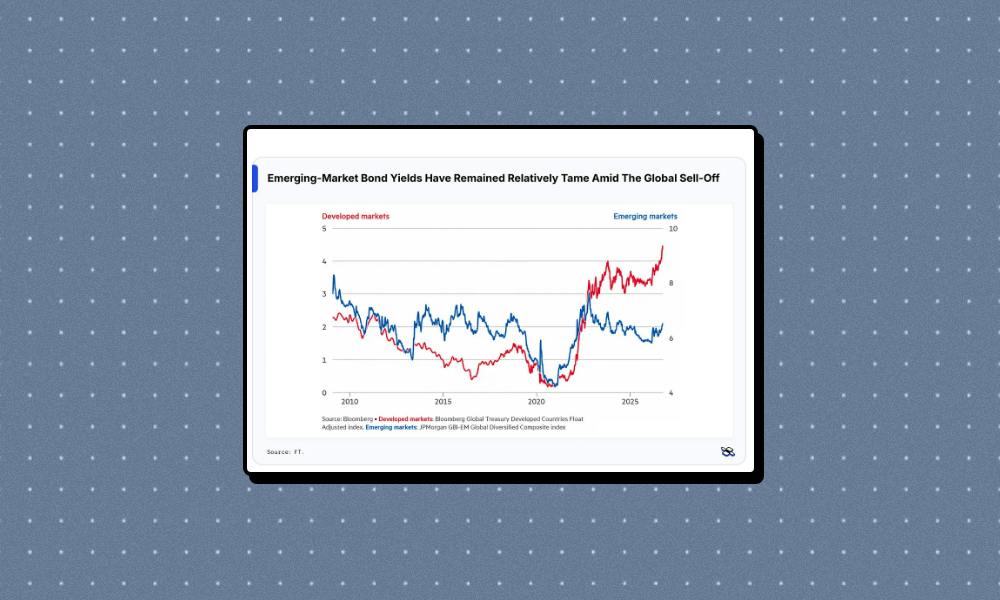
India's rupee ended Monday essentially flat, closing at 96.2925 per dollar, as the Reserve Bank of India (RBI) appeared to step in to keep the currency from drifting too far. The calm came despite a firmer US dollar and oil prices hovering near $103 a barrel, two forces that usually weigh on emerging-market currencies.
According to Reuters, the RBI kept the rupee "moored" in a tight range, a sign that policymakers are actively managing the exchange rate ahead of Wednesday's rate decision. For everyday investors, this matters because currency stability affects everything from import prices to the returns on foreign investments.
Why the rupee is under pressure
The dollar has been strengthening globally, which tends to pull capital away from emerging markets like India. At the same time, oil near $103 a barrel is a particular strain for India, one of the world's largest importers of crude. Higher oil prices increase the country's import bill, widen the trade deficit, and put downward pressure on the rupee.
In recent weeks, the rupee has been hovering around the 96 mark, with the RBI frequently intervening to smooth volatility. This is part of a broader pattern: Indian firms have been hedging at record levels, betting on more currency swings. The central bank's actions, however, have kept the currency in a surprisingly narrow band.
What Wednesday's rate decision could mean
The RBI's monetary policy committee is set to announce its interest rate decision on Wednesday. While the brief doesn't specify the expected move, the central bank has been balancing the need to support growth with the need to control inflation, which has been above its target range.
A rate hike could support the rupee by making Indian assets more attractive to foreign investors, but it could also slow economic activity. Conversely, holding rates steady might ease pressure on borrowers but could leave the currency more vulnerable to external shocks.
Investors will be watching the RBI's commentary closely for signals on future policy. The central bank's ability to keep the rupee stable in the face of a strong dollar and high oil prices is a key test of its credibility.
What it means for investors
For Indian investors, a stable rupee is generally a positive, as it reduces uncertainty for businesses that rely on imports and for those with foreign currency debt. However, the RBI's intervention is not without costs. Selling dollars to support the rupee drains foreign exchange reserves, which could become a concern if sustained.
For foreign investors, the rupee's stability is a double-edged sword. On one hand, it reduces currency risk when investing in Indian assets. On the other, it may mask underlying economic pressures that could lead to sharper adjustments later.
The recent trend of the rupee steadying above 96 has been helped by dips in oil and fading expectations of US Federal Reserve hikes. But with oil back near $103 and the dollar firm, the RBI's job is getting harder.
Looking ahead, the key drivers to watch are the RBI's rate decision, the trajectory of oil prices, and the dollar's strength. A sustained move above $103 in oil could force the RBI to let the rupee weaken, while a dovish Fed could ease pressure.
For now, the rupee's tight leash is a sign of the RBI's commitment to stability, but it also reflects the delicate balancing act facing emerging-market central banks in a world of higher global interest rates and volatile commodity prices.