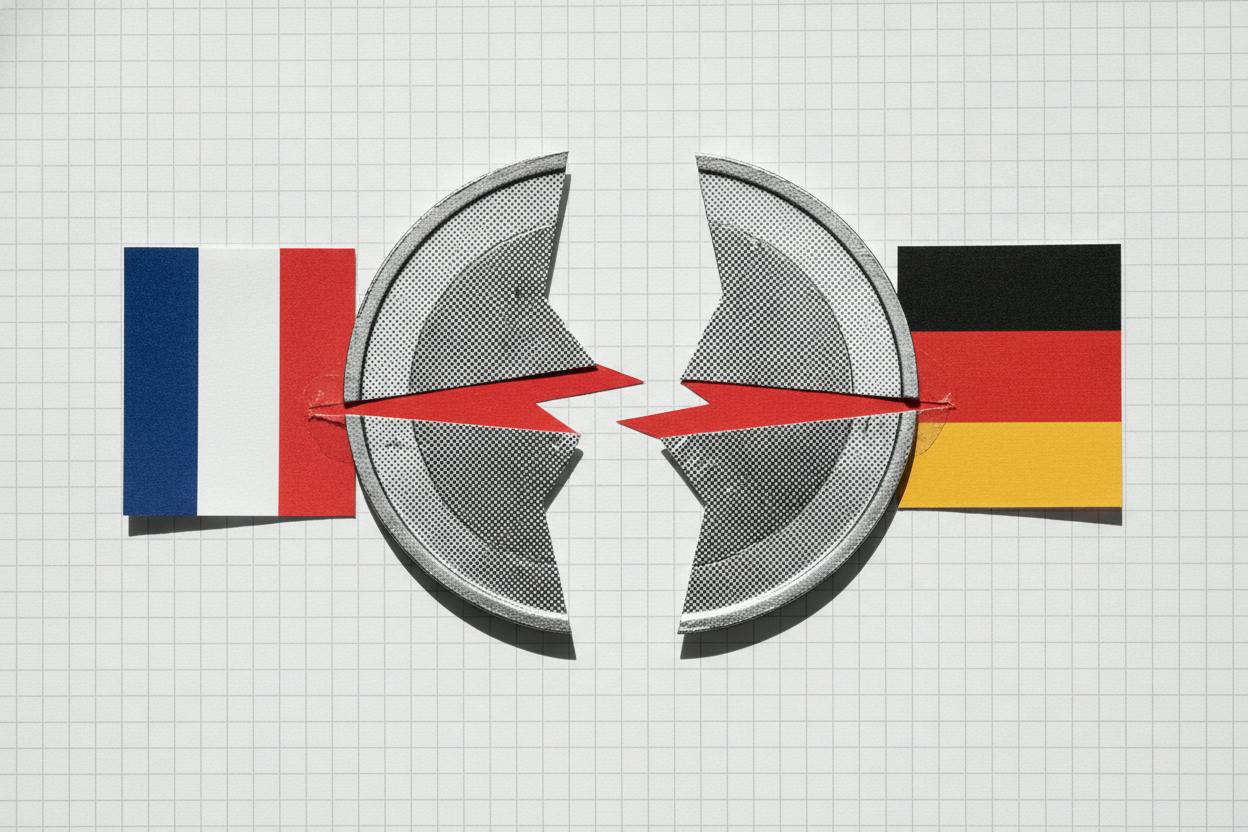
Investors are putting a fresh price on France risk, and it's showing up across markets. The euro slid to a 17-month low, French bond yields rose relative to Germany's, and Paris stocks lagged, as concerns over the country's budget deficit and political gridlock weighed on sentiment.
The move reflects a broader reassessment of France's fiscal position. Markets have grown uneasy about the government's ability to rein in spending and pass a credible budget plan through a fragmented parliament. That unease is now visible in the bond market, where investors are demanding a higher premium to hold French debt.
What's driving the sell-off?
In the eurozone, Germany is widely treated as the safe benchmark. The gap between French and German 10-year borrowing costs—known as the spread—acts like a stress gauge for the region. That spread has pushed above 150 basis points, a level not seen in years, signaling that investors want extra compensation to lend to France.
The widening spread is a direct response to worries about France's deficits and whether budget-fixing plans will survive parliamentary scrutiny. With no single party holding a majority, passing meaningful fiscal reforms is proving difficult. That political uncertainty is making investors nervous about the country's long-term debt trajectory.
This matters beyond bonds. When global investors get nervous about a large member's finances, they often hedge or trim exposure to the euro. That dynamic has helped push the single currency to its lowest level in 17 months against the dollar, a move that also reflects the greenback's strength. The dollar's recent climb has been aided by the euro's weakness.
Stocks feel the pressure
French equities have also been caught in the downdraft. The CAC 40, the country's main stock index, has underperformed its European peers as investors shy away from companies with heavy exposure to the domestic economy. Sectors like banks, utilities, and consumer goods—all sensitive to borrowing costs and consumer confidence—have been particularly affected.
The broader European market is also watching closely. A prolonged period of French fiscal stress could spill over into other eurozone economies, especially those with weaker balance sheets. That's why the spread is more than just a French story—it's a barometer for the entire region's stability.
What it means for investors
For everyday investors, the key takeaway is that France's fiscal troubles are not just a political issue—they have real financial consequences. A weaker euro can affect the returns on European investments when converted back to dollars or other currencies. It can also influence the pricing of European bonds and stocks.
Investors holding French government bonds are now earning a higher yield, but that comes with increased risk. The widening spread suggests the market is pricing in a greater chance of fiscal slippage or even a downgrade by rating agencies. For those with exposure to European assets, it's worth monitoring how the budget debate unfolds in the coming weeks.
On the positive side, a weaker euro can be a tailwind for European exporters, making their goods cheaper on global markets. That could provide some support to French and German companies that sell heavily abroad. However, the overall mood remains cautious, and the recent widening in corporate bond spreads suggests risk appetite is fragile.
Looking ahead
The immediate focus is on whether France can present a credible budget plan that satisfies both the European Union and the markets. Any sign of progress could help stabilize the euro and French assets. Conversely, further political deadlock could push the spread even wider and add to the euro's decline.
Investors will also be watching the European Central Bank's next moves. While the ECB does not target spreads directly, it has tools to address fragmentation if the stress becomes systemic. For now, the market is in a wait-and-see mode, with the euro's slide serving as a reminder that fiscal policy and currency markets are deeply intertwined.
For those with a diversified portfolio, the key is to stay informed and avoid making hasty decisions based on short-term volatility. France's fiscal situation is a developing story, and its impact on markets will likely be felt for some time.