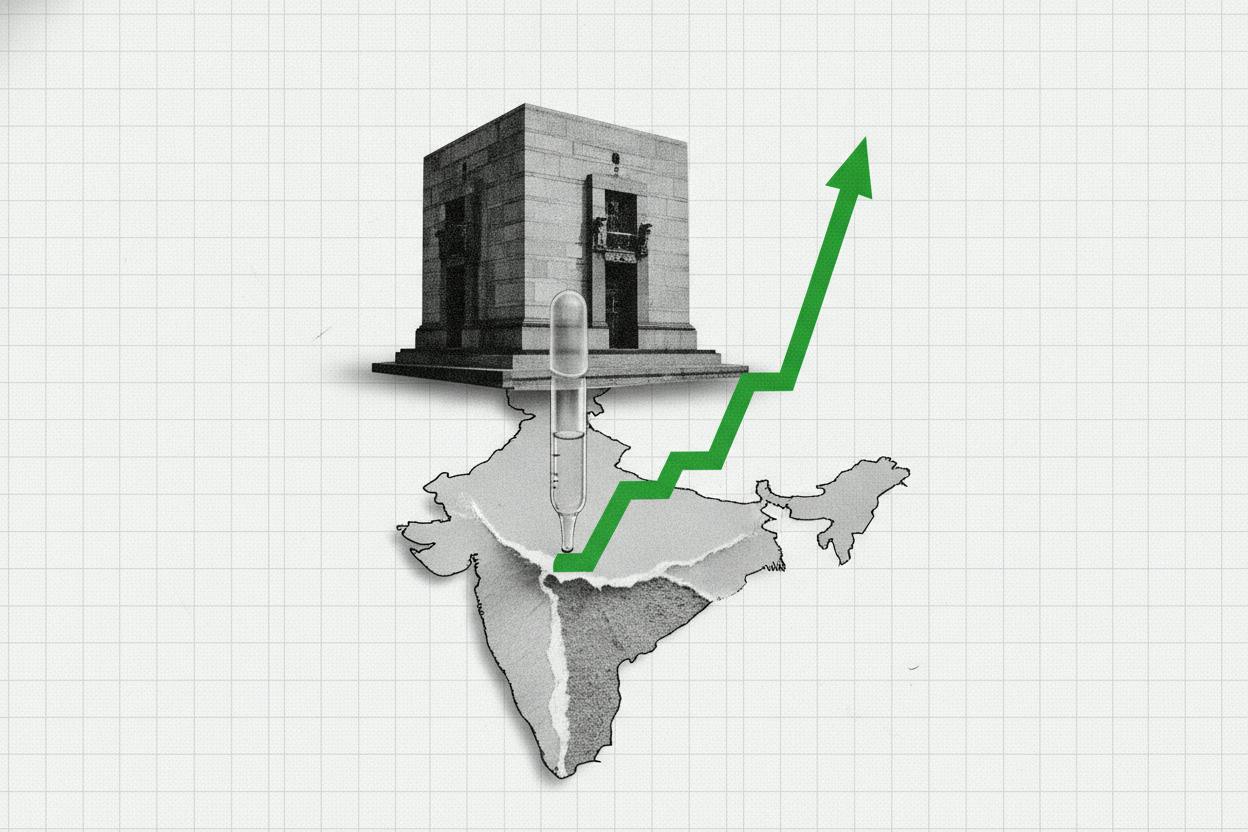
The Reserve Bank of India (RBI) has been quietly tightening financial conditions through the foreign-exchange market, and the effects are now showing up in the cost of hedging the rupee. Bankers estimate that the central bank's spot dollar sales and dollar-rupee swaps have pulled nearly $20 billion of liquidity out of the banking system this month, lifting one-year forward premiums by about 50 basis points.
For everyday investors, this is a reminder that central banks don't only move interest rates to manage the economy. They also use tools like currency intervention to influence how much cash is sloshing around, and those moves ripple through borrowing costs, bond yields, and the value of the rupee.
How the RBI is draining liquidity
When the RBI sells dollars in the spot market, it receives rupees in exchange, effectively removing those rupees from circulation. Similarly, in a "sell-buy" dollar-rupee swap, the central bank sells dollars now and agrees to buy them back at a future date, which also pulls rupees out of the banking system temporarily.
According to IDFC First Bank, an Indian lender, the RBI's net dollar selling through spot trades and swaps has been substantial, with the total drain estimated at close to $20 billion. This is a significant amount in a banking system where liquidity conditions are closely watched by money-market participants.
The immediate effect has been a rise in one-year forward premiums—the price investors pay to lock in an exchange rate for dollars a year from now. A 50-basis-point jump in that premium makes it more expensive for companies and investors to hedge their currency exposure, which can affect importers, exporters, and anyone with overseas investments.
Why the RBI is stepping in
The RBI's actions come against a backdrop of pressure on the rupee. The currency has been hovering near record lows, with the rupee slipping past 96 per dollar earlier as oil prices surged and foreign investors pulled money out of Indian markets. The central bank has been defending the currency, stepping in to steady the market as US Treasury yields and crude prices bite.
By selling dollars, the RBI supports the rupee by increasing its supply in the market. But that intervention has a side effect: it reduces the amount of rupees in circulation, which can tighten liquidity and push up short-term interest rates. In effect, the RBI is using the FX market as a tool to manage both the currency and domestic monetary conditions.
This is not unusual. Central banks often use currency intervention to smooth volatility, especially when a currency is under pressure from external factors like oil prices or global rate differentials. But the scale of the intervention matters, and $20 billion is a notable sum that can have broader implications.
What it means for investors
For Indian investors, the main takeaway is that liquidity is getting tighter, which can influence everything from bond yields to bank deposit rates. When the RBI drains liquidity, it tends to push up short-term interest rates, making borrowing more expensive and potentially slowing economic activity.
For those with foreign-currency exposure—whether through imports, exports, or overseas investments—the rise in forward premiums means hedging costs are going up. A company that needs to pay for imports in dollars will now pay more to lock in a future exchange rate, which can squeeze profit margins. Conversely, exporters who receive dollars may find that hedging becomes more expensive, but they might also benefit if the rupee weakens further.
Investors in Indian bonds should watch how the RBI's actions affect yields. Tighter liquidity often leads to higher yields, which can be a headwind for bond prices. However, if the RBI's intervention successfully stabilizes the rupee, it could reduce the risk of imported inflation, which would be positive for the broader economy.
The RBI's moves are part of a larger global picture. Central banks around the world are grappling with how to manage currencies and liquidity in a period of high inflation and volatile markets. Norway's central bank, for instance, recently held rates but flagged a possible hike, showing that policymakers are still in tightening mode.
For now, the RBI's focus appears to be on defending the rupee and managing liquidity without resorting to a full-blown rate hike. But if the pressure continues, investors should expect more intervention, and with it, more volatility in forward premiums and short-term rates.
As always, the key is to stay informed and understand how these macro moves can affect your portfolio. Whether you're a seasoned investor or just starting out, keeping an eye on central bank actions—both at home and abroad—can help you anticipate shifts in the market.