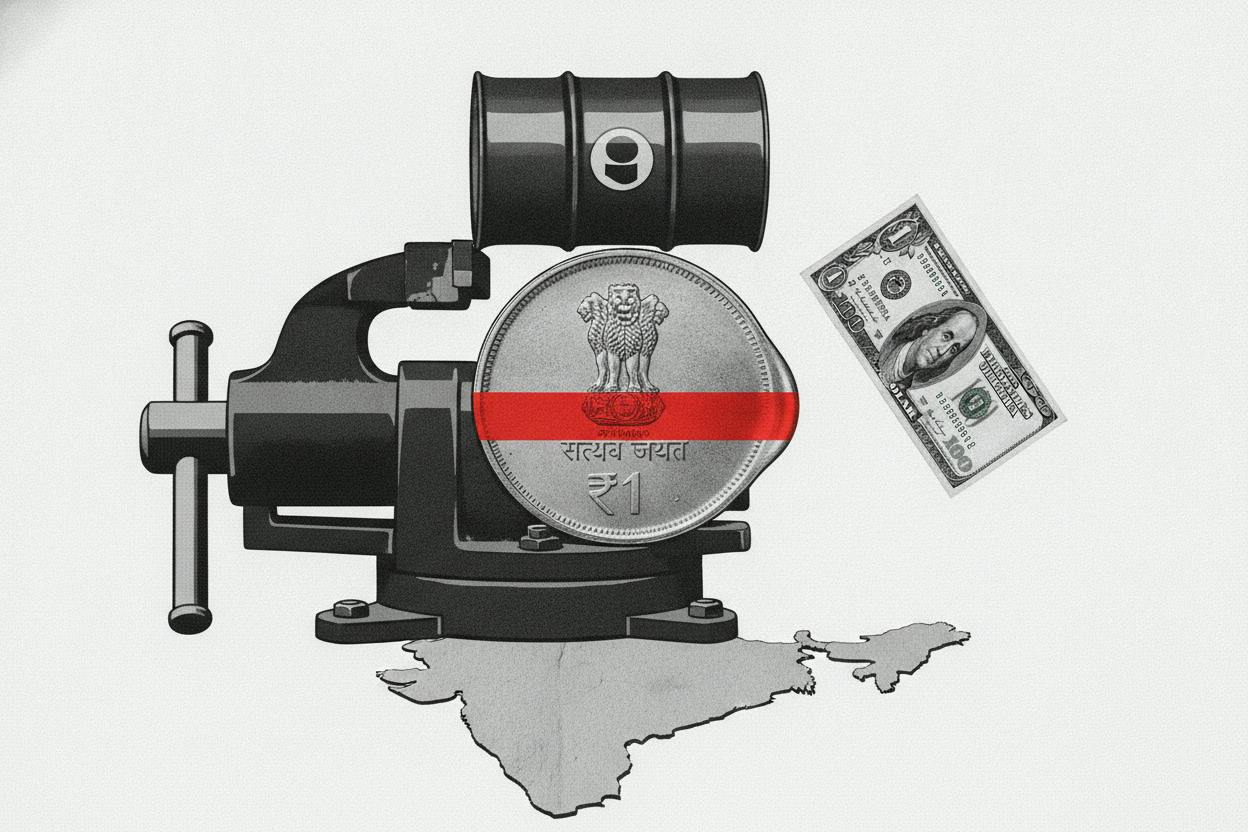
The Indian rupee slid past the 96-per-dollar mark on Tuesday, as a sharp jump in global oil prices and heavy selling by overseas investors piled pressure on the currency. Brent crude, the international benchmark, climbed to $107.4 a barrel, adding to India's import bill and stoking inflation worries.
The move prompted the Reserve Bank of India (RBI) to step into the foreign exchange market, with traders reporting that the central bank was selling dollars to defend the 96 zone. Such intervention is a common tool used by central banks to smooth excessive volatility and prevent sharp depreciations that could unsettle markets.
Why the rupee is under pressure
India is one of the world's largest importers of crude oil, so when oil prices rise, the country's import bill swells. That means more dollars are needed to pay for the same amount of oil, which naturally pushes the rupee lower. Higher oil prices also feed into domestic inflation, as fuel and transportation costs rise, which can hurt consumer spending and corporate margins.
At the same time, foreign investors have been pulling money out of Indian markets. In September alone, overseas investors withdrew $3.7 billion from Indian equities and bonds, according to the source brief. This outflow reduces demand for the rupee, adding to its depreciation.
The combination of a higher oil bill and capital outflows creates a double whammy for the currency. When foreign investors sell Indian assets, they convert the proceeds back into dollars, increasing the supply of rupees in the market and pushing the exchange rate down.
What the RBI is doing
The RBI has a history of intervening in the currency market to prevent excessive swings. By selling dollars from its reserves, the central bank can absorb some of the excess rupee supply and help stabilise the exchange rate. This is a delicate balancing act: too much intervention can deplete reserves, while too little can allow the rupee to fall too fast, which could spook markets and increase the cost of imports.
In recent weeks, the RBI has been active in defending the rupee, as seen in reports of the central bank stepping in near the 96 level. The central bank has also used other tools, such as FX swaps to drain liquidity, which can help support the currency by tightening rupee supply.
The pressure on the rupee is not unique to India. Across emerging markets, currencies have been hit by a stronger US dollar and rising US Treasury yields, which make dollar-denominated assets more attractive and pull capital away from riskier markets. The Indonesian rupiah, for example, recently weakened to 17,935 per dollar under similar pressures.
What it means for investors
For everyday investors, a weaker rupee has several implications. First, it makes imported goods more expensive, which can feed into higher inflation. This could prompt the RBI to keep interest rates higher for longer, which affects borrowing costs for home loans and business loans.
Second, a falling rupee can hurt the returns of Indian investors who hold foreign assets, as the value of those investments in rupee terms declines. On the flip side, exporters and companies that earn revenue in dollars may benefit, as their earnings convert into more rupees.
For those with money in Indian stocks, the currency weakness can be a double-edged sword. Foreign investors may continue to sell if they fear further depreciation, which could weigh on share prices. However, domestic investors might see this as a buying opportunity, especially if they believe the RBI will stabilise the currency.
It's also worth noting that the RBI's intervention can have a short-term stabilising effect, but the underlying drivers—oil prices and capital flows—will ultimately determine the rupee's direction. If oil prices stay elevated and foreign outflows continue, the rupee could face further pressure.
What to watch next
Investors will be closely watching oil prices, as any further spike could push the rupee even lower. They will also monitor the RBI's actions, including any statements from the central bank about its currency policy. Additionally, global factors such as the US dollar's strength and the Federal Reserve's interest rate path will play a role.
In the near term, the rupee's fate is tied to the interplay between oil, capital flows, and central bank intervention. For now, the RBI appears committed to defending the 96 level, but whether it can hold that line depends on how long the current pressures persist.
As always, investors should focus on their long-term goals and avoid making hasty decisions based on short-term currency movements. Diversification and a clear understanding of one's risk tolerance remain key principles.