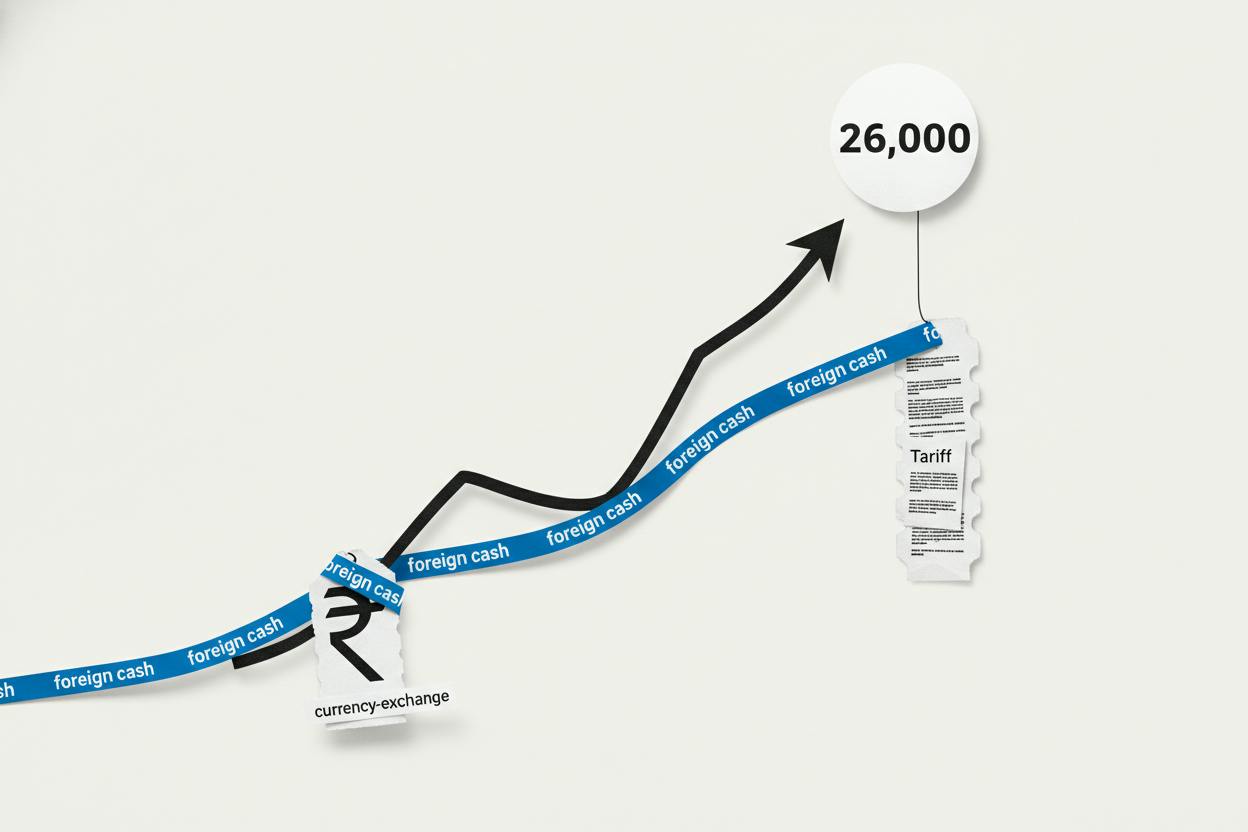
Foreign investors have poured a record $15.16 billion into Indian stocks this month, helping the Nifty 50 index climb back toward the closely watched 26,000 level. The buying spree, the largest monthly inflow on record, comes as US and Indian officials continue trade negotiations that could reshape the outlook for exporters and importers.
What's driving the rally?
The surge in foreign portfolio investment (FPI) has been the main engine behind the Nifty's recent gains. FPIs are institutional investors from outside India who buy Indian stocks, bonds, and other financial assets. Their buying has been steady and substantial, providing a strong tailwind for the market.
One notable side effect: the Indian rupee has risen 2.9% alongside these inflows. That's not a coincidence. When foreign investors buy Indian stocks, they typically need to convert dollars into rupees to settle their trades. This increased demand for the rupee pushes its value higher, which can also ease local financial conditions by making imports cheaper and reducing inflationary pressure.
The rally has been unusually flow-driven, meaning it's powered more by the sheer volume of foreign money than by a broad improvement in corporate fundamentals. That makes the market more sensitive to shifts in investor sentiment.
The 26,000 hurdle
The Nifty 50, India's benchmark stock index, is now testing the 26,000 level. Many analysts view this as a key resistance point—a price level where rallies often stall because some investors choose to sell and lock in profits. If the inflows persist, the index could push through this level, but it's not guaranteed.
Momentum is on the bulls' side for now. But there are competing forces at play. Higher oil prices tend to hurt India, which imports most of its crude oil, and can pressure the rupee. Meanwhile, the ongoing US-India tariff talks add another layer of uncertainty.
According to Reuters, the US could cap tariffs on Indian imports at 17% if the two sides reach a deal, or raise them to 25% if they don't. That's a wide range, and the outcome will influence which sectors investors favor. A lower tariff cap would be a boon for Indian exporters, while a higher one could hurt them and benefit domestic-focused companies.
What it means for investors
For everyday investors, the key takeaway is that heavy foreign buying can lift both the Nifty and the rupee—until it reverses. The same mechanism that boosts the currency when money flows in works in reverse when money flows out. If global investors turn cautious and start selling Indian stocks, they'll need to convert rupees back into dollars, which can tighten local liquidity and amplify swings in both the index and the currency.
This is why the current rally, while impressive, carries a degree of risk. Portfolio money is discretionary and can leave as quickly as it arrived. Investors should be prepared for potential volatility, especially if tariff negotiations take an unexpected turn or oil prices spike.
For those with exposure to Indian equities, it's worth watching the rupee's movement and the progress of trade talks. A deal that caps tariffs at 17% could provide a further boost to the market, while a breakdown could trigger a pullback.
As always, it's important to remember that markets are unpredictable. The record inflows are a positive sign, but they don't guarantee future returns. Diversification and a long-term perspective remain the best strategies for most investors.
For more on how currency movements and foreign flows interact, see our earlier piece on the rupee's recent strength. And for context on how oil prices can affect markets, check out this analysis of oil's impact on currencies.