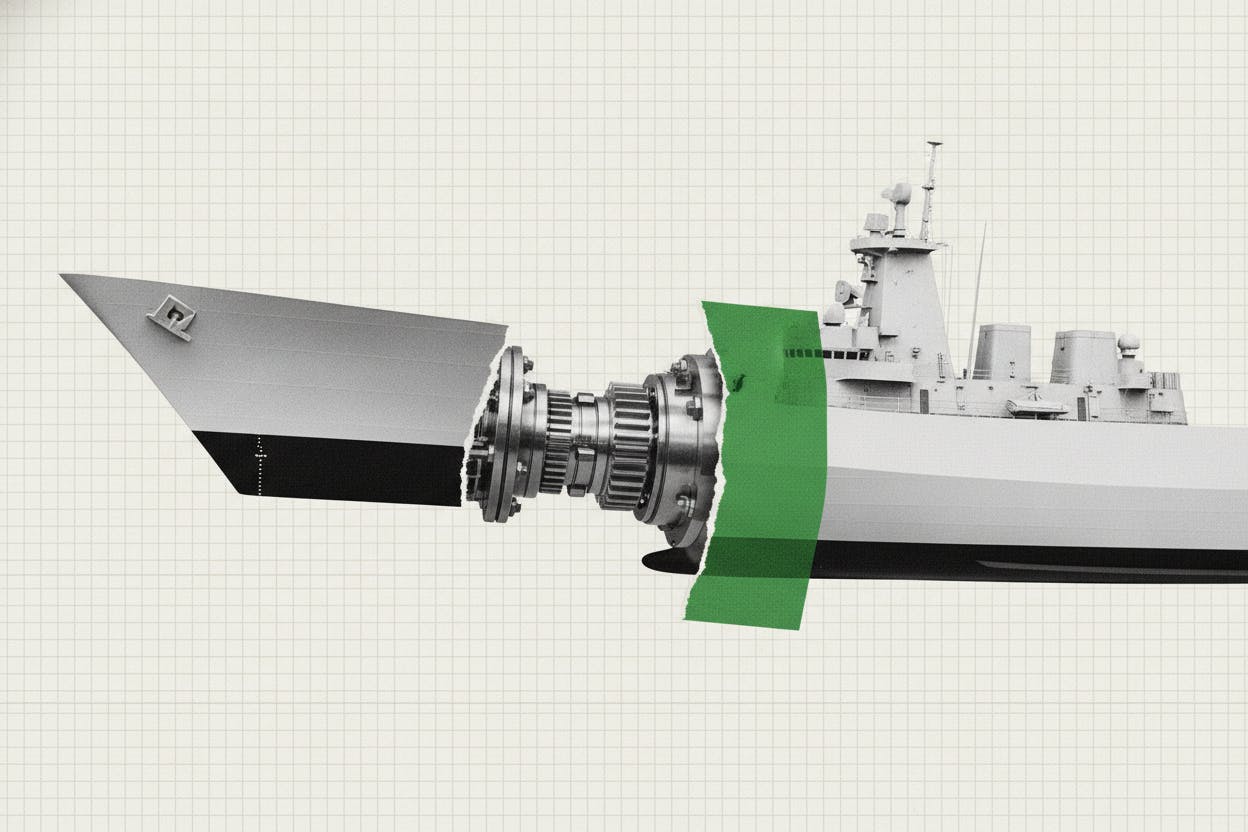
Renk Group shares tumbled 8% on Tuesday after Germany abruptly canceled its F126 frigate program, but at least one analyst is telling investors to look past the headline. Mwb Research upgraded the German propulsion systems maker to buy the following day, calling the sell-off a misread of the company's actual exposure to the warship project.
The move highlights how quickly defense stocks can swing on government procurement decisions—and how important it is to separate signal from noise. For everyday investors, the episode is a case study in why a single contract cancellation doesn't always mean a company's growth story is broken.
What Actually Happened
Germany's decision to scrap the F126 frigate program sent shockwaves through the defense sector, but the impact varies widely by company. Renk, which makes propulsion systems for naval vessels, saw its stock hit hardest. Yet Mwb Research argues the market treated Renk as if it were as exposed as Rheinmetall, a larger German defense contractor with deeper ties to the F126 program.
According to Mwb's estimates, Renk's direct exposure is limited to a one-off accounting charge of roughly €20 million. Even that could be partly offset by compensation claims from the German government. In other words, the financial hit is manageable and unlikely to derail the company's broader trajectory.
The Bigger Picture: What Replaces F126
The more important question for Renk is what comes next. Germany may pivot toward the MEKO A200 frigate design, built by Thyssenkrupp Marine Systems. Mwb Research believes that scenario could mean more hulls and faster delivery timelines, creating a revenue opportunity of €30–40 million for Renk—potentially more than offsetting any losses from the F126 cancellation.
This is a reminder that defense procurement is rarely a zero-sum game. When one program ends, another often begins, and suppliers with flexible capabilities can adapt. Renk's propulsion systems are used across multiple naval platforms, so a shift in design doesn't necessarily mean a loss of business.
For context, Germany's defense spending has been under scrutiny since the country announced a €100 billion special fund in 2022 to modernize its military. The F126 cancellation is part of a broader reassessment of priorities, and investors should watch for signals from the NATO Summit in early July, where defense spending commitments could firm up the order pipeline.
What It Means for Investors
Mwb Research's key message is that the durable driver for Renk is its order backlog—the amount of contracted work it has lined up—not the F126 headline. The analyst expects a strong second quarter and says order intake could reach €500 million, but only if German decisions on large land-systems purchases arrive in time.
Even as Mwb trimmed its price target to €50 from €53, it still upgraded the stock to buy. That might seem contradictory, but it reflects a distinction between near-term forecast tweaks and the bigger question of how fast new orders materialize. If procurement choices shift toward MEKO A200 and pull forward deliveries, Renk could add business instead of subtracting it.
For everyday investors, the takeaway is that defense stocks can be volatile on headlines, but the underlying fundamentals—backlog, contract diversity, and government spending trends—matter more. A single cancellation doesn't necessarily break a company's growth story, especially if it has other irons in the fire.
Related reading: Germany's Warship U-Turn Sends Defense Stocks Diverging: Winners and Losers and Chinese AI Giant Zhipu Soars 2,000% as Defense Stocks Diverge on Germany's Warship U-Turn.
Investors should also keep an eye on broader German economic trends, as consumer spending remains weak and could affect defense budgets indirectly. See German Consumer Mood Edges Up but Spending Remains Weak for more.