Oil markets have been fixated on geopolitical chokepoints like the Strait of Hormuz and the Red Sea. But Europe's next supply disruption could come from something much less dramatic: a river running dry.
The Rhine – Europe's industrial artery – is nearing critically low water levels after an extreme drought, threatening to choke off a vital route linking Rotterdam's ports with factories and refineries across Germany, France, and Switzerland.
What is happening to the Rhine?
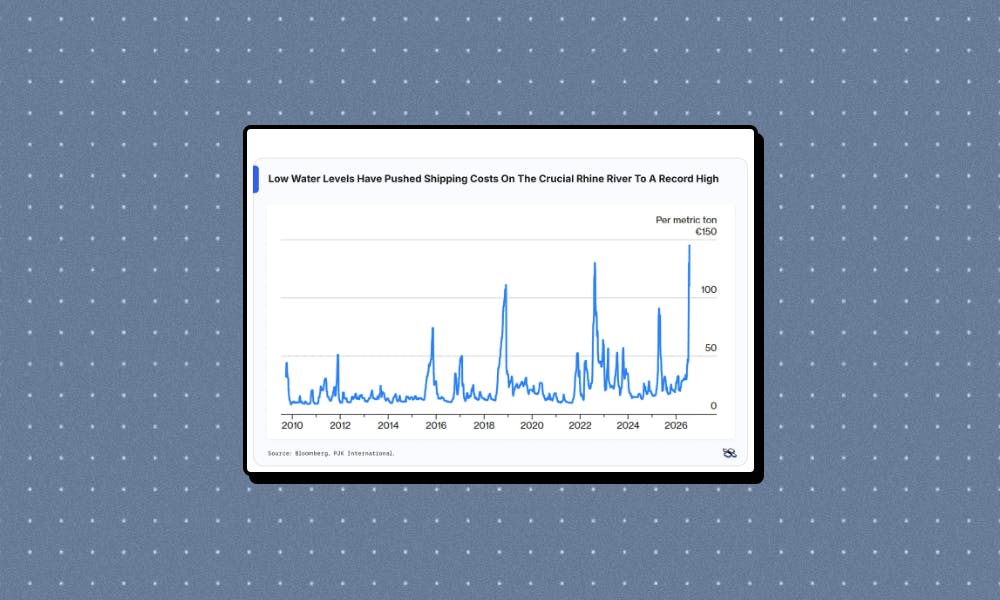
The Rhine is one of the busiest waterways in the world, carrying everything from coal and chemicals to grain and cars. But as water levels drop, barges that normally carry over 5,000 tons of cargo are now transporting just 800 tons. That means more trips are needed to move the same amount of goods, pushing freight costs to record highs of nearly €150 ($170) per ton.
The lower the water levels, the higher the shipping costs. This is not a new problem – similar droughts in 2018 and 2022 caused major disruptions. But the current situation is particularly severe because it comes at a time when Europe is already dealing with high energy prices and supply chain stress from other global chokepoints.
What does this mean for Germany and the wider economy?
Germany faces the risk of local fuel shortages because refineries along the Rhine rely on barge deliveries of crude oil and petroleum products. If barges cannot operate, those refineries may have to cut production, which could push up fuel prices at the pump and squeeze industrial output.
The broader European economy is also vulnerable. The Rhine connects the port of Rotterdam – Europe's largest – to the industrial heartlands of Germany, Switzerland, and France. Any disruption along this corridor can ripple through supply chains, delaying deliveries and raising costs for manufacturers, chemical companies, and utilities.
This comes as European bond yields rise amid broader market uncertainty, and as heatwave costs mount for companies like Mercedes-Benz, which recently cut its 2026 forecast. The drought is adding another layer of pressure on an already fragile economic environment.
What it means for investors
For everyday investors, the Rhine drought is a reminder that supply chain risks are not always geopolitical. Sometimes they are environmental. Companies that depend on river transport – especially in chemicals, energy, and manufacturing – could see higher costs and lower profits in the short term.
Investors should watch for earnings warnings from German industrial firms and chemical giants like BASF, which recently lifted its 2026 outlook amid Hormuz disruptions but now faces a new headwind. The drought could also push up diesel and heating oil prices in Europe, affecting consumer spending and inflation.
On the flip side, companies that provide water management or alternative transport solutions could benefit. For example, Veralto raised its 2026 profit outlook recently, citing steady demand from water utilities – a sector that may gain attention as droughts become more frequent.
Currency markets are also feeling the heat. The Hungarian forint led CEE currencies lower recently as oil spikes and Fed decisions loom, and a Rhine disruption could add to inflationary pressures in the eurozone, potentially influencing European Central Bank policy.
What to watch next
The key variable is rainfall. If the drought persists, water levels could fall further, forcing more severe restrictions on barge traffic. Some stretches of the Rhine may become impassable, which would force companies to switch to rail or truck transport – both more expensive and less efficient.
European stocks have already edged higher as oil rallies, but a prolonged Rhine disruption could weigh on industrial and energy shares. Investors should monitor weekly water level reports from German authorities and any government measures to ease the impact, such as releasing strategic fuel reserves or subsidizing alternative transport.
For now, the Rhine is a quiet crisis – but one that could quickly escalate into a major economic headache for Europe.