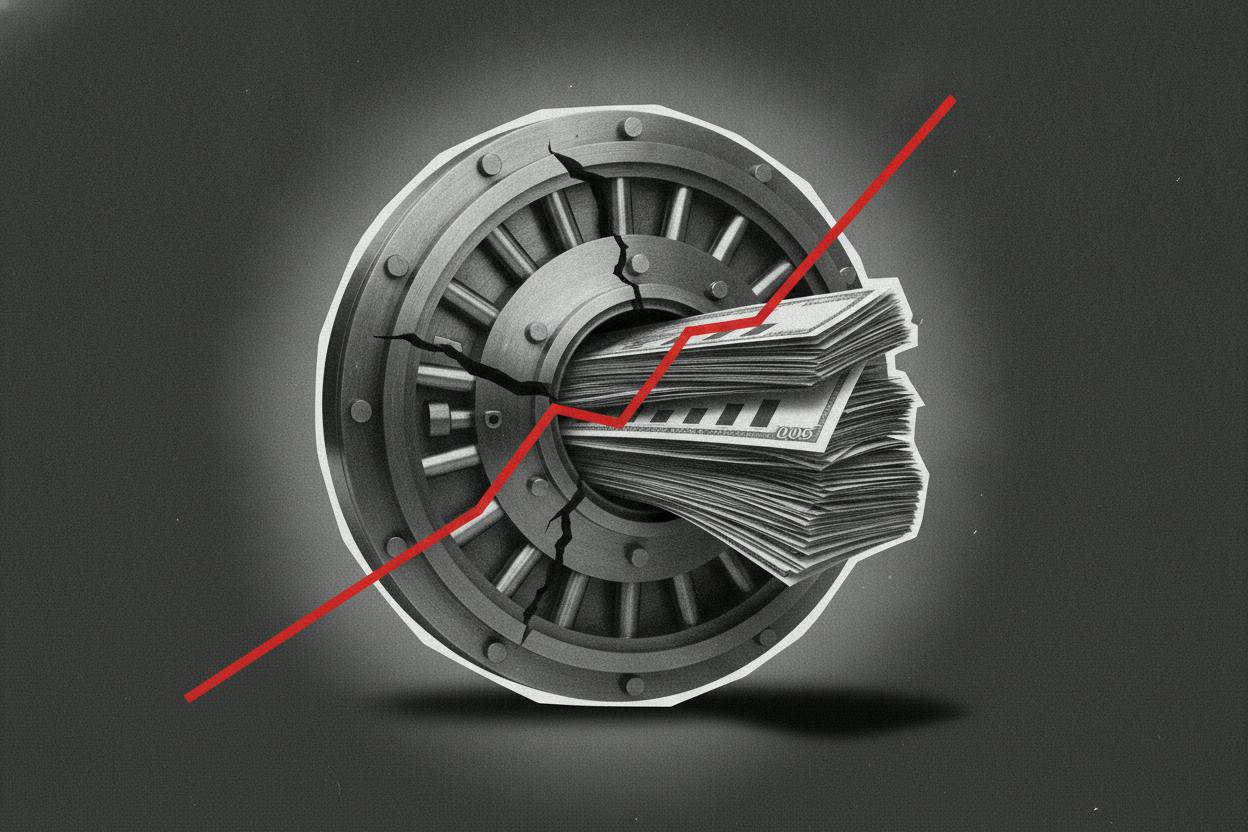
US banks are once again facing a familiar but uncomfortable choice: sell billions of dollars in bonds that have fallen in value, locking in losses, or hold onto them and hope yields fall back. The trigger is a renewed climb in Treasury yields, which has put the industry's unrealized bond losses back in the spotlight.
When Treasury yields rise, the prices of older bonds with lower interest payments drop. Banks that hold these bonds—often as part of their safety buffers—must record those price changes in a line item called accumulated other comprehensive income (AOCI), even if they never sell. A negative AOCI signals that the market value of their bond portfolios is below what they paid, which can make balance sheets look weaker to regulators and investors.
What the numbers show
According to S&P Global Market Intelligence, the US banking industry's AOCI stood at negative $156.64 billion in the second quarter. Since then, long-term Treasury yields have moved higher, which means the gap between the bonds' book value and their market value has likely widened. That would push AOCI even further into negative territory.
Bank of America illustrates the dynamic. Its bond portfolio has been a drag on earnings for several quarters, and the bank has repeatedly said it prefers to hold those bonds to maturity rather than sell at a loss. But with yields climbing again, the pressure to act is building.
The decision is not just about accounting. Selling underwater bonds converts paper losses into realized losses, which directly hit quarterly earnings and capital ratios. Holding them avoids that hit but leaves the bank exposed to further price declines if yields keep rising—and it ties up capital that could be used for lending or other purposes.
Regulatory pressure adds urgency
Adding to the urgency is the nearing implementation of Basel III rules, which are designed to strengthen bank capital requirements. Under those rules, unrealized losses in AOCI may count more heavily against capital, making it costlier for banks to keep underwater bonds on their books. That could push more lenders to sell while they still have some control over the timing.
The situation is not unique to the US. Indian banks have paused dollar bond sales as US yields and hedging costs rise, a sign that the ripple effects are global. And in Europe, yields have steadied for now, but the underlying trend is the same.
What it means for investors
For everyday investors, the key takeaway is that bank earnings and stock prices could become more volatile as lenders navigate this decision. If banks choose to sell, they will report one-time losses that reduce profits. If they hold, they may face higher capital requirements or future write-downs if yields continue to climb.
Investors should watch bank earnings calls for language about AOCI and bond portfolio strategy. Banks that signal a willingness to sell may see short-term earnings hits but could emerge with cleaner balance sheets. Those that hold may be betting on a future decline in yields—a bet that has not paid off so far this year.
The broader market context matters too. Higher Treasury yields affect not just banks but the entire economy, as they raise borrowing costs for consumers and businesses. That is one reason central banks in emerging markets are also watching the move in US yields closely.
For now, the industry is in a wait-and-see mode. But with AOCI still deeply negative and Basel III looming, the pressure to make a decision is only going to grow. As HSBC's recent drag on European banks shows, bond-related losses can weigh on even the largest lenders.
For investors, the lesson is to pay attention to the balance sheets of the banks they own or are considering. Unrealized bond losses are not always a red flag—many banks have ample capital to absorb them—but they are a risk factor that can amplify losses in a rising-rate environment.
As the debate over selling versus holding continues, one thing is clear: the era of cheap money is over, and banks are having to adjust to a world where bond portfolios can be a source of pain rather than stability.