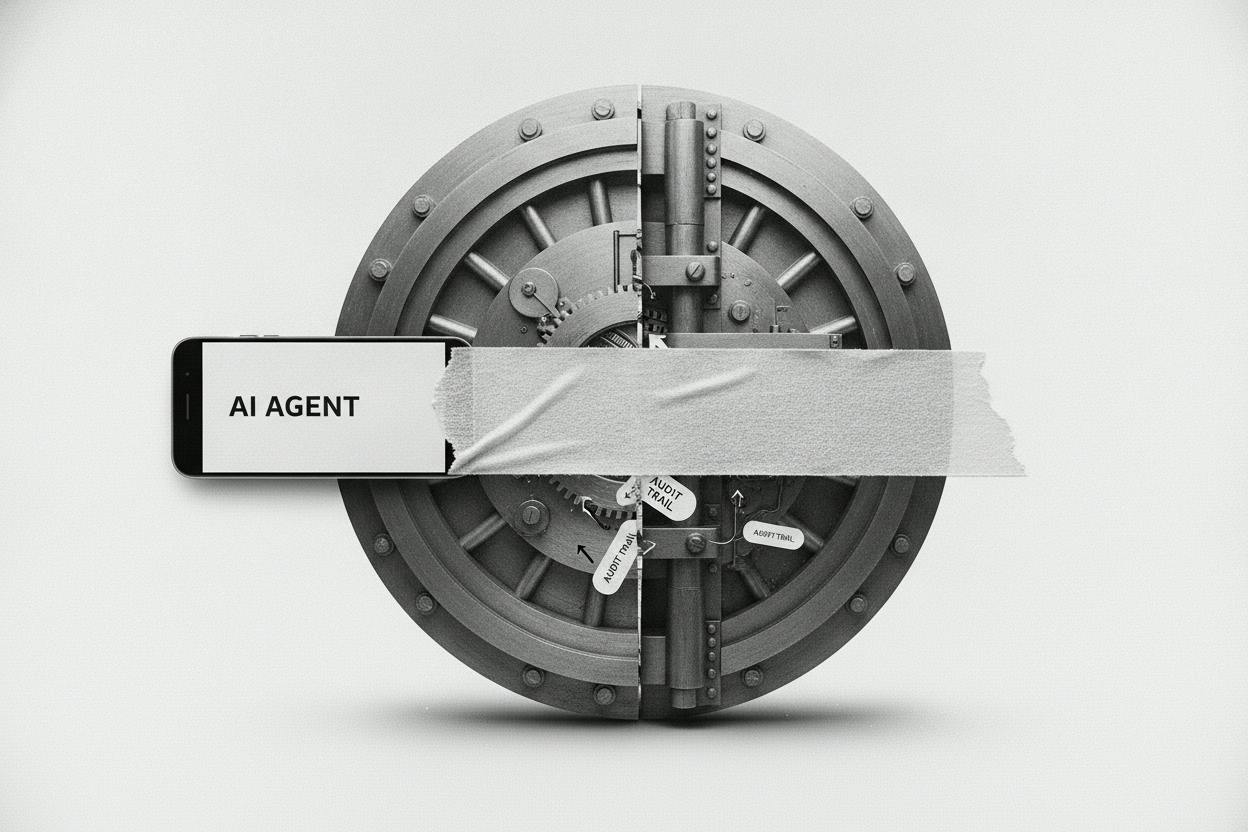
UBS chief executive Sergio Ermotti has drawn a clear line on artificial intelligence: outside AI models will not be allowed to take actions inside client accounts, such as shifting deposits. Speaking about the bank's approach, Ermotti said the decision-making of such tools can become a “black box,” making it hard to explain or audit what happened.
The stance reflects a growing distinction in banking between AI chatbots that answer questions and AI “agents” that can perform tasks on a user's behalf. While chatbots are now common in banking apps, agents that can actually move money raise a different set of issues.
Why banks are cautious about AI agents
When an external model is allowed to touch a customer's account, the bank still carries the legal and regulatory duty of care. It must be able to prove why a transaction occurred, show a clear audit trail, and fix any problems quickly. If the logic behind a decision sits inside an outside model that the bank cannot fully inspect, meeting those obligations becomes difficult.
Ermotti noted that some banks have already seen potential model “misbehaviors” in account management, which helps explain why UBS is keeping outside systems from “enter[ing] into the bank and do that.” His comments align with reporting that major US banks are also blocking third-party agents from connecting to customer accounts.
For UBS, the issue is partly about timing. Ermotti said the integration of Credit Suisse, which UBS acquired in 2023, slowed the bank's AI rollouts. As that work wraps up, UBS wants to use technology to become more efficient, but it plans to keep a “human-in-the-loop” approach, where AI supports staff rather than making final decisions on client accounts.
What this means for your money
For everyday banking customers, the practical takeaway is that your bank account is likely to stay off-limits to third-party AI agents for now. This is less about being anti-AI and more about accountability. If a bot shifts your deposits and something goes wrong, your bank still has to explain what happened and stand behind the outcome — which is hard when the logic sits inside an outside model that can be difficult to audit.
The near-term tradeoff is that consumer AI inside banking apps is more likely to stay read-only: summarizing spending, suggesting options, or pre-filling forms. Fully automated “autopilot” features, like moving cash between accounts without human review, will probably roll out slowly and with tighter guardrails.
That cautious approach is not unique to banking. Retailers are also experimenting with AI agents, but with similar limits. For example, Walmart has opened its store to AI shopping agents but with guardrails in place, and AI shopping agents are becoming a battleground for Etsy, Wayfair and eBay. In banking, the stakes are higher because the consequences of a mistake are more serious.
Investor implications
For investors, UBS's stance is a signal about how banks are approaching AI adoption. It suggests that while banks will continue to invest heavily in technology, they will do so with a focus on risk management and regulatory compliance. That could mean slower rollouts of fully autonomous features, but it also reduces the risk of costly errors or reputational damage.
UBS's comments also come as the bank finishes integrating Credit Suisse, a process that has been a drag on its technology initiatives. As that work concludes, UBS is expected to push for more tech-driven efficiency, but with a human in the loop. That balance is likely to be a theme across the banking sector, as institutions weigh the benefits of AI against the need for accountability.
For investors watching the broader tech and AI space, the news reinforces that AI adoption in regulated industries like banking will be measured and careful. It also highlights the importance of AI agents in other sectors, where the risks are lower and the pace of change is faster.
Ultimately, UBS's decision is a reminder that in finance, trust and transparency often trump speed. For customers, that means your money is likely to stay in human hands — or at least under human oversight — for a while longer.