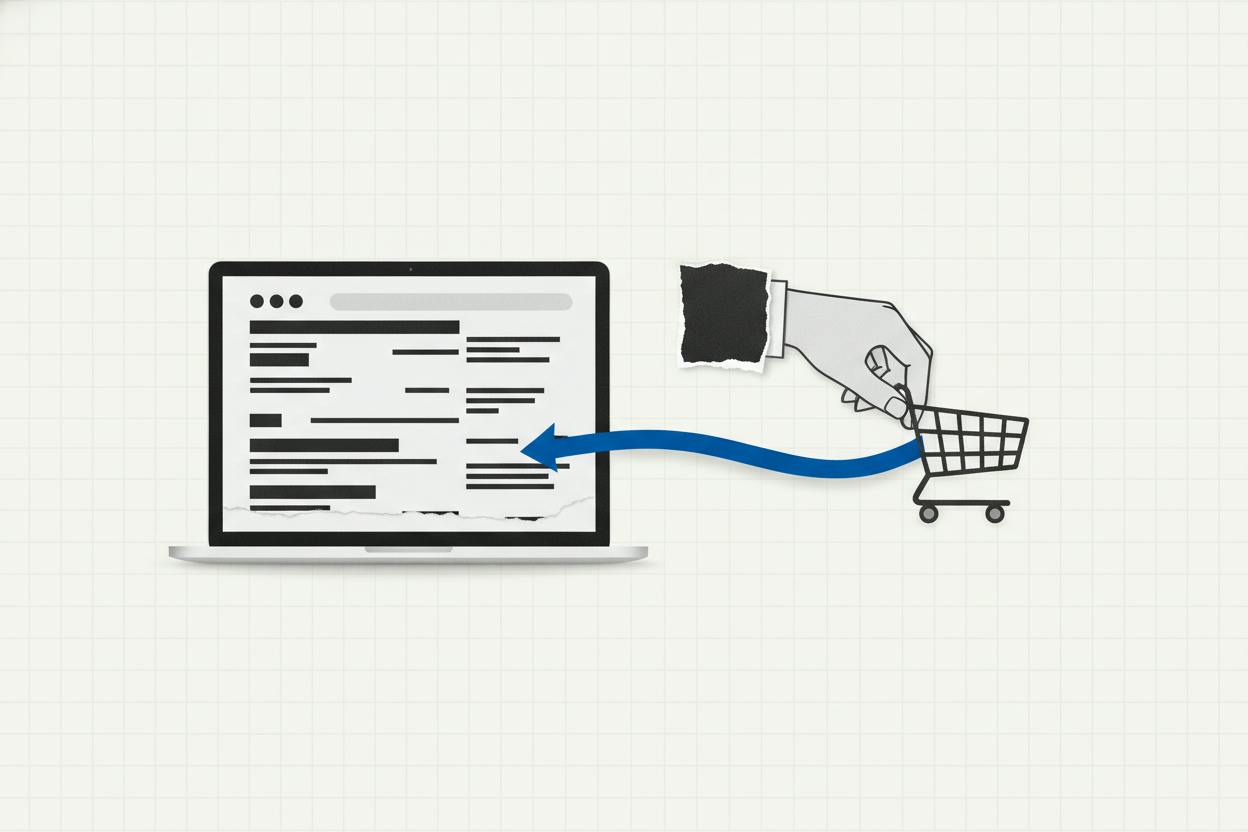
The next big fight in online shopping may not be over price or delivery speed, but over who gets to be the digital assistant that does the shopping for you. That's the takeaway from a new note by Bank of America Securities, which says "agentic commerce" is emerging as a fresh rival to traditional e-commerce just as several major online retailers prepare to report earnings.
Agentic commerce refers to AI assistants that can search for products, compare options, and even complete a purchase on a customer's behalf. Instead of browsing a website or app, a shopper might simply tell an AI agent what they need, and the agent handles the rest. Bank of America says the race to control the customer is still in its early stages, but it's already influencing how some companies are positioning themselves.
Who's leaning in?
According to the note, Etsy and Wayfair are among the companies leaning into large language model (LLM) tools ahead of their upcoming earnings reports. LLMs are the technology behind AI chatbots and assistants that can understand and generate human-like text. For a marketplace like Etsy, which sells handmade and vintage goods, an AI agent could help shoppers navigate a vast, highly varied catalog. For Wayfair, a home goods retailer, an agent might help customers find furniture that fits their space and style without endless scrolling.
eBay and Carvana are also mentioned as part of the group heading into earnings, though the note doesn't specify exactly how they're using the technology. The broader point is that these platforms are all trying to figure out how to stay relevant in a world where customers may no longer visit their sites directly.
This isn't just a theoretical shift. Retailers have already been experimenting with AI tools to improve search and recommendations. Target, for example, recently announced plans to add an AI shopping helper as part of its holiday strategy, a sign that the technology is moving from novelty to mainstream. You can read more about that in our piece on Target's holiday AI plans.
Why it matters for investors
For everyday investors, the rise of agentic commerce raises a key question: who captures the value when AI does the shopping? If a customer asks an AI agent to buy a birthday gift, does the agent choose an Etsy seller, a Wayfair lamp, or a product from a giant like Amazon? The answer could determine which companies thrive and which lose out.
Bank of America's note suggests that the race to control the customer is still wide open. That means early movers could gain an advantage, but it also means there's a lot of uncertainty. Companies that successfully integrate AI into their platforms might be able to reduce friction and increase sales. Those that don't risk being bypassed entirely.
For Etsy and Wayfair, the upcoming earnings reports will be a chance to show investors whether their AI investments are paying off. Investors will likely listen for any mention of AI-driven sales, customer engagement, or cost savings. But it's important to remember that earnings reports are backward-looking, and the full impact of agentic commerce may take years to show up in financial results.
The bigger picture
The emergence of agentic commerce comes at a time when the AI trade is facing its first big test on Wall Street. Investors have poured money into AI-related stocks, but there are growing concerns about whether the technology will deliver the promised returns. The recent slide in Korea's KOSPI index, driven by worries about AI chip debt, is a reminder that the AI boom can be volatile. You can see more in our coverage of Korea's AI chip worries.
For e-commerce companies, the stakes are high. Online shopping is a massive market, but it's also highly competitive. If AI agents become the primary way people shop, the companies that control those agents could wield enormous power. That's why Bank of America calls it a race to control the customer.
It's also worth noting that agentic commerce isn't just a concern for retailers. Payment processors, logistics companies, and even advertising platforms could be affected. If AI agents make purchasing decisions, traditional advertising may become less effective, and the way companies reach customers could change dramatically.
What to watch next
As Etsy, Wayfair, eBay, and Carvana report earnings, investors should pay attention to any commentary about AI and automation. Management teams may discuss how they're using LLMs to improve search, personalize recommendations, or streamline checkout. They might also reveal partnerships with AI companies or plans to launch their own agents.
But investors should be cautious about reading too much into early moves. The technology is still young, and it's unclear which business models will benefit most. Some companies may use AI to cut costs, while others may use it to drive growth. The key is to focus on whether these tools are actually improving customer experience and financial performance, not just generating buzz.
In the meantime, the broader market will be watching to see if the AI trade can hold up. The upcoming earnings season could provide clues about whether companies are turning AI hype into real profits. For now, agentic commerce remains an emerging trend, but it's one that could reshape the e-commerce landscape in the years ahead.