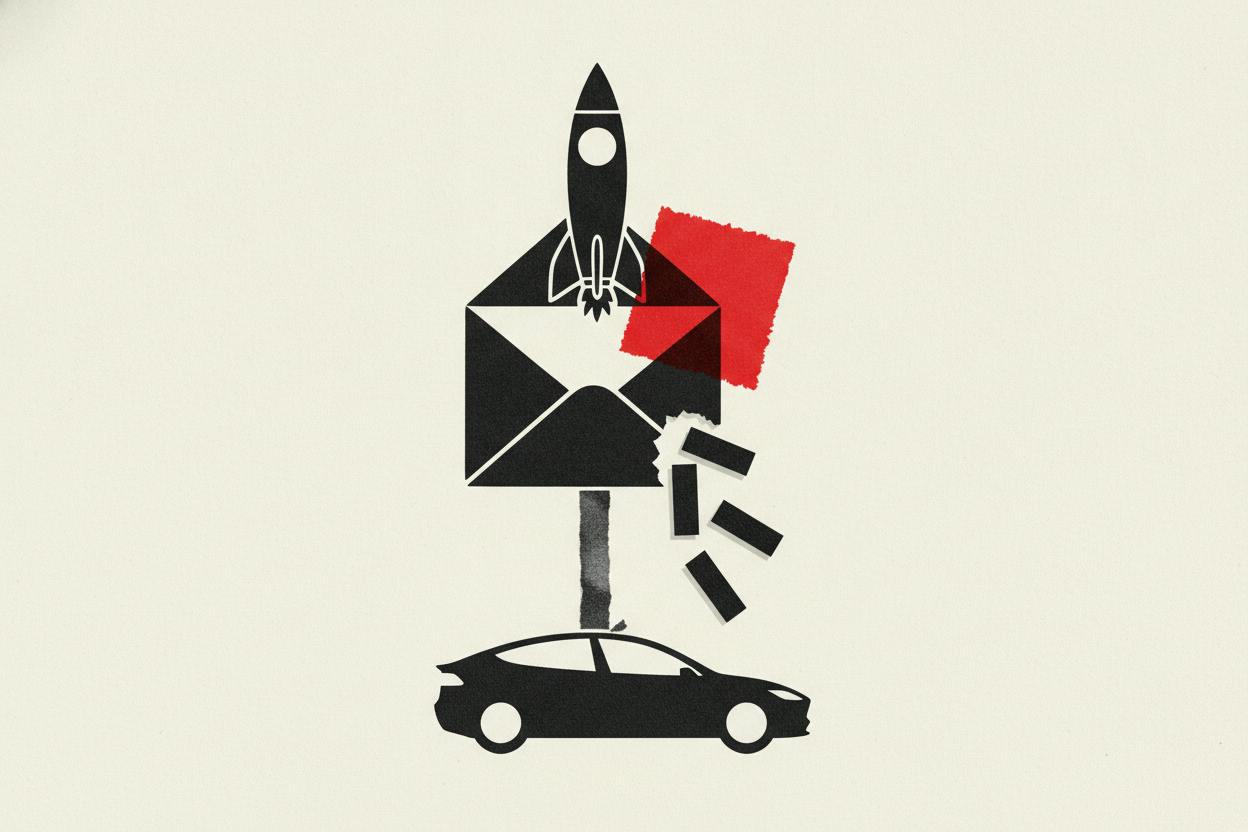
Wall Street may be warming to the idea of a Tesla-SpaceX combination, but Elon Musk is pouring cold water on the notion that it's a foregone conclusion. In recent remarks, the billionaire said a merger between his electric-car maker and his rocket company would hinge on independent special committees and a "tough" vote by Tesla shareholders — not on his say-so.
Musk's comments come as analysts at major banks reportedly see a deal as increasingly plausible, with some eyeing a tie-up by the end of next year. The speculation has been fueled by visible collaboration between the two companies and by Musk himself acknowledging there is "a lot of merit" in combining them. Yet he also called himself a "conflicted party," noting that no terms have been agreed or even discussed.
Why a Tesla-SpaceX merger is on the table
The idea of merging Tesla and SpaceX has floated around for years, but it has gained fresh momentum recently. Both companies are pushing hard into artificial intelligence and autonomous systems — Tesla with its self-driving software and robotics, and SpaceX with its Starlink satellite network and growing AI-related cloud services. Supporters argue that a combined entity could cut duplicated work and create synergies, making it easier to share technology and talent.
SpaceX, which is privately held, has seen its valuation soar in recent years, driven by the success of Starlink and a booming AI business. Some analysts believe that bringing SpaceX under the Tesla umbrella could give Tesla shareholders exposure to that growth, while also providing SpaceX with access to Tesla's capital and manufacturing expertise.
But a merger of this scale would be unprecedented. Tesla is a publicly traded company with a market value in the hundreds of billions, while SpaceX is one of the most valuable private companies in the world. Combining them would likely be one of the largest deals in corporate history, raising complex questions about valuation, governance, and regulatory approval.
What Musk's "conflicted party" comment means
Musk's acknowledgment that he is a "conflicted party" is a key detail. As the largest shareholder and CEO of both companies, he would have a personal stake in any deal, which is why he says independent special committees — made up of directors with no financial interest in the outcome — would lead the process. This is a standard practice in corporate governance to protect minority shareholders from conflicts of interest.
Even with such committees, a merger would require approval from Tesla shareholders. Musk himself has signaled that this would not be an easy vote, suggesting that some investors may be skeptical about the benefits of combining a carmaker with a space and satellite company. The two businesses operate in very different industries, with different risk profiles and capital needs.
For everyday investors, this means the deal is far from certain. While Wall Street may be pricing in a possible tie-up, the path to completion is fraught with hurdles, and Musk's latest comments are a reminder that nothing has been decided.
What it means for investors
For Tesla shareholders, the prospect of a merger with SpaceX could be a double-edged sword. On one hand, it could provide access to SpaceX's high-growth businesses, including Starlink and its AI cloud services, which have been posting blockbuster results. On the other hand, it could dilute Tesla's focus on its core automotive business and expose shareholders to the risks of the capital-intensive space industry.
For SpaceX investors — mostly private funds and insiders — a merger could offer a path to liquidity, allowing them to cash out some of their holdings. But it would also mean giving up the potential upside of an eventual SpaceX IPO, which many have been waiting for.
The broader market has been watching the merger exploration with interest, and the news has already moved stocks. Tesla shares have been volatile on the speculation, and any concrete development could trigger significant swings.
Investors should also consider the regulatory angle. A merger of this size would likely face scrutiny from antitrust authorities, who may question whether combining the two companies would stifle competition in areas like satellite internet or autonomous driving. That adds another layer of uncertainty.
For now, Musk's message is clear: don't count on a deal happening anytime soon. The process, if it moves forward, will be deliberate and subject to shareholder approval. As one analyst put it, "This is a possibility, not a probability."
In the meantime, investors should keep an eye on any announcements from Tesla or SpaceX about formal talks. Until then, the merger remains a topic of speculation — and a reminder of how intertwined Musk's ventures have become.