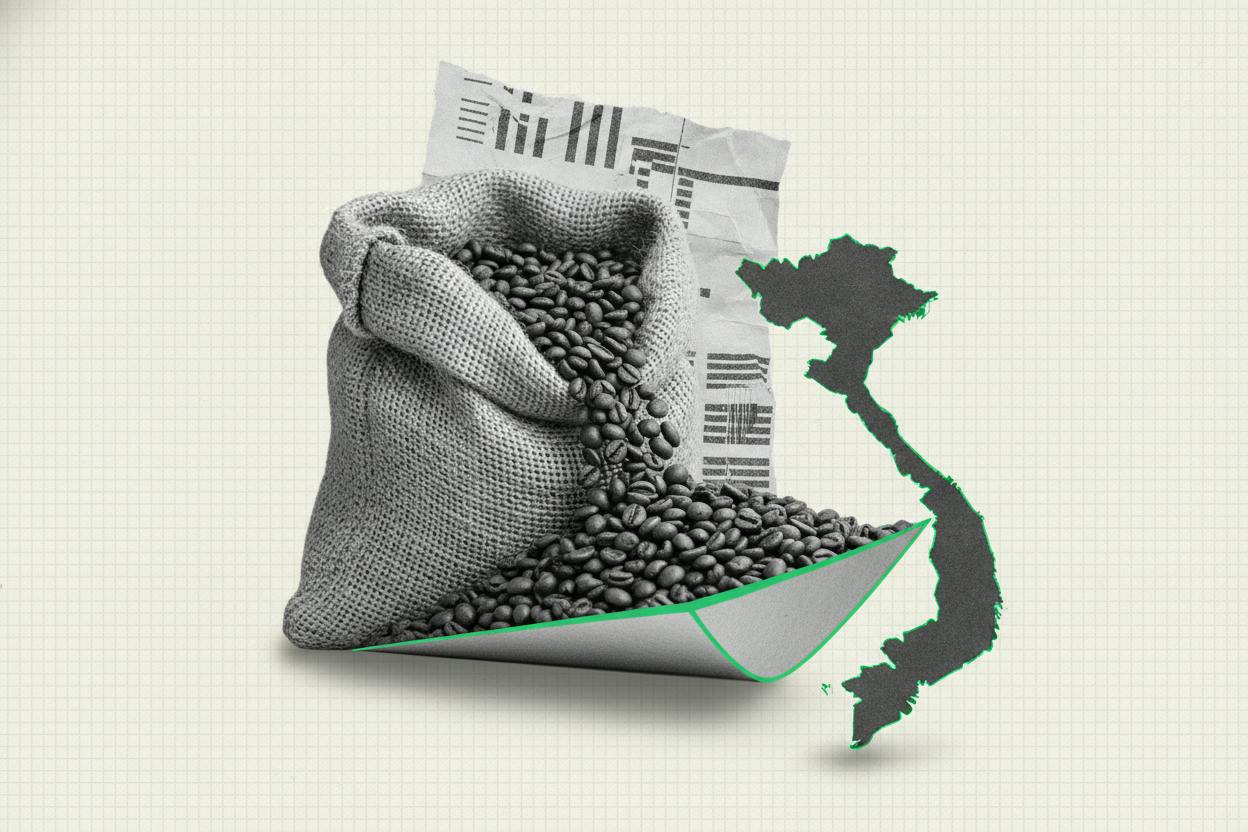
Robusta coffee futures rebounded on Tuesday, climbing 1.6% to $3,279 a metric ton on ICE, after sliding to a 2-1/2-year low of $3,140 last week. The bounce comes as traders shift their focus from worries about tight supplies to the prospect of fresh beans hitting the market from Vietnam, the world's largest robusta producer.
Vietnam's harvest picks up
Vietnam's coffee harvest is now underway, and dealers expect activity to peak later this month. A trader in the Central Highlands, the country's main coffee-growing region, said output should be roughly in line with last year's. That expectation is key: when buyers believe new beans are about to become available for shipping, the pressure on the nearest delivery months often eases first.
In practical terms, this means the market's price curve can flatten. Instead of paying a big premium for coffee available immediately, traders may be willing to pay more for later delivery, anticipating that supply will catch up. A flatter curve typically lowers short-dated hedging costs for coffee roasters and can reduce the sharp, day-to-day swings that come from sudden 'nearby' supply scares.
Uganda's exports disappoint
Not every origin is adding to supply, though. Uganda's agriculture minister reported that October coffee exports fell 13% year-on-year, following a weak harvest in a key region. This serves as a reminder that global availability can tighten in pockets even as Vietnam ramps up its output.
Uganda is a significant robusta producer, though smaller than Vietnam. Its export decline adds a note of caution to the otherwise more optimistic outlook for supply. The mixed signals mean traders will be watching closely to see how the global balance shapes up in the coming months.
What it means for investors
For everyday investors, the coffee market might seem distant, but it can have ripple effects. Coffee is a major commodity, and price moves can influence the costs of companies that roast and sell coffee, from global giants to local cafes. When robusta prices are volatile, it can affect profit margins and, ultimately, the prices consumers pay for their daily cup.
The recent rebound in robusta futures is a sign that the market is adjusting to the expectation of more supply. If Vietnam's crop indeed matches last year's, the fear of running out of nearby supply fades, which could lead to a more stable pricing environment. However, the weaker exports from Uganda highlight that supply chains are not uniform, and disruptions in one region can still cause ripples.
Investors with exposure to coffee-related stocks or funds should keep an eye on the harvest progress in Vietnam and any further export data from other producers. The market's reaction to these developments will likely dictate short-term price movements.
For those interested in broader commodity trends, the coffee market's dynamics are similar to other agricultural products, where weather, harvest cycles, and export policies play crucial roles. As seen in other recent stories, such as rice export prices hitting two-year highs in the region, agricultural markets can be sensitive to supply disruptions.
In the meantime, the coffee market's focus remains on Vietnam's harvest peak later this month. If the crop delivers as expected, the recent price bounce could be the start of a more sustained recovery from the lows. But with Uganda's exports down, the global supply picture is far from uniform, and traders will be balancing these factors as they position for the months ahead.