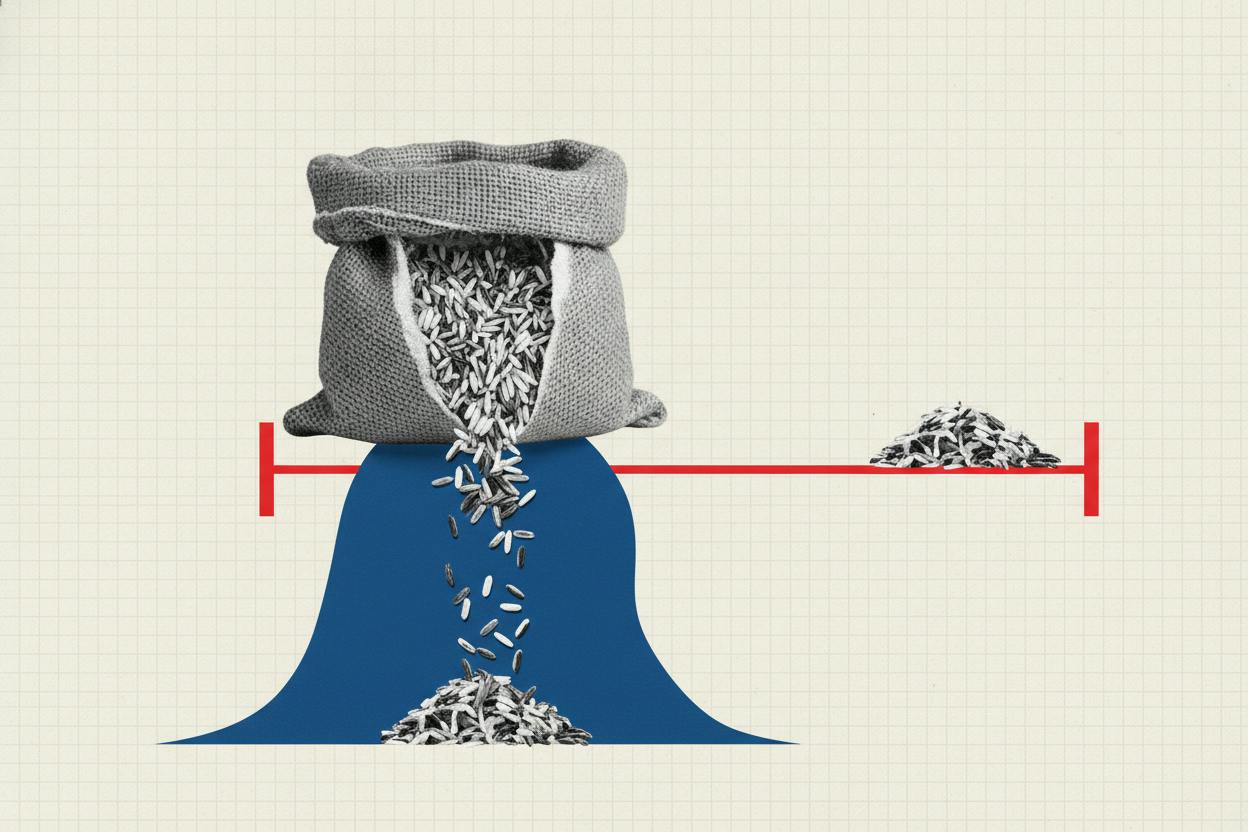
Rice export prices in Vietnam and Thailand, the world's two biggest shippers of the grain, have climbed back to levels not seen in two years, driven by a return of demand from the Philippines and supply disruptions from flooding in the region.
According to Reuters, Vietnam's 5% broken rice—a widely traded grade—is now being offered at $480 to $490 per metric ton, up from $470 to $480 a week earlier. The rise comes as buyers from the Philippines, a major importer, re-entered the market after a period of slower purchases.
However, the demand picture is not uniform. A trader in Ho Chi Minh City told Reuters that the Philippine purchases are concentrated on cheaper grades, such as 25% and 100% broken rice, while much of Vietnam's higher-quality 5% rice is being shipped to Africa. That means the rally is being driven by specific segments rather than broad-based buying.
In Thailand, the region's other export heavyweight, 5% broken rice also rose to $490 to $495 per ton, supported by foreign buying and flood-related tightness in supply. Flooding in key growing areas has disrupted harvests and logistics, reducing the amount of rice available for export in the near term.
Why rice prices matter
Rice is a staple food for billions of people across Asia and Africa, and its price has outsized importance for both consumers and governments. When export prices spike, importing countries face higher food import bills, which can feed into broader inflation. For exporting nations, higher prices boost farm incomes and export revenues, but they can also prompt domestic price controls or export restrictions to protect local consumers.
The current rally echoes a pattern seen in 2022 and early 2023, when rice prices surged to multi-year highs after India, the world's largest rice exporter, banned some exports and adverse weather hit crops in several countries. That episode showed how quickly rice markets can tighten and how sensitive they are to policy and weather shocks.
This time, the immediate triggers are more localized: flooding in Vietnam and Thailand has constrained supply, while the Philippines—a regular buyer—has stepped up purchases, likely to rebuild stocks or meet domestic demand. The fact that prices are back near two-year highs suggests the market is still adjusting to these supply-demand imbalances.
What it means for investors
For everyday investors, the rice price rally is a reminder that agricultural commodities can be volatile and are influenced by factors far beyond the headlines. Companies exposed to rice—such as agribusiness firms, fertilizer makers, and food processors—may see their margins and revenues affected by these price swings. Conversely, consumer staples companies that rely on rice as an input could face higher costs, which they may or may not pass on to shoppers.
In the broader context, rising food prices are a key input to inflation. Central banks, including the U.S. Federal Reserve, watch food and energy costs closely when setting interest rates. While rice is not as globally significant as wheat or corn, sustained increases in staple food prices can add to inflationary pressures, particularly in emerging markets where food makes up a larger share of household spending.
Investors should also note the regional dynamics. The Philippines, for instance, has been battling elevated inflation, as recent data showed inflation at 7.8%, with food prices a major contributor. Higher rice import costs could complicate the central bank's efforts to tame price pressures. Meanwhile, Thailand's economy, which relies heavily on exports, could benefit from higher rice revenues, as noted in recent growth forecast upgrades.
For those looking at the broader commodity complex, the rice rally is a reminder that weather events and policy shifts can create opportunities and risks. Other commodities have also seen price moves due to supply disruptions, showing how interconnected global markets are.
What to watch next
Investors will be watching several factors in the coming weeks. First, the extent of flood damage in Vietnam and Thailand will determine how long supply remains tight. If waters recede quickly and harvests recover, prices could ease. Second, the pace of Philippine buying will be key—if demand continues, prices may stay elevated. Third, any policy response from exporting governments, such as export curbs or subsidies, could shift the market balance.
For now, the two-year highs in rice prices are a clear signal that the market is in a delicate balance. For investors, staying informed about these dynamics can help in understanding the risks and opportunities in agricultural and consumer sectors.