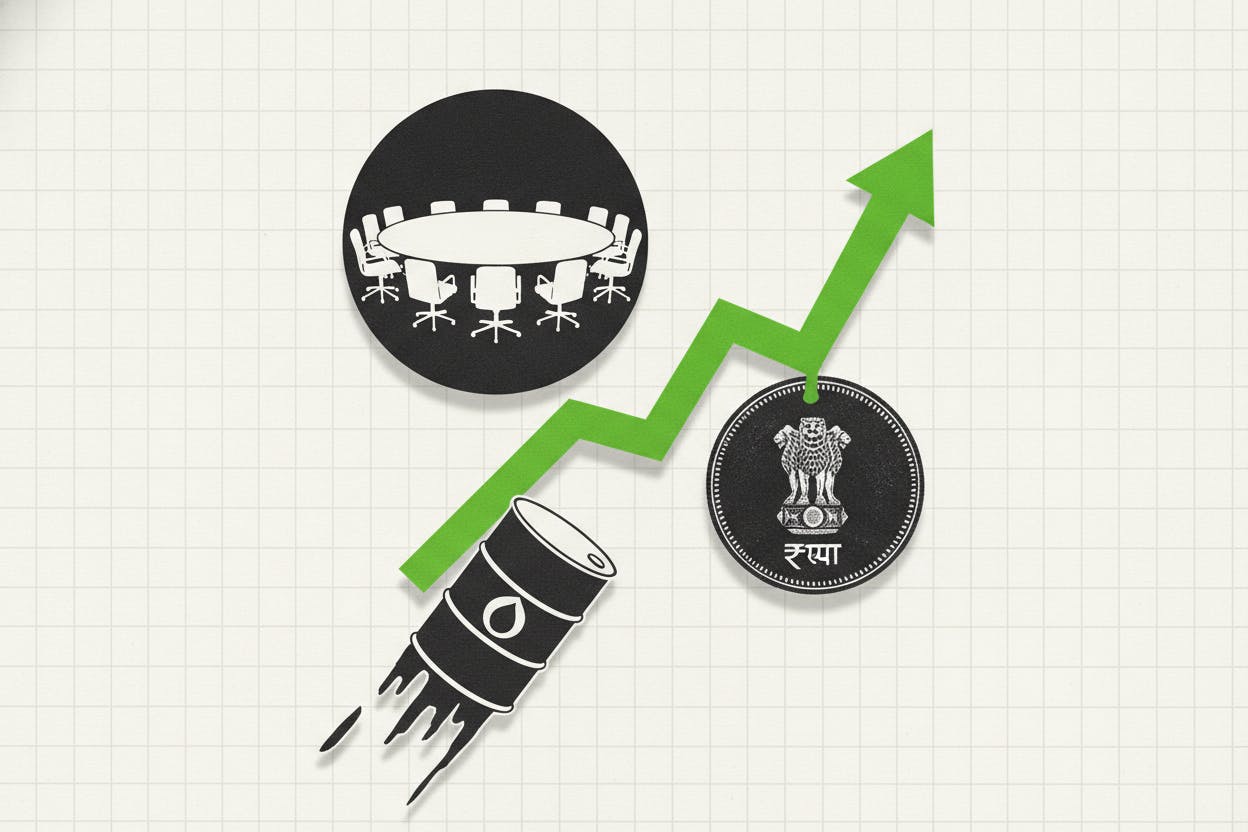
India's rupee climbed to a near one-month high on Tuesday, firming to 95.13 per dollar as a slide in global oil prices and steady foreign investment flows boosted demand for the local currency. The move comes just a day before the Reserve Bank of India (RBI) is widely expected to announce its latest monetary policy decision, keeping traders on edge.
What's driving the rupee higher?
The rupee rose about 0.3% against the dollar, according to Reuters, helped by a pullback in crude prices. Brent crude, the international benchmark, fell roughly 5% to around $83.5 a barrel after the United States held off on a fresh move against Iran while pushing for a quick deal that could reopen the Strait of Hormuz, a critical shipping lane for global oil supplies.
For India, the world's third-largest oil importer, cheaper crude is a big deal. The country buys most of its oil from abroad, so when prices drop, the cost of imports falls. That narrows the trade deficit—the gap between what India exports and imports—and reduces the amount of dollars Indian companies need to buy to pay for those imports. Less demand for dollars typically supports the rupee.
At the same time, foreign money has been flowing into Indian markets, adding to the currency's strength. When overseas investors buy Indian stocks or bonds, they need to convert their dollars into rupees, which creates demand for the local currency.
Why the RBI decision matters
All eyes are now on the Reserve Bank of India's rate decision on Wednesday. The central bank has kept its key interest rate steady for several meetings, trying to balance the need to control inflation with supporting economic growth. A rate cut could weaken the rupee by making Indian assets less attractive to foreign investors, while a hold or a hawkish tone could support it.
The RBI also plays a direct role in the currency market. It often intervenes to smooth out sharp moves, either by selling dollars to prop up the rupee or buying dollars to prevent it from strengthening too quickly. Recent reports suggest the RBI has been active in managing the rupee's level, and traders will be watching for any signals about its future approach.
India's foreign exchange reserves are substantial, having recently hit $682.3 billion, giving the central bank plenty of firepower to influence the currency if needed.
What it means for investors
For everyday investors, a stronger rupee can have mixed effects. On one hand, it makes imported goods cheaper, which can help lower inflation and reduce the cost of things like electronics and machinery. On the other hand, it can hurt exporters, such as IT services companies that earn revenue in dollars but pay costs in rupees, because their earnings get squeezed when converted back.
If you hold international investments or plan to travel abroad, a firmer rupee means your money goes further. But if you're invested in export-heavy sectors, a sustained rise in the currency could weigh on their profits.
The oil price drop is also a positive for India's economy as a whole. Lower energy costs reduce the subsidy burden on the government and help keep inflation in check, which could give the RBI more room to cut rates later this year. That would be good news for borrowers and could boost stock market sentiment.
Global context
The rupee's move comes amid a broader shift in currency markets. The dollar has been under pressure recently as traders bet that the US Federal Reserve may start cutting interest rates later this year. A weaker dollar generally supports emerging market currencies like the rupee.
Other currencies have also seen notable moves. The Japanese yen, for example, has been volatile, with intervention risk rising as the dollar slips. Meanwhile, the pound has had its best month since April as budget nerves fade, and the Canadian dollar's recent bounce may not last, according to analysts.
In Asia, Japanese stocks slid after a rare joint yen intervention, while China's central bank has signaled easier policy and more panda bond issuance. These developments highlight how interconnected global markets are, and how shifts in one region can ripple through to others.
Looking ahead
The immediate focus for rupee traders is Wednesday's RBI decision. If the central bank signals a dovish stance, the rupee could give back some of its gains. If it stays hawkish, the currency might extend its rally.
Oil prices will also remain a key driver. Any escalation in Middle East tensions could send crude higher again, reversing some of the recent decline. For now, the combination of cheaper oil and foreign inflows has given the rupee a welcome boost, but the path ahead is far from certain.
For investors, the takeaway is to watch the RBI's language carefully and keep an eye on oil markets. Both have the power to move the rupee—and your portfolio—in the coming days.