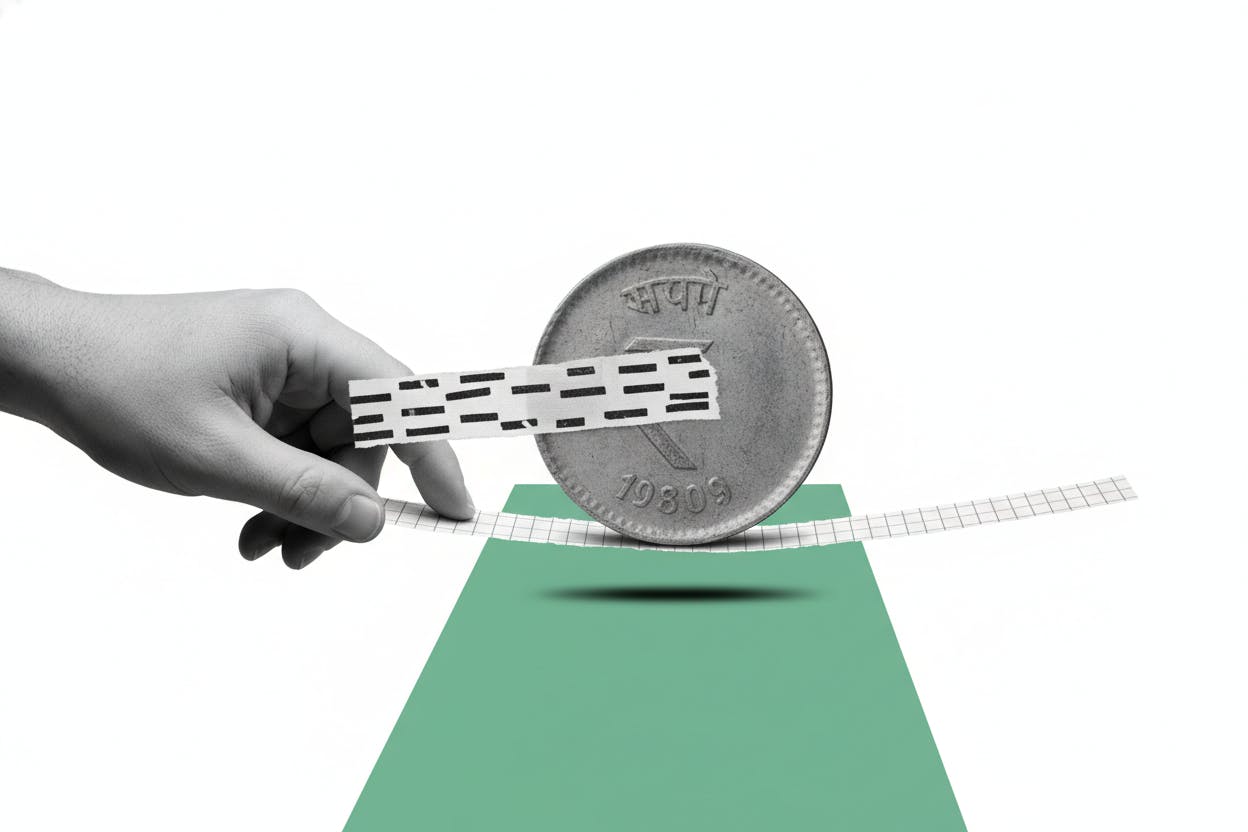
India's rupee is finding firmer footing after weeks of pressure, as the central bank's aggressive dollar sales and a friendlier global backdrop help steady the currency. The move has cooled speculation that the rupee would slide toward 97 per dollar, a level that had been on traders' radar just weeks ago.
What's been happening with the rupee?
The rupee had been flirting with fresh lows, weighed down by a strong US dollar and global risk aversion. But the Reserve Bank of India (RBI) has stepped in repeatedly, selling dollars from its reserves to cushion the currency's fall. That intervention, traders say, has been the main shock absorber.
Now, the external environment has turned more supportive. Brent crude prices have eased, which matters a lot for India. The country imports most of its oil, so cheaper crude lowers the import bill and reduces the demand for dollars from oil buyers. That, in turn, takes some pressure off the exchange rate.
On top of that, roughly $41 billion in inflows linked to RBI measures—such as a special deposit scheme that attracted foreign currency—have added to the rupee's support. These inflows have helped offset some of the outflows that were dragging the currency down.
Why the RBI's intervention matters
The RBI's near-daily presence in the currency market is a reminder of how much sway central banks can have over exchange rates, at least in the short term. By selling dollars, the RBI effectively mops up excess demand for the greenback, propping up the rupee.
But intervention is not without costs. Selling dollars drains the country's foreign exchange reserves, which had already been under watch. Earlier this year, India's reserves were bolstered by a deposit drive that brought in dollars, as reported in our coverage of the reserves hitting $682.3 billion. That buffer gives the RBI room to act, but it's not unlimited.
The rupee's recent resilience also echoes a broader pattern. In the past, the currency has often found its footing after periods of intense RBI intervention, especially when global conditions turn less hostile. The question is whether this time is different.
What's next for the rupee?
Traders are now watching whether the optimism sticks. The recent calm could be tested if oil prices reverse higher, if the US dollar strengthens again, or if global risk sentiment sours. Any of those could reignite pressure on the rupee.
On the flip side, if oil stays low and inflows continue, the rupee could hold its ground or even strengthen further. A stable currency is generally good for India's economy—it helps contain imported inflation and makes it cheaper for Indian companies to service foreign debt.
For investors, the rupee's moves matter in several ways. A steadier currency reduces the risk of sudden losses for those holding Indian assets, and it can boost sentiment in local markets. It also affects companies with large foreign-currency borrowings or those that rely heavily on imports.
But it's worth remembering that currency forecasts are notoriously tricky. The rupee's path will depend on a mix of global and domestic factors, many of which are outside the RBI's control.
What it means for investors
For everyday investors, the rupee's recovery is a reminder of how interconnected global markets are. Oil prices, US interest rates, and central bank actions all feed into the currency's fortunes.
If you're investing in Indian stocks or funds, a stable rupee can be a tailwind. It reduces the currency risk that comes with foreign investment and can make Indian assets more attractive to global investors. That could support equity valuations, especially for companies that are sensitive to import costs.
On the other hand, if the rupee resumes its slide, it could weigh on returns for foreign investors and push up inflation at home. That's why the RBI's actions are being watched so closely.
For now, the immediate threat of a slide toward 97 per dollar has faded. But as with any market, the calm could be temporary. Investors should keep an eye on oil prices, the dollar index, and any signals from the RBI about its intervention strategy.
In the broader context, India's currency story is part of a larger emerging-market narrative. Many developing economies are grappling with a strong dollar and high global interest rates. India's relatively strong reserves and active central bank give it more tools than most, but it's not immune to global shocks.
As the RBI continues its heavy lifting, the rupee's fate will hinge on whether the external winds stay favourable. For now, the currency has found its feet—but the ground beneath it remains uneven.