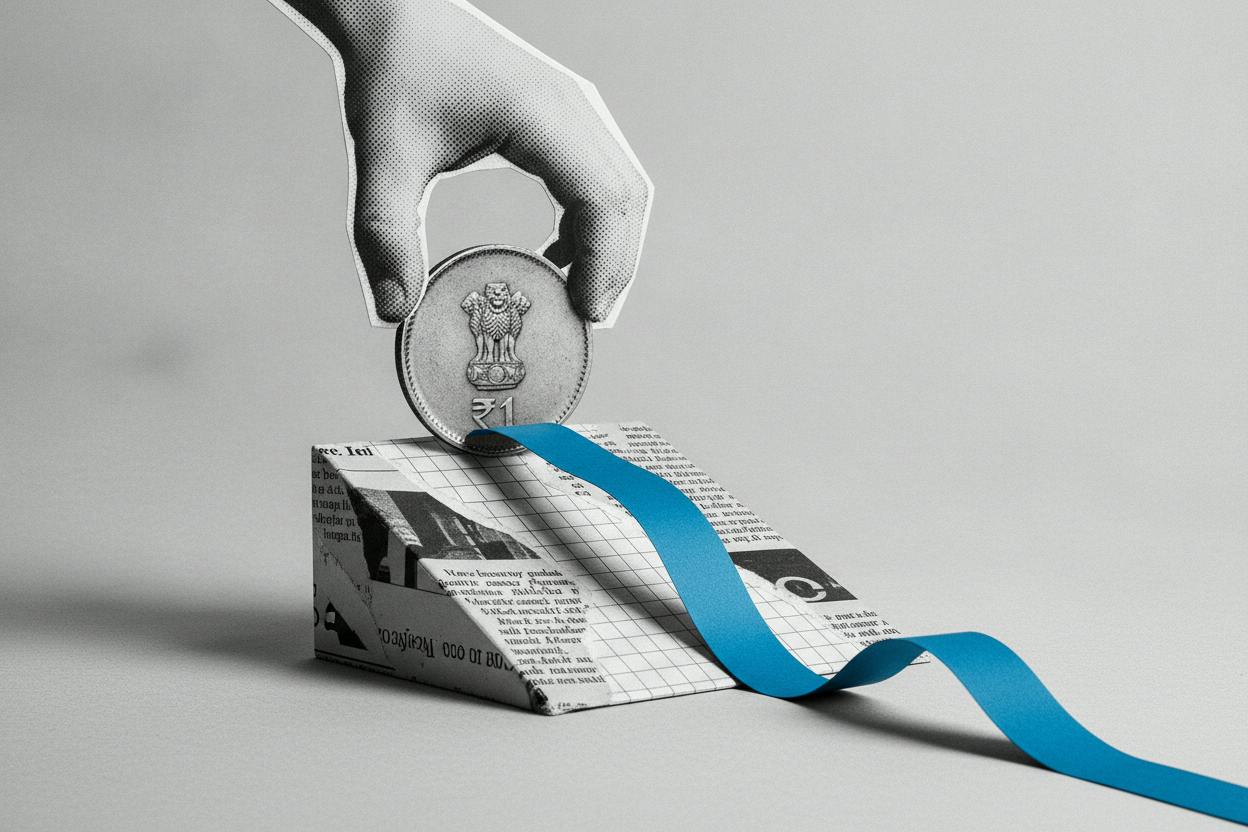
India's rupee slipped to 96.43 per US dollar on Tuesday, edging close to the record low it hit in May, as traders said the Reserve Bank of India (RBI) likely stepped in by selling dollars to slow the currency's decline. The move highlights the delicate balancing act facing the central bank as it prepares to announce its latest interest rate decision on Wednesday.
Why the rupee is under pressure
The rupee has been weighed down by steady selling from foreign investors, who have been pulling money out of Indian stocks and bonds. That outflow creates demand for US dollars, pushing the rupee lower. When the currency falls too quickly, the RBI often intervenes by selling dollars from its reserves to support it.
But intervention comes at a cost. Every dollar the RBI sells reduces its foreign exchange reserves, which act as a buffer against future shocks. The central bank must decide whether to spend that firepower now to smooth the currency's slide, or conserve it and accept a weaker rupee.
Markets believe the RBI has been intervening frequently, but some banks, including DBS, argue the central bank wants to be more careful with its reserves. DBS estimates that the RBI's net short forward position—essentially a promise to deliver US dollars in the future—stood at about $200 billion by the end of August. That position builds when the RBI uses swaps, which are agreements to exchange currencies now and reverse the trade later, to absorb inflows and manage liquidity. The result is a large future dollar obligation that can make hedging more expensive.
What the rate decision means
The RBI's policy decision is due Wednesday, and a quarter-point rate hike is widely expected. Higher interest rates can help support a currency by making it more attractive for foreign investors to hold local assets. But with the forward market still cautious, the question is whether a rate hike alone will be enough to stabilize the rupee.
One-year forward contracts for the dollar-rupee pair were trading around 99.70, meaning the market expects the rupee to weaken further over the next year. By contrast, economists polled by Reuters see the spot rate at around 97.50 over the same period. That gap suggests traders are pricing in the possibility of continued pressure on the currency, even if the RBI steps in.
What it means for investors
For everyday investors, the rupee's slide has a few practical implications. If you hold Indian stocks or mutual funds, a weaker rupee can reduce the value of your returns when converted back to your home currency. It can also make imported goods more expensive, which may feed into inflation and affect the broader economy.
For companies that need to pay for imports or service foreign debt, the forward market matters a lot. A large forward overhang—like the RBI's estimated $200 billion position—can keep hedging costs elevated. That means businesses may pay more to lock in future dollar payments, and those costs can eventually trickle down to consumers.
The RBI's decision on Wednesday will be closely watched not just for the rate move, but for any signals about how it plans to manage the currency going forward. If the central bank signals it is willing to let the rupee weaken further, that could put more pressure on the spot rate. If it signals continued intervention, it may reassure markets but raise questions about how long it can sustain that approach.
For now, the rupee remains near its record low, and the path ahead depends on a mix of global factors—like US interest rates and oil prices—and domestic policy choices. Investors should keep an eye on the RBI's statement and any comments about its intervention strategy.
Related: Indian banks lead stocks higher ahead of RBI decision and rupee slides toward 97 as US yields stay high.