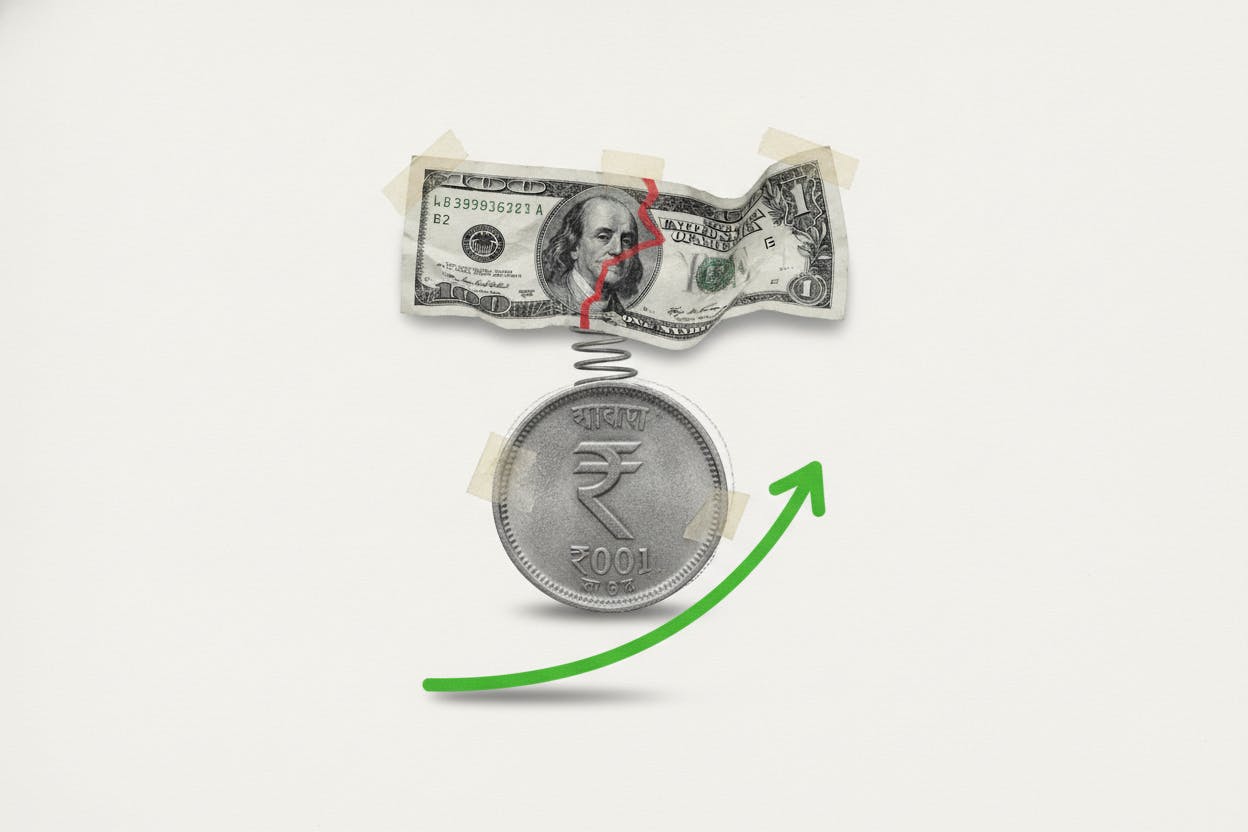
The Indian rupee is expected to open stronger on Friday, with traders eyeing an opening range of 95.12-95.16 against the US dollar, up from Thursday's close of 95.3925. The move comes after a cooler-than-expected US jobs report weakened the dollar and lowered the odds of a Federal Reserve rate hike in September.
Currencies often move on interest-rate expectations: when investors believe US rates will peak lower, holding dollars becomes less attractive. That's exactly what happened after Thursday's data showed June hiring slowed and earlier payroll gains were revised down. According to the CME's FedWatch tool, futures markets now price in only about a 53% chance of a September hike, down from roughly 75% before the report.
Dollar Slips, But Rupee Rally Not Guaranteed
The dollar index slipped another 0.2% to 100.77 on Friday, following a 0.5% drop the day before, putting it on track for its biggest weekly decline since early April. A weaker dollar typically supports emerging market currencies like the rupee, as it reduces the US currency's relative appeal and encourages capital flows into higher-yielding assets.
But a softer dollar alone doesn't guarantee a sustained rupee rally. MUFG, a global bank, noted that the jobs report doesn't settle the bigger question of whether inflation will cool fast enough to keep the Fed on hold. If inflation remains sticky, the Fed could still raise rates later this year, which would strengthen the dollar again.
Closer to home, traders say the USD/INR pair will still hinge on day-to-day flows. Exporter selling—when Indian companies convert their dollar receipts into rupees—can add supply of dollars and support the rupee. Portfolio flows, both equity and debt, can swing demand. After the rupee hit a three-week low in the prior session on transaction-related demand, the market is watching whether easing equity outflows, reported bond inflows, and renewed exporter selling can make the global tailwind stick.
What It Means for Investors
For everyday investors, the rupee's movement matters because it affects the value of international investments and the cost of imported goods. A stronger rupee means your money goes further when buying foreign stocks or traveling abroad, but it can also hurt exporters' profits, which may weigh on Indian stocks in sectors like IT and pharmaceuticals that earn a significant portion of revenue in dollars.
The broader context is that the US jobs data is part of a global trend of mixed economic signals. Other currencies have also reacted to the softer dollar: the South African rand edged higher ahead of the report, and Latin American markets rallied after the data was released. Meanwhile, the yen jumped as Japan shifted its FX intervention tactics, and the Hang Seng rose as traders awaited the jobs data for Fed direction.
For the rupee, the key question is whether the current dollar weakness is a temporary blip or the start of a longer-term trend. If the Fed stays on hold and the dollar continues to slide, the rupee could see further gains. But if inflation data surprises to the upside or local flows turn negative, the rupee could quickly give back its gains.
Local Flows: The Real Test
Beyond global factors, the rupee's direction will be determined by local supply and demand. Exporters, who have been holding back dollar sales in anticipation of a weaker rupee, may now step in to sell dollars, adding to the rupee's support. On the other hand, if foreign investors start pulling money out of Indian equities, the rupee could come under pressure.
Bond inflows have been reported, which could provide additional support. Foreign investors have been increasing their holdings of Indian government bonds, attracted by relatively high yields and the inclusion of Indian bonds in global indexes. If this trend continues, it could help offset any equity outflows.
For now, traders are watching the 95.12-95.16 opening range as a key level. If the rupee can hold above that and break through resistance, it could signal a more sustained recovery. But if it fails to hold, the pair could snap back even with a softer dollar.
The Bottom Line
The rupee's rebound is a reminder that currency markets are driven by a complex mix of global and local factors. For investors, the key takeaway is that a weaker dollar is supportive for the rupee, but it's not a guarantee. Keep an eye on local flows, especially exporter selling and portfolio inflows, as they will determine whether the rupee's gains are here to stay.