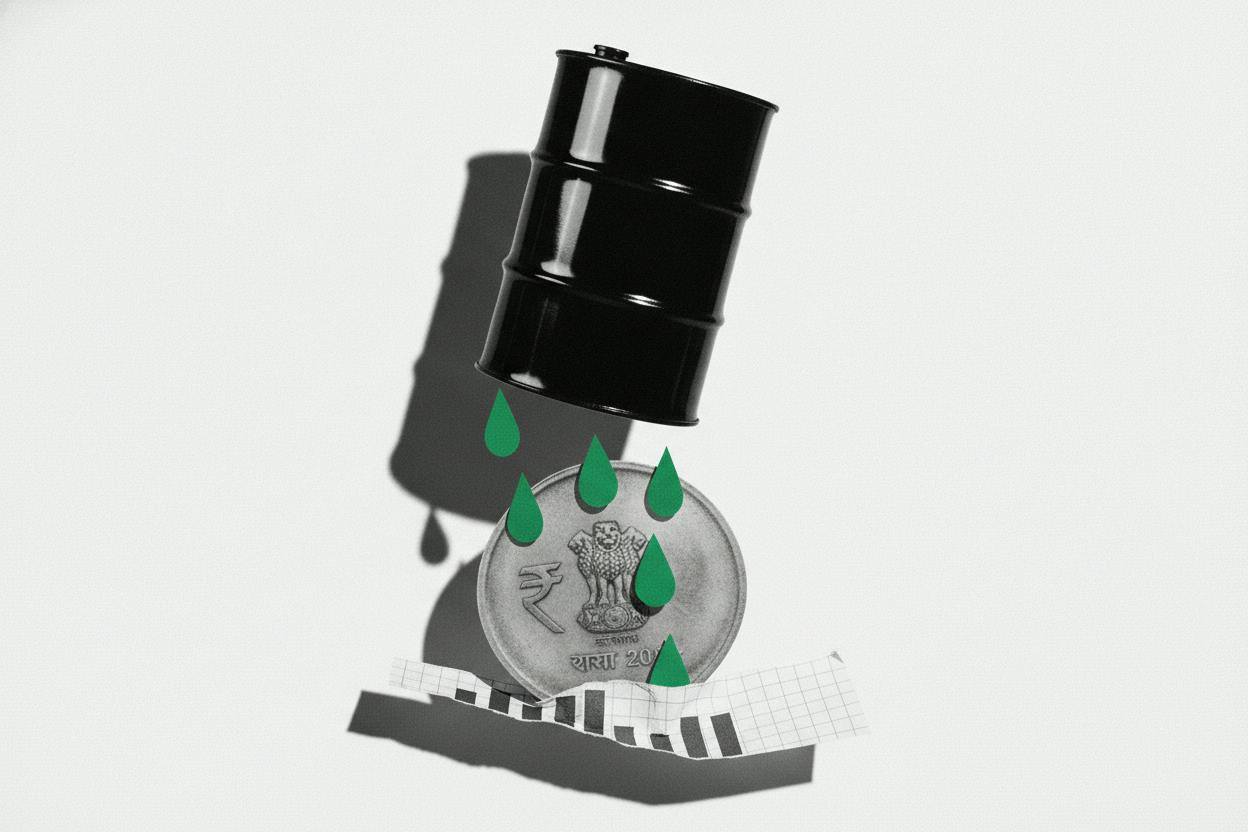
India's currency extended its losing streak on Wednesday, closing at 95.1850 per US dollar, down 0.3% on the day and about 0.8% over the past three sessions, according to Reuters. The slide comes as global oil prices remain elevated, with Brent crude hovering near $115 a barrel, and as foreign investors continue to pull money out of Indian stocks.
The rupee's decline is a familiar story for Indian markets, but the current combination of high oil and sustained foreign outflows is putting particular pressure on the currency. For everyday investors, a weaker rupee can mean costlier imports, higher inflation, and a drag on returns from overseas investments.
Why oil matters for the rupee
India is one of the world's largest importers of crude oil, so when global prices climb, the country's import bill swells. That means more dollars are needed to buy the same amount of oil, which directly increases demand for the US currency and pushes the rupee lower.
Brent crude has risen roughly 13% over the past three weeks, according to the brief, and remains near $115. That sustained strength is a key driver of the rupee's recent slide. Higher oil prices also feed into domestic inflation, as fuel and transportation costs ripple through the economy, affecting everything from food prices to airfares.
For investors, the link between oil and the rupee is a reminder of how global commodity prices can affect local markets. When oil spikes, Indian equities often come under pressure, and the currency tends to weaken, as seen in recent sessions.
Foreign investors keep selling
Adding to the rupee's woes, foreign investors have been net sellers of Indian equities in recent days. This trend has been a recurring theme in 2025, with global funds sometimes shifting money to other markets or reducing exposure to emerging markets when risk sentiment sours.
When foreign investors sell Indian stocks, they typically convert the proceeds back into dollars, which increases the supply of rupees in the market and puts further downward pressure on the currency. The combination of high oil and foreign outflows creates a double whammy for the rupee.
Recent market action reflects these pressures. The Nifty index has slipped as high oil prices keep inflation worries alive, and traders are also bracing for a Federal Reserve decision that could influence global capital flows. If the Fed signals higher-for-longer interest rates, that could strengthen the dollar further, making it harder for the rupee to recover.
What it means for your money
For Indian investors, a weaker rupee has several implications. First, it makes imported goods more expensive, which can push up inflation. That, in turn, may prompt the Reserve Bank of India to keep interest rates higher for longer, affecting borrowing costs for home loans and business credit.
Second, if you hold US dollar-denominated assets or plan to travel abroad, a weaker rupee means your money doesn't go as far. Conversely, exporters and companies that earn revenue in dollars may benefit, as their earnings convert into more rupees.
For those with investments in Indian stocks, the currency's slide can be a headwind, especially for companies that rely heavily on imported raw materials. However, it's not all negative—some sectors, like information technology and pharmaceuticals, often see a boost from a weaker rupee because a large portion of their revenue comes from overseas.
Indeed, India's chronic drug demand remains strong, as seen in Mankind Pharma's recent profit surge, and the travel boom has lifted companies like ITC Hotels. But the broader market is still grappling with the twin pressures of high oil and foreign selling.
What to watch next
Investors will be keeping a close eye on the Federal Reserve's upcoming policy decision, as well as any signs of oil prices easing. If Brent retreats from $115, the rupee could find some relief. On the other hand, if oil stays high and foreign investors continue to exit, the rupee may test the 95 level again, as some analysts have suggested.
The bond market is also worth watching. India's 10-year government bonds have been on a losing streak, and a weaker rupee could add to that pressure by making foreign investors more cautious about Indian debt.
For now, the rupee's path is tied to global oil prices and the mood of foreign investors. Both are uncertain, but the key takeaway for everyday investors is that currency movements can have real effects on portfolios, from inflation to returns on foreign assets. Staying informed and diversified remains a prudent approach.