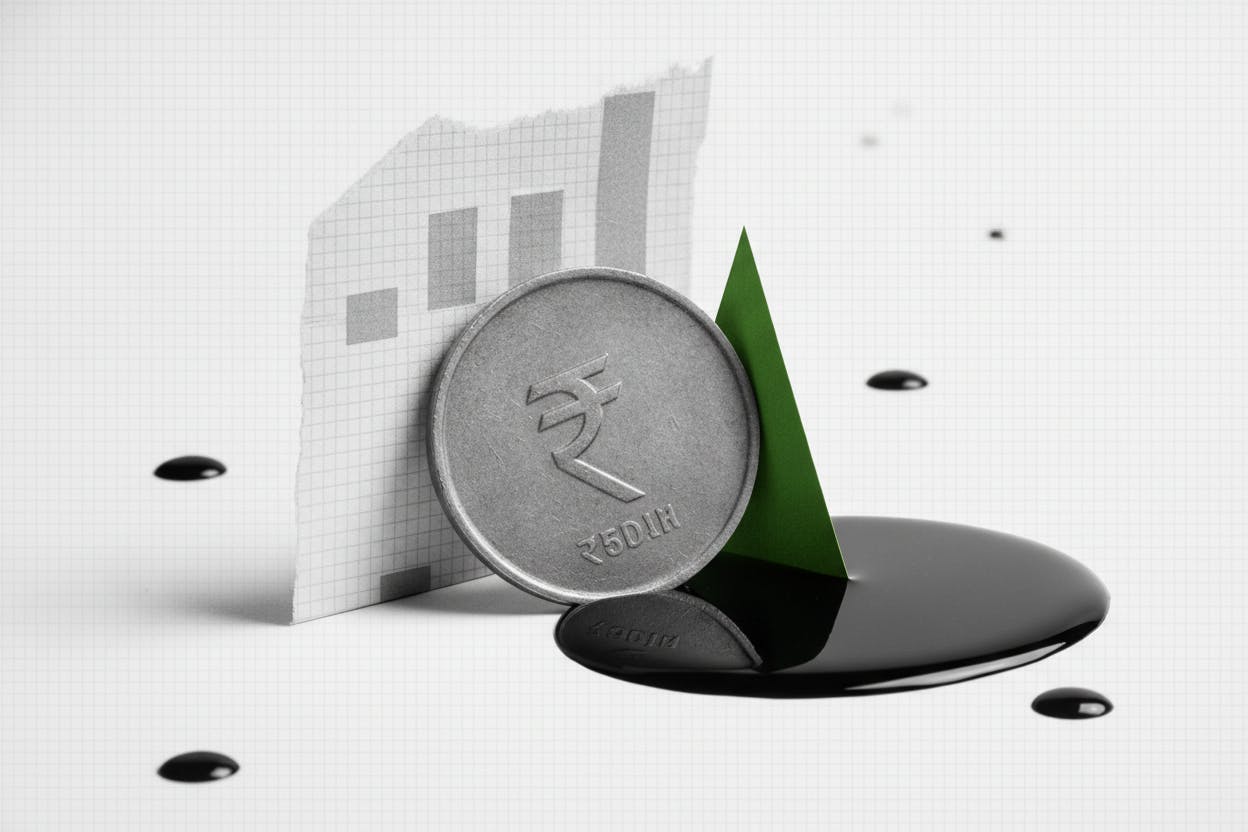
The Indian rupee weakened to a one-month low on Tuesday, pressured by a sharp rise in global oil prices amid escalating tensions around the Strait of Hormuz. Traders reported that state-run banks were actively selling dollars, likely on behalf of the Reserve Bank of India (RBI), to stem the currency's slide.
The rupee briefly touched 95.7875 per US dollar before recovering to around 95.76 by 11:30 a.m. IST, according to Reuters. The move came as crude oil prices jumped on fears that disruptions in the Strait of Hormuz—a critical chokepoint for global oil shipments—could tighten supply and push energy costs higher.
Why Oil Prices Matter for the Rupee
India is one of the world's largest importers of crude oil, relying on foreign purchases to meet roughly 85% of its domestic demand. When oil prices rise, the country's import bill swells, widening the trade deficit. That, in turn, increases demand for US dollars from refiners and other importers, putting downward pressure on the rupee.
The Strait of Hormuz, located between Oman and Iran, is a narrow waterway through which about 20% of the world's oil passes. Any threat to shipping there—whether from geopolitical tensions, military incidents, or sanctions—can send crude prices higher and ripple through currency markets in oil-dependent economies like India.
This isn't the first time the rupee has come under fire from oil-driven shocks. Similar episodes in recent years have seen the currency weaken sharply, prompting the RBI to intervene through dollar sales to smooth volatility and prevent disorderly moves.
RBI Intervention: A Familiar Tool
The RBI regularly uses state-run banks as its agents in the foreign exchange market. By selling dollars from its reserves, the central bank can absorb excess demand for the greenback and support the rupee. Traders said Tuesday's dollar sales were likely aimed at preventing a sharper depreciation that could unsettle markets and raise import costs further.
Intervention, however, has limits. The RBI's foreign exchange reserves, while substantial, are not infinite. Each dollar sold reduces the cushion available for future shocks. Moreover, heavy intervention can signal to markets that the central bank is uncomfortable with the rupee's level, sometimes attracting speculative bets against the currency.
For everyday investors, the key takeaway is that the RBI is actively managing the rupee's slide, but the underlying pressure from oil prices remains. If crude continues to climb, the central bank may face a difficult choice: let the rupee weaken further, which could fuel inflation, or burn through more reserves to defend it.
What It Means for Investors
A weaker rupee has mixed implications for Indian investors. On the one hand, it can boost the earnings of export-oriented companies, such as IT services firms and pharmaceutical exporters, whose revenues are largely in dollars. On the other hand, it raises the cost of imported goods, from crude oil to electronics, which can squeeze margins for domestic companies and push up consumer prices.
For those with international exposure, a falling rupee means that foreign investments—whether in US stocks or global funds—become more valuable in rupee terms. But it also makes overseas travel, education, and imports more expensive.
The broader market context matters too. The rupee's decline comes alongside a broader dollar strength, as seen in the yuan slipping against the dollar amid similar Gulf tensions. Meanwhile, gold prices have slipped as oil's surge and rate hike expectations reshape market dynamics.
Investors should also keep an eye on Indian bonds, which have been rallying on foreign buying and strong auction demand ahead of a key index decision, as covered in our earlier report. A weaker rupee could complicate that rally by raising inflation expectations and potentially delaying rate cuts.
Looking Ahead
Markets will be watching for further developments in the Strait of Hormuz and any official comments from the RBI. The central bank's next monetary policy meeting is also on the horizon, and the rupee's trajectory could influence its stance on interest rates.
For now, the rupee remains under pressure, but the RBI's intervention has provided a temporary floor. Whether that floor holds depends largely on oil prices—and the geopolitical forces driving them.



