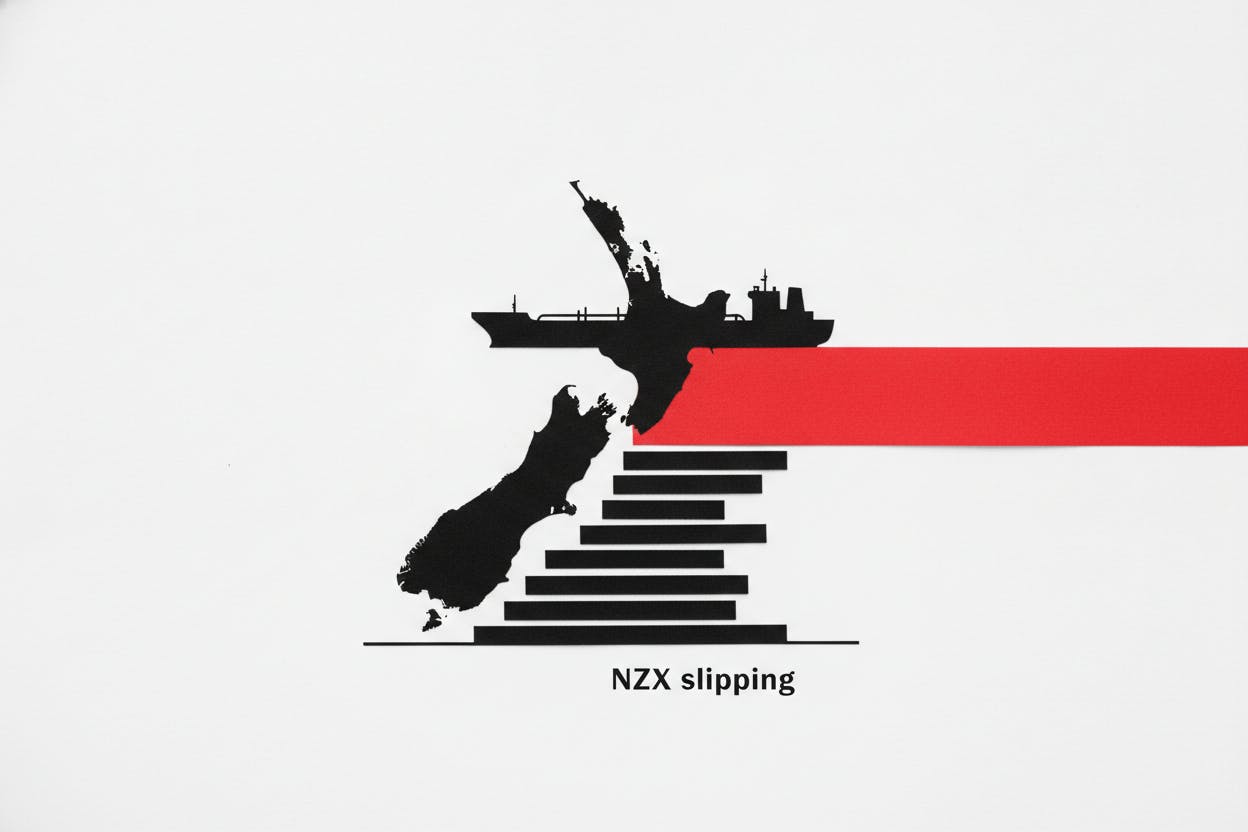
New Zealand shares edged lower on Tuesday as a mix of geopolitical tensions, a downgraded dairy forecast, and a central bank rate hike kept investors cautious. The S&P/NZX 50 fell 0.45%, tracking a broader mood of uncertainty across Asian markets.
Strait of Hormuz Standoff Fuels Caution
The main driver of the risk-off tone was a fresh flare-up around the Strait of Hormuz, a narrow waterway that handles about a fifth of the world's oil shipments. Iran's Islamic Revolutionary Guard Corps claimed the strait was closed, while US Central Command said it remained open to lawful transit, according to Reuters. Even without an actual disruption, such conflicting statements can rattle markets because they raise the risk of higher energy prices and supply chain disruptions. For a net oil importer like New Zealand, any sustained rise in crude costs would feed into fuel prices and broader inflation, adding pressure on households and businesses. For more on the global impact, see Oil Surges Over 4% as US-Iran Strikes and Strait of Hormuz Closure Rattle Markets.
Services Sector Shows Signs of Life
On the domestic front, there was a glimmer of positive news. BusinessNZ reported that the services sector returned to growth in June, after a contraction in May. However, the survey also highlighted that firms continued to report weak demand and lingering cost pressures, suggesting the recovery remains fragile. The services sector is a major driver of New Zealand's economy, so any expansion is welcome, but the underlying softness means the Reserve Bank is unlikely to ease policy anytime soon. For a deeper dive, see New Zealand Services Sector Returns to Growth in June, but Recovery Remains Fragile.
Fonterra Cuts Milk Price Forecast
Adding to the downbeat mood was news from Fonterra, the country's largest dairy exporter. The cooperative trimmed its forecast farmgate milk price for the 2026-2027 season to NZ$9.25 per kilogram of milk solids, down from NZ$9.75. The revision follows weaker prices at recent Global Dairy Trade auctions. Dairy is a cornerstone of the New Zealand economy, and the milk price directly affects rural incomes and spending across the country. A lower forecast means farmers will have less cash to invest in their operations and spend in local communities, which can ripple through the broader economy.
RBNZ Hikes Rate to 2.50%
In a move that caught some market participants off guard, the Reserve Bank of New Zealand raised its official cash rate by 25 basis points to 2.50% at its July meeting. Rabobank noted that the decision was aimed at keeping financial conditions tight and supporting the New Zealand dollar. A 25-basis-point increase may sound small, but the cash rate is the foundation for short-term wholesale interest rates—the rates banks pay to borrow for periods ranging from a few months to a couple of years. When those funding costs rise, banks typically pass them on to borrowers. Floating-rate loans are usually repriced first, followed by new fixed-rate offers as existing fixed-rate deals expire. This means homeowners rolling off a fixed mortgage in the coming months are likely to face higher rates. On the flip side, savers may benefit from slightly higher term-deposit rates as banks compete for deposits. The RBNZ's focus on preventing financial conditions from easing too quickly signals that borrowing costs are likely to stay elevated for longer than many households might expect.
What It Means for Investors
For everyday investors, the combination of geopolitical uncertainty, a weaker dairy outlook, and a tighter monetary policy creates a challenging environment. The Strait of Hormuz tensions could keep energy prices volatile, which may benefit energy stocks but hurt sectors like airlines and transport. The Fonterra downgrade is a reminder that commodity prices remain under pressure, which could weigh on rural-focused stocks and the New Zealand dollar. Meanwhile, the rate hike reinforces the message that the RBNZ is prioritising inflation control over growth, which could keep bond yields elevated and dampen enthusiasm for rate-sensitive sectors like housing and consumer discretionary. As always, diversification and a long-term perspective remain key. For context on how similar geopolitical events have affected other markets, see South Africa Faces Oil Shock and Rand Pressure as Iran Claims Strait of Hormuz Closure and Oil Surges Past $78 as Strait of Hormuz Tensions Rattle Markets.



